Strip
A never-ending story about not getting the hang of it.

Twisted paper
Overview
A never-ending story about not getting the hang of it.
Background
The Möbius Strip is, according to Wikipedia “a surface with only one side (when embedded in three-dimensional Euclidean space) and only one boundary curve.” I say it’s a cool shape with a cool name. For years I tried - and failed - to come up with a way of using it to tell a story. Obviously it would be a loop, with no formal beginning or ending, but apart from that I didn’t have much to go on. I bandied around some ideas, including a short treatise on time and space, based on this Worf-sampling Orbital track, a biography of French cartoonist Jean Giraud and a see-through comic about topless dancers.
None of these things worked, either because I didn’t really understand the concepts behind them (the first), because I didn’t have a strong affection for them (second) or because I was too embarrassed (third).
In the end, as with most things, I found bringing it close to personal experience was what unlocked it. I’ve never been a great one for home decorating and find the concept of wallpaper too strange to get my head around. The idea of every piece aligning perfectly made me feel stressed and this tension formed the the emotional heart of the story. As a former temp worker, I’ve had a lot of different jobs and can well remember the sinking feeling that comes with realising that no matter how hard you try, you’re just not getting it.
That understanding came with an insight sparked by the shape of the paper. What I like about the möbius strip is the twist it has in it, making it more interesting than a simple loop. That idea of the paper folding over itself put the picture in my head of wallpaper easing off one part of the wall, only to reattach itself to another.
This is one of several pieces I’ve created lately that involve loops or continuous cycles. Perhaps I just don’t like endings.
Mug
A story about a mug, on a mug.
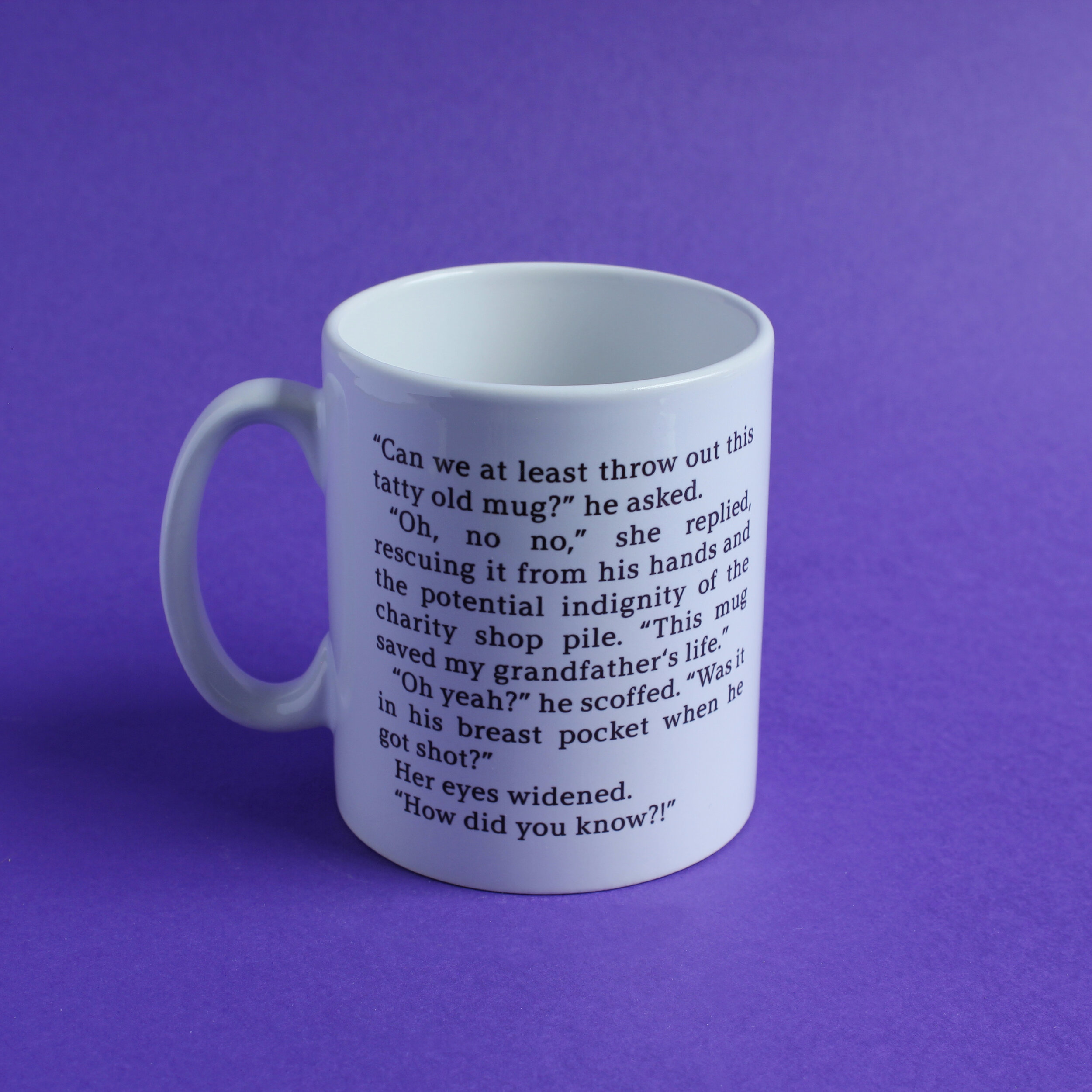
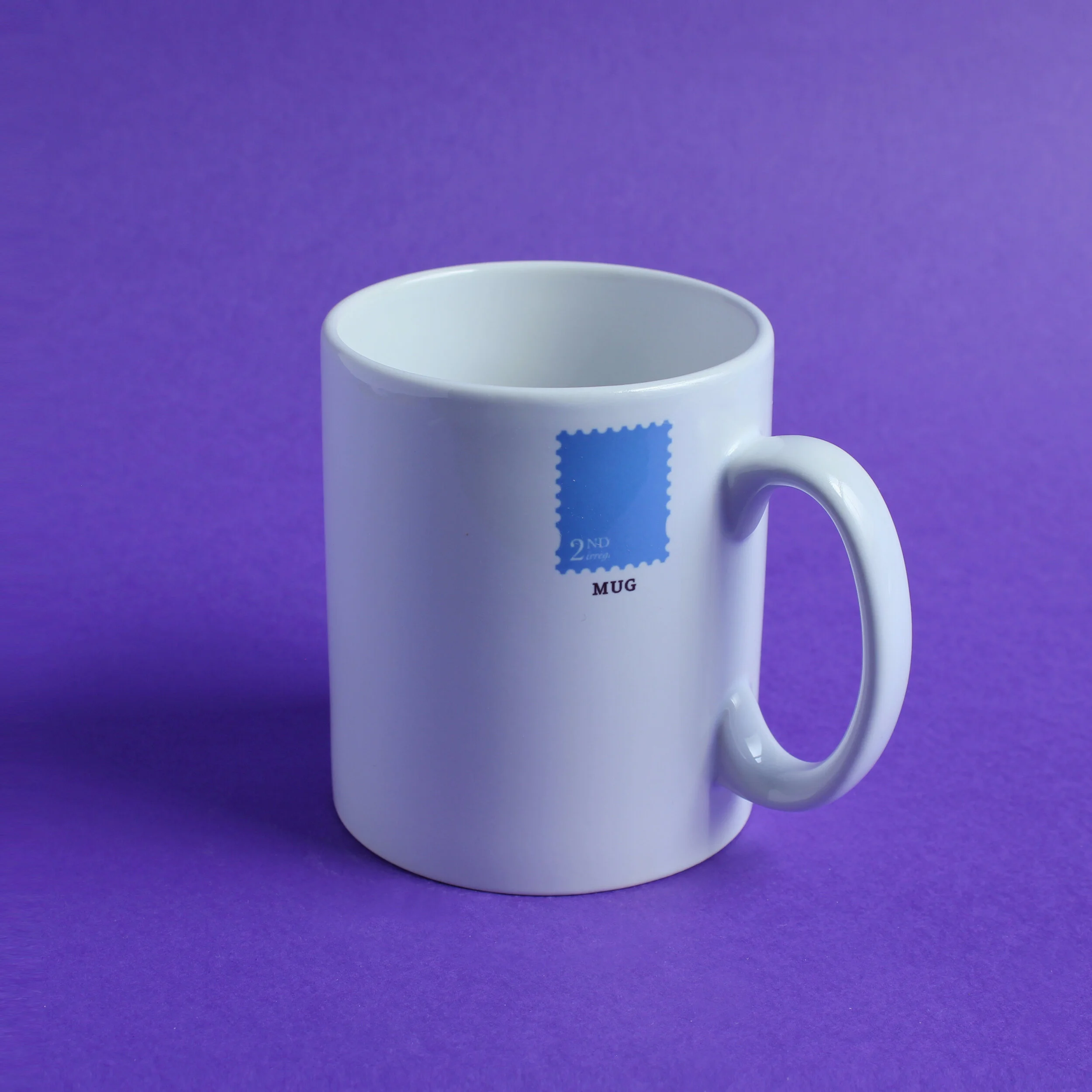

A 10oz white ceramic mug, emblazoned with a little story (about a mug, naturally) and some tasteful Second Class Irregular branding.
Dishwasher & microwave safe.
Overview
A story about a mug, on a mug.
Background
Sometimes you redefine the interplay between form and content… and sometimes you just put a story on a mug. No shame in the latter. I made this really to entertain myself, but it’s as easy to offer it for sale as well. Buy one if you like mugs (and who doesn’t?).
Primates
A set of two backpack-like volumes about a pair of animals sharing their habitat.
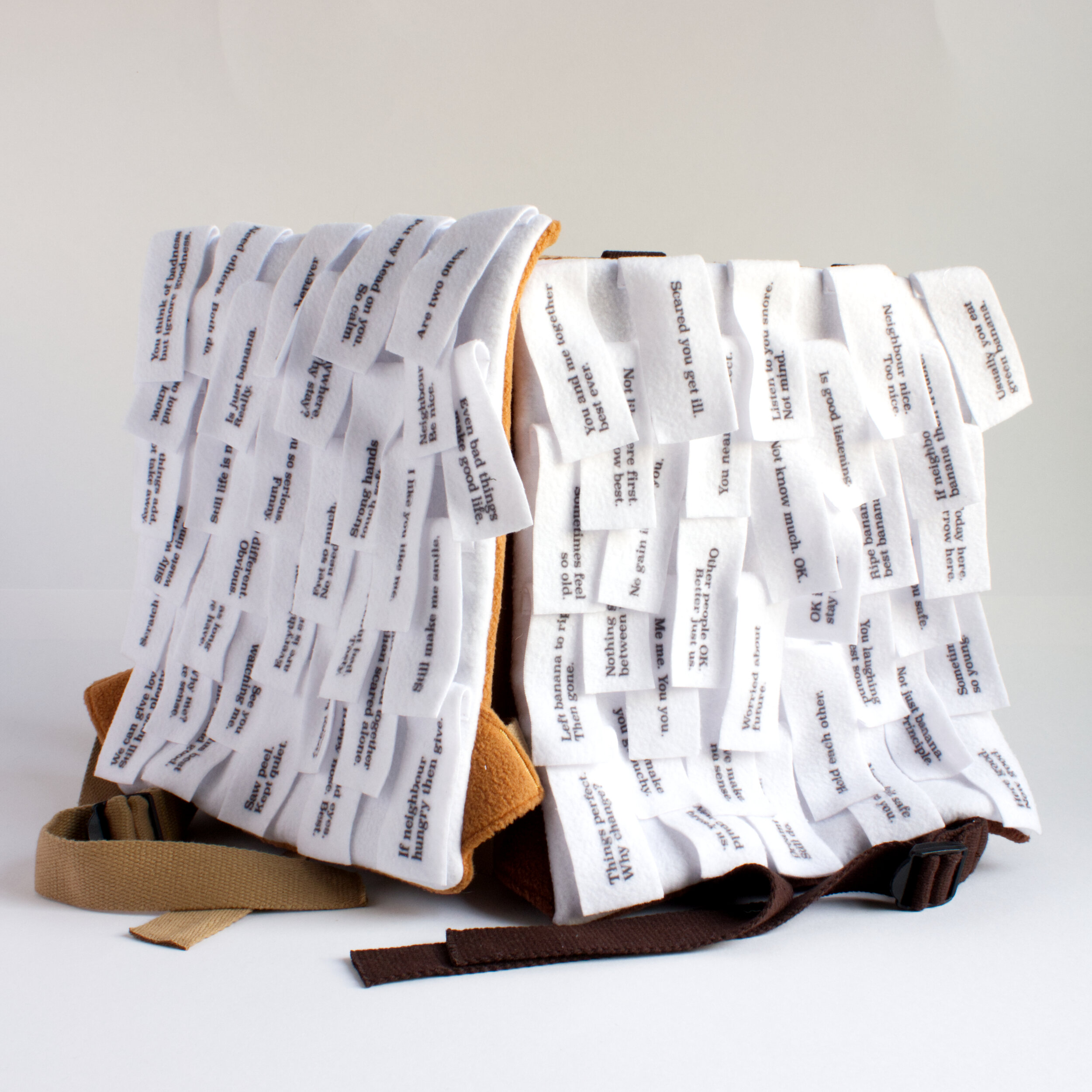
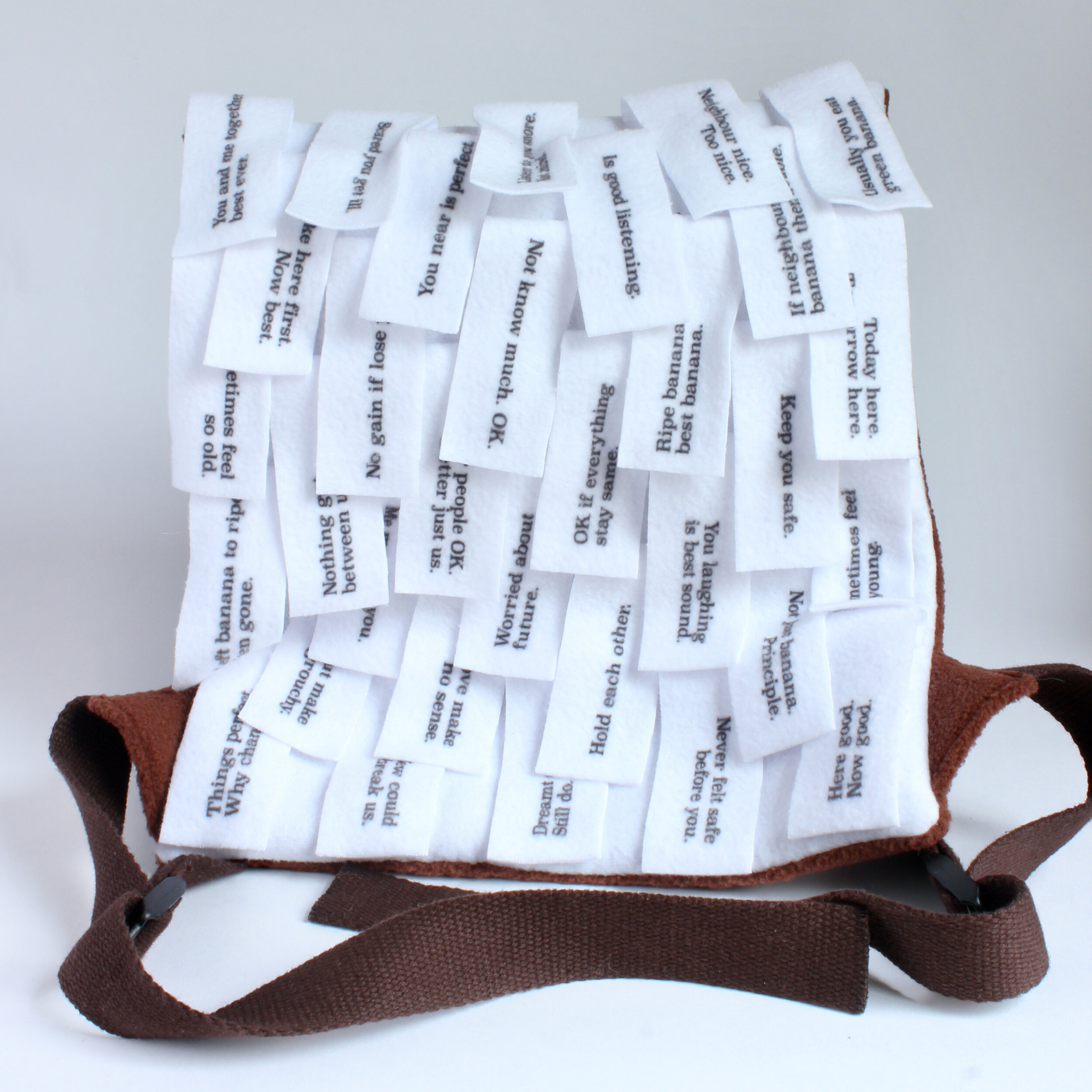
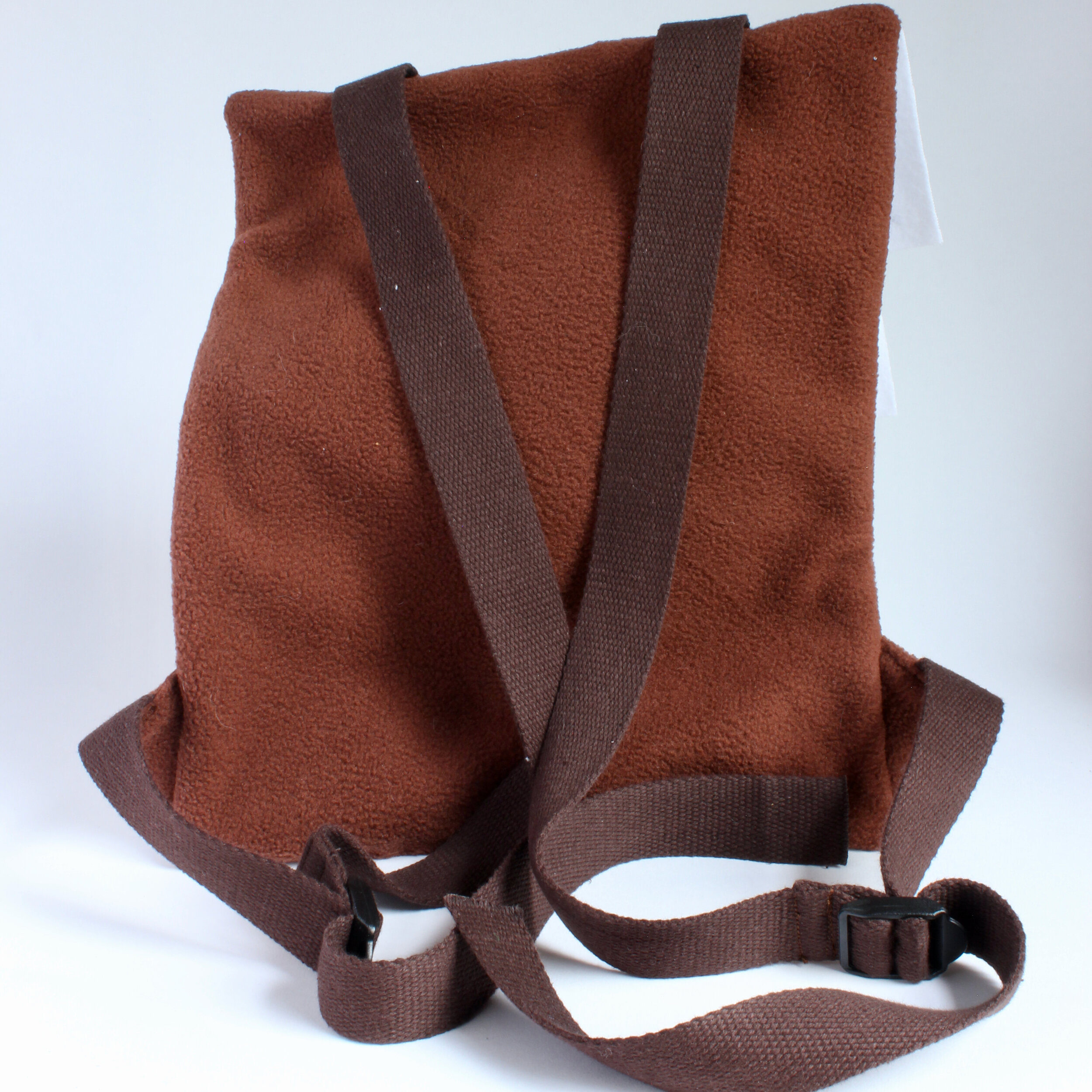
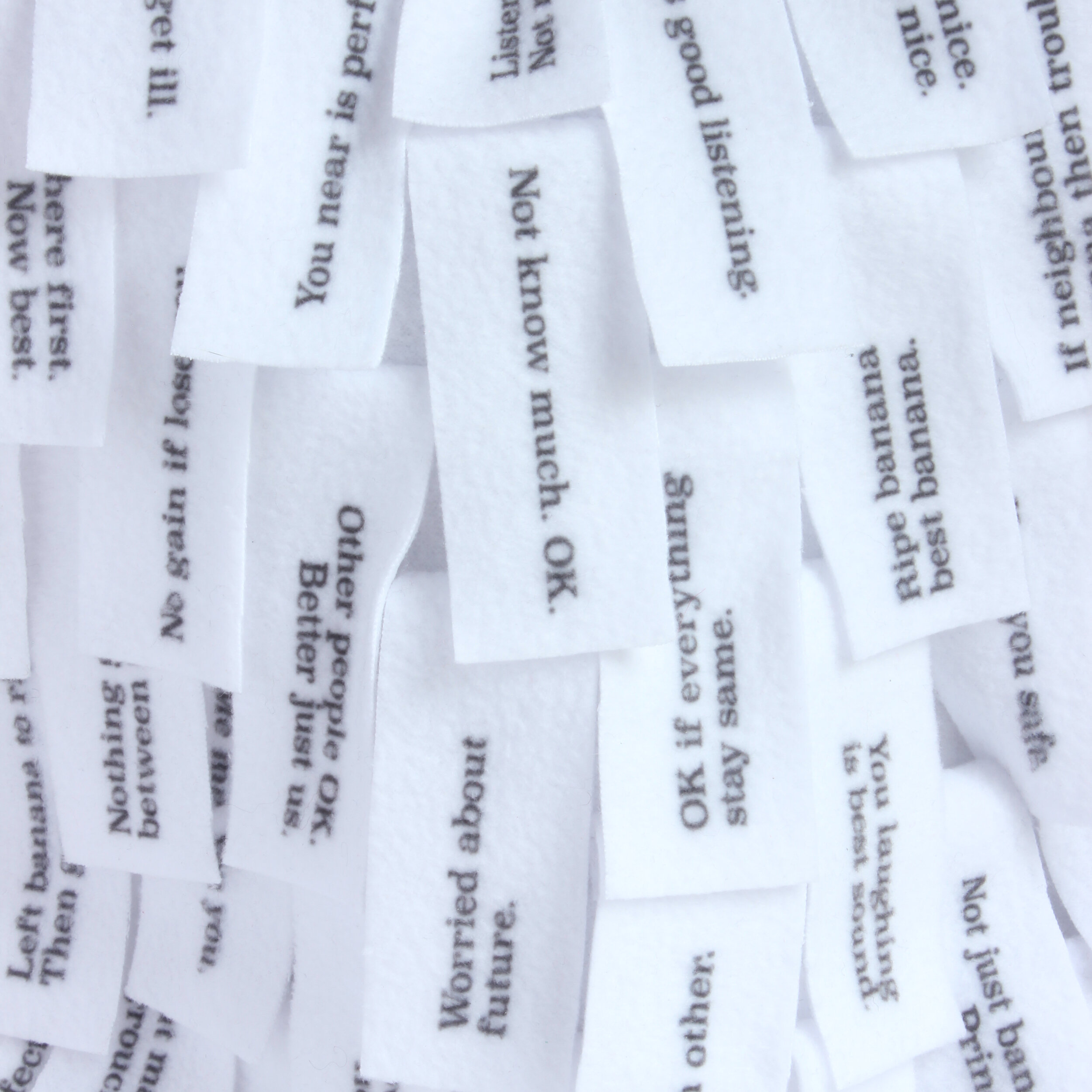
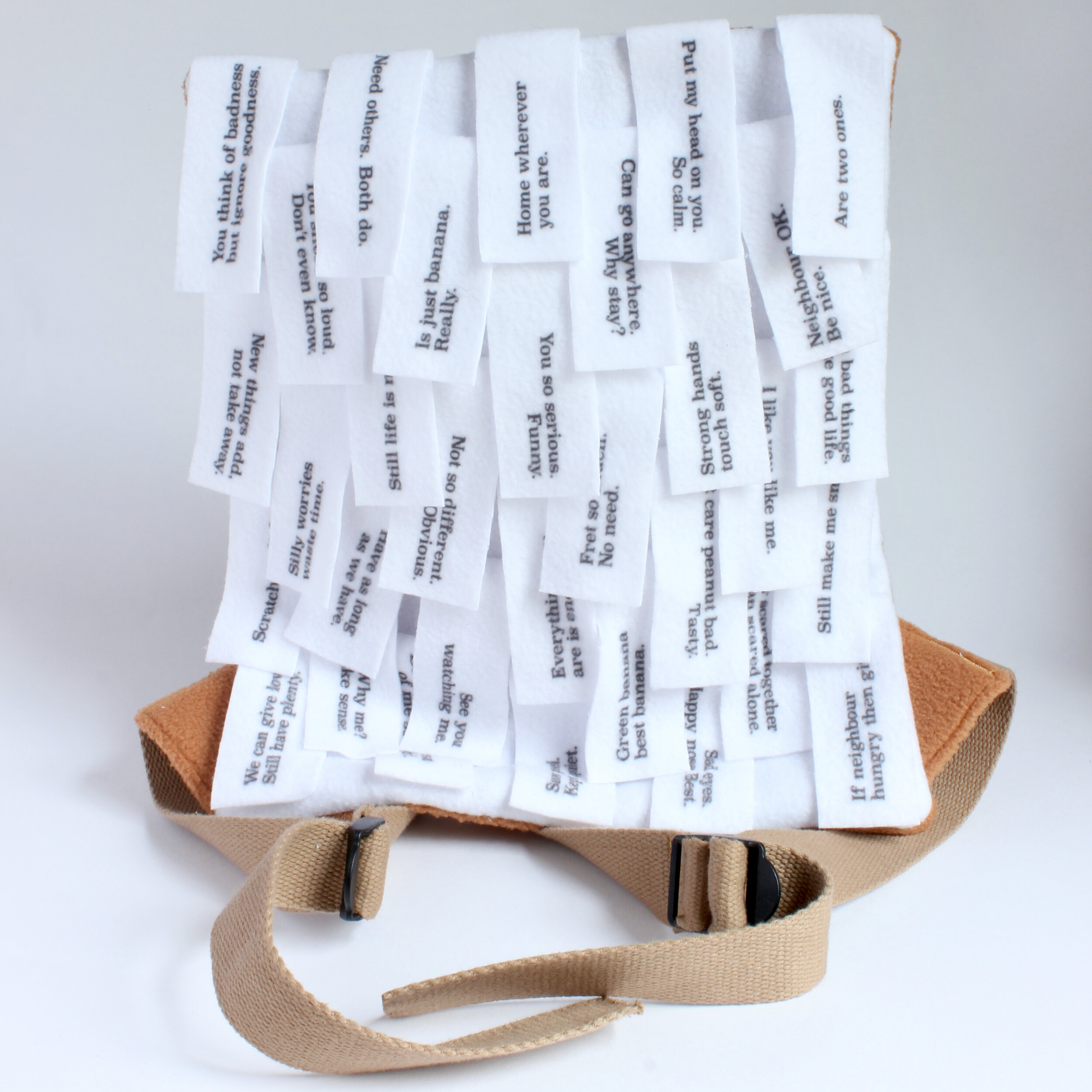
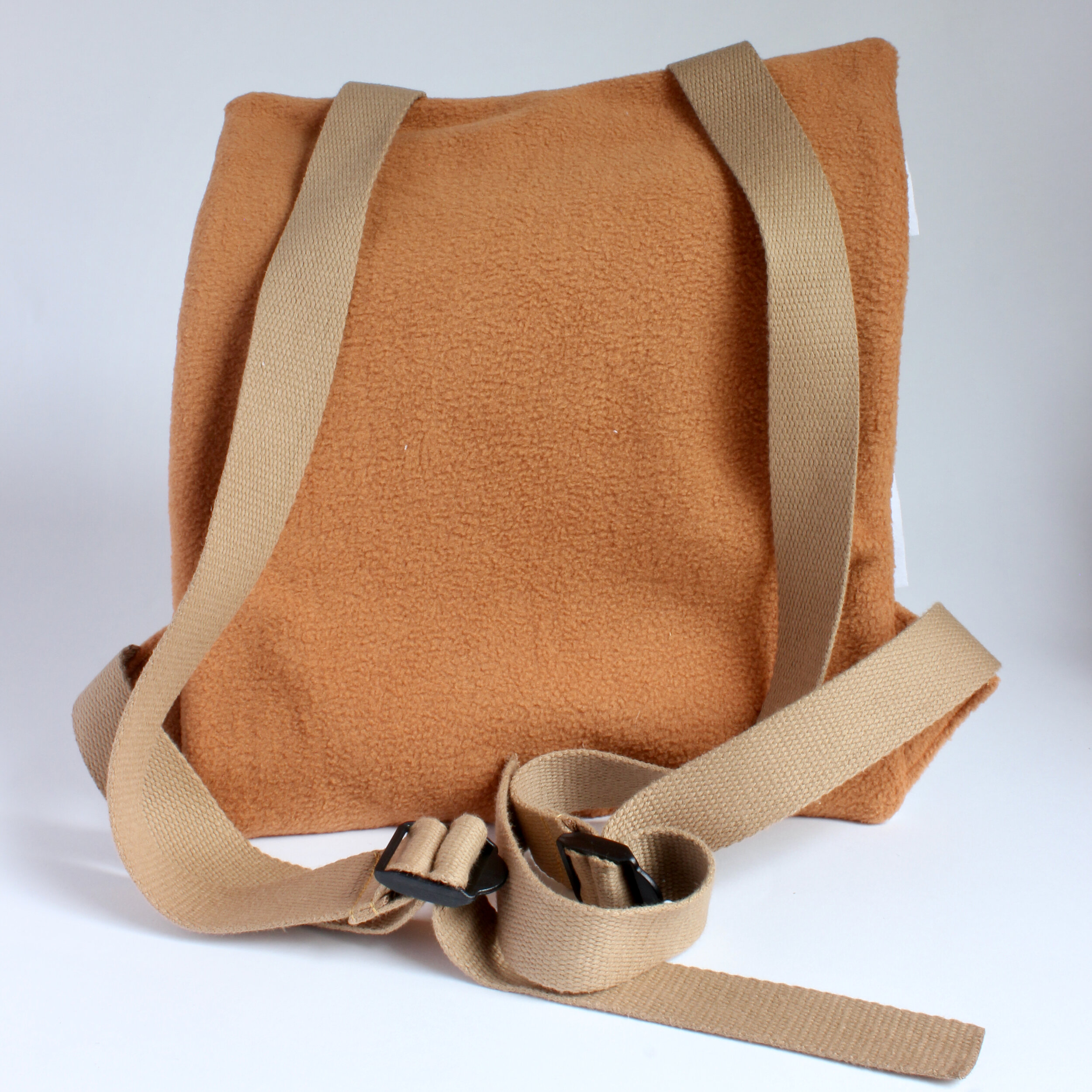
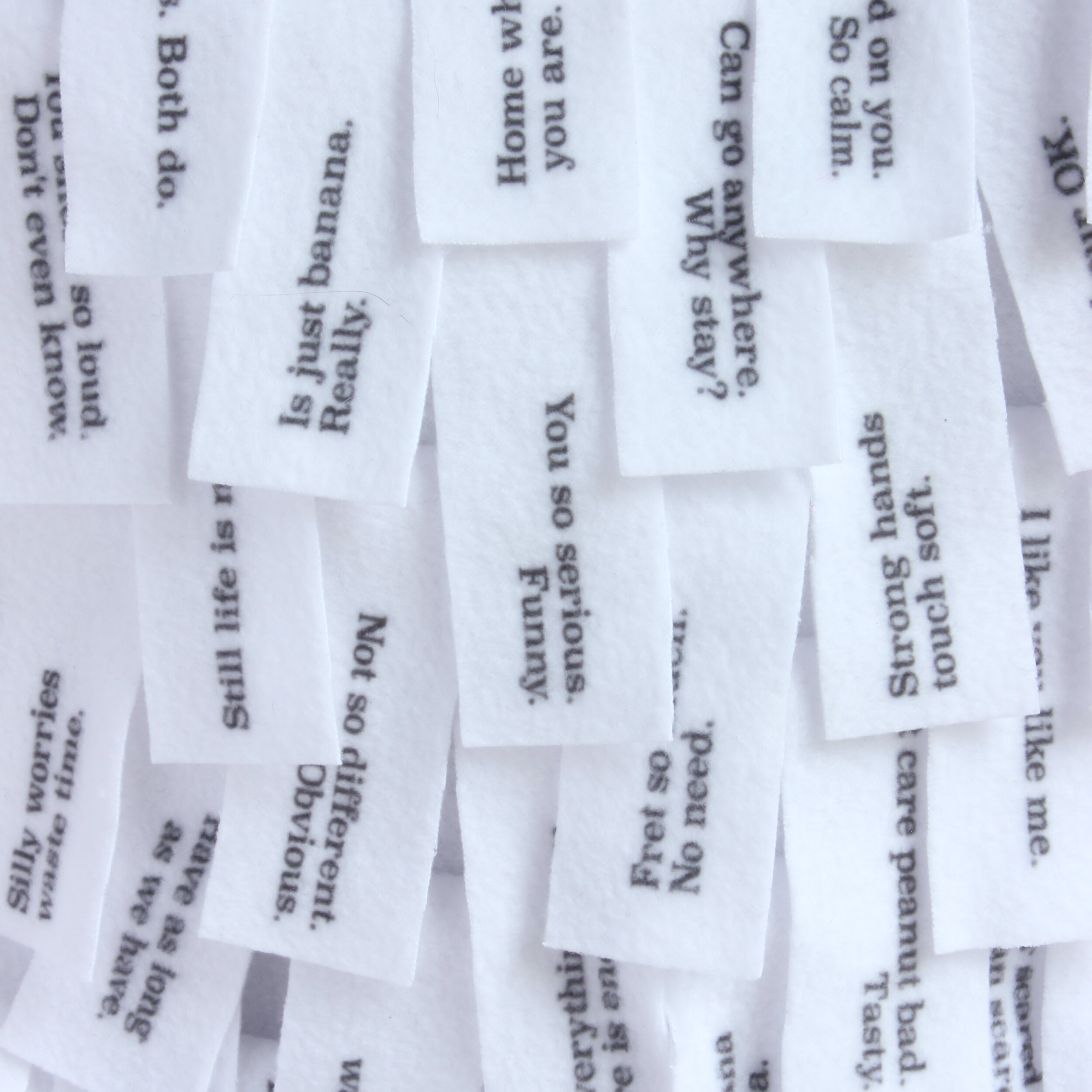
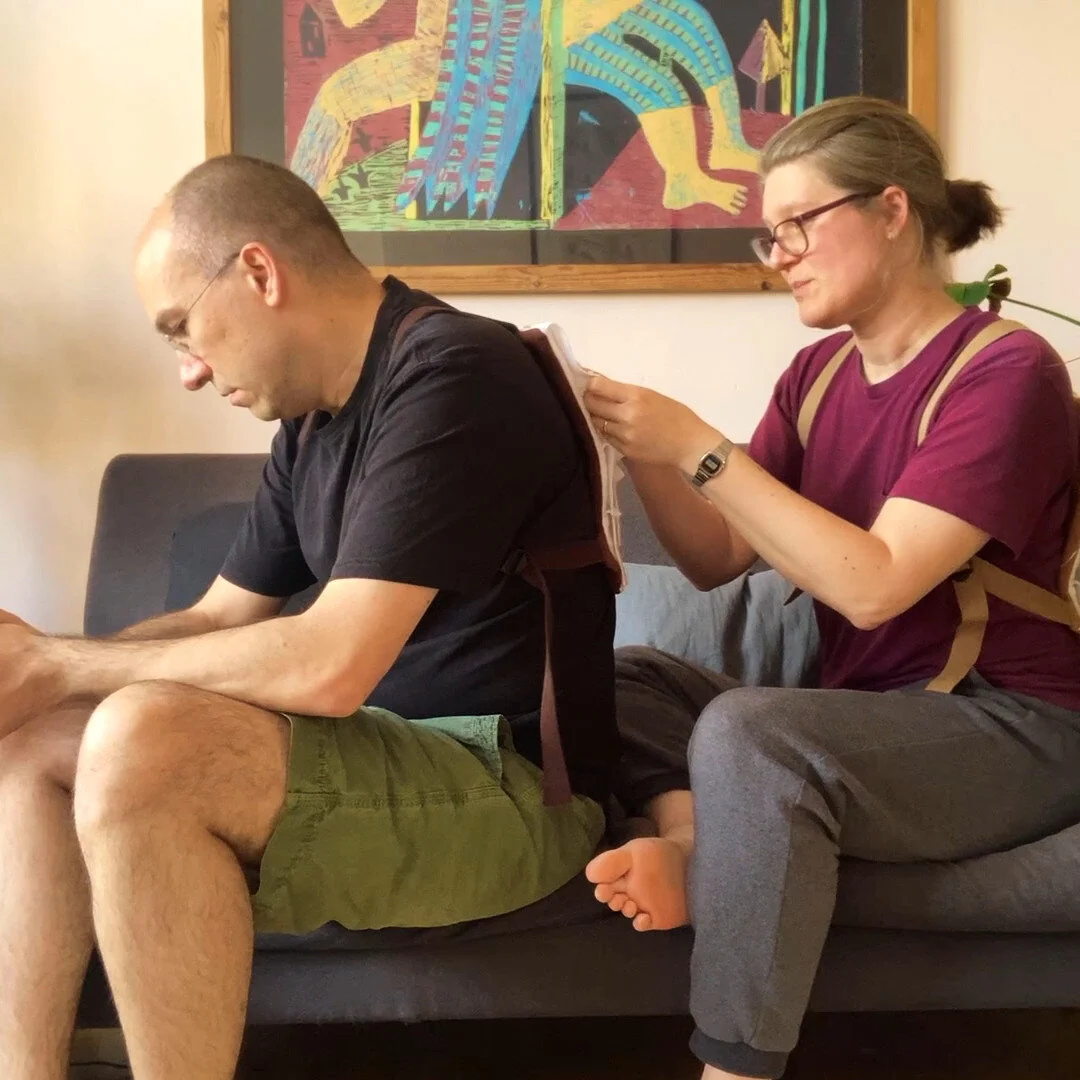
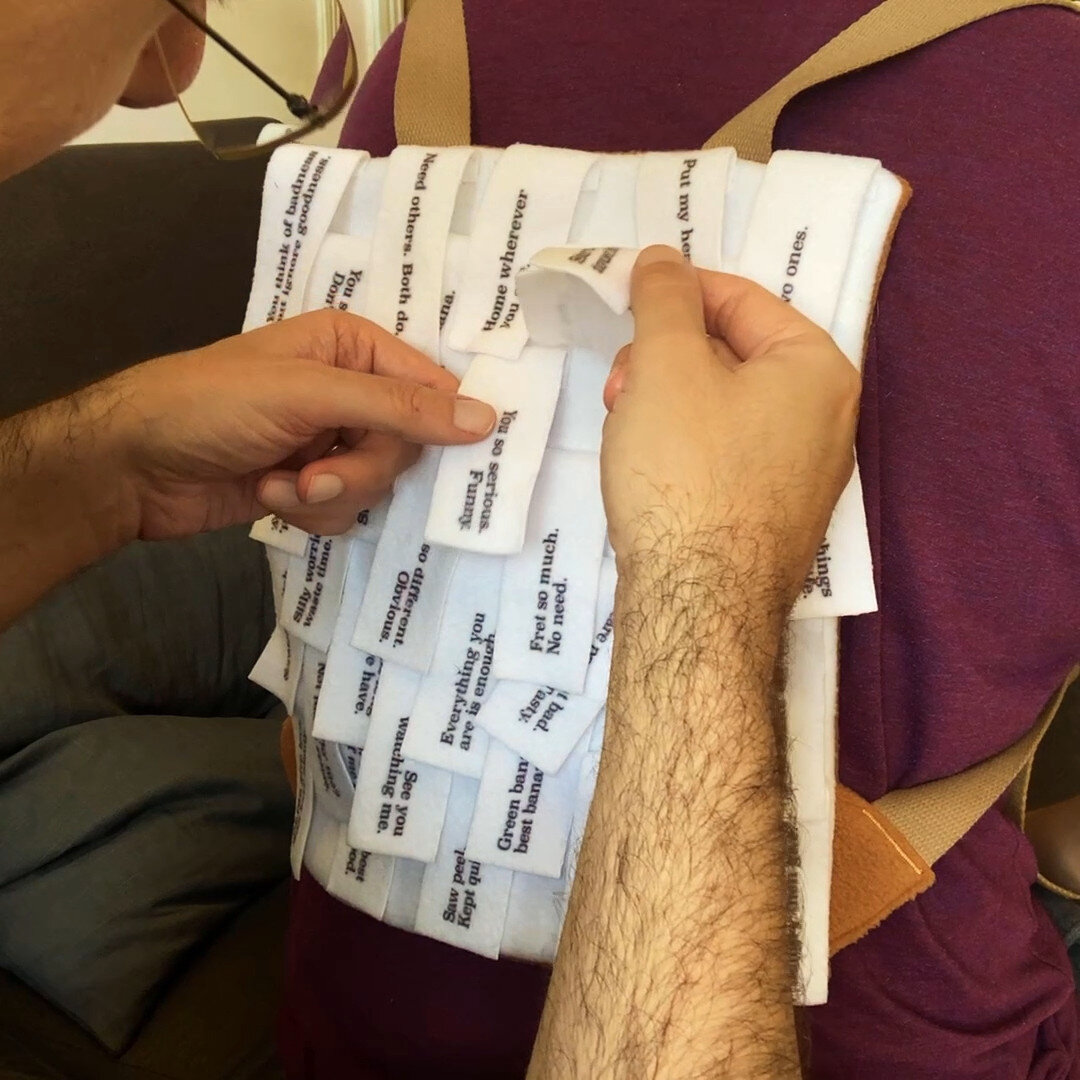

Set of two back-pack like volumes, made of fleece. It is designed for two people to read aloud to one another. It tells the story of two animals sharing a habitat.
Click here for more information about the book and how it was made.
Printed fleece and fabric rucksacks, two pieces
Overview
Primates is a set of two volumes, intended to created a shared reading experience. The pieces are worn on the readers' backs, meaning each has to read to the other. The text is a fragmented narrative in two halves, from two perspectives, about the shared lives of the two protagonists and their differing perspectives thereof. The text is printed on fleecy fabric and the tactile experience of stroking, smoothing and preening the material is an inherent part of the book. This sensuous element, combined with the suggested position of the readers, creates a sense of closeness, care and intimacy.
Background
For a while now I've been wanting to do something that allowed the reader to get more hands on and really dig in to a text. I experimented with a few things, but these early prototypes were unsatisfying, as I didn't really have understanding of what I could and couldn’t do.
Two courses helped bring this project in to focus. The first was a five-week paper folding and pleating course at the Working Men's College, taught by Thomas Prendeville. This gave me a better understanding of what was possible and also deepened my appreciation for the hands-on feel of working with paper and card.
The second was Artists Books - Theory and Methods by Ben Denzer, taught online from the Center for Book Arts in Brooklyn, NY. In just two short sessions, Ben introduced the wide world of artist's books and explained a lot of the theory and practice involved in making them. The first week was this overview and we were briefed to come up with our own artist's book for the next session.
The vague notions of folds and tactility combined with the living situation we were experiencing during Coronavirus lockdown. My partner and I get on well for the most part, but each of us was the only person the other saw for several months at a time. Being in such close quarters for so long requires patience and kindness to be active practices.
The image of apes grooming each other struck me as an intimate act of caring. Reading books is usually a solitary act and adults seldom get the opportunity to read aloud to one another. I wanted to explore the idea of reading as a shared experience. I sketched out a rough idea of two backpacks with strands of words on them that each person would have to untangle and read to the other.


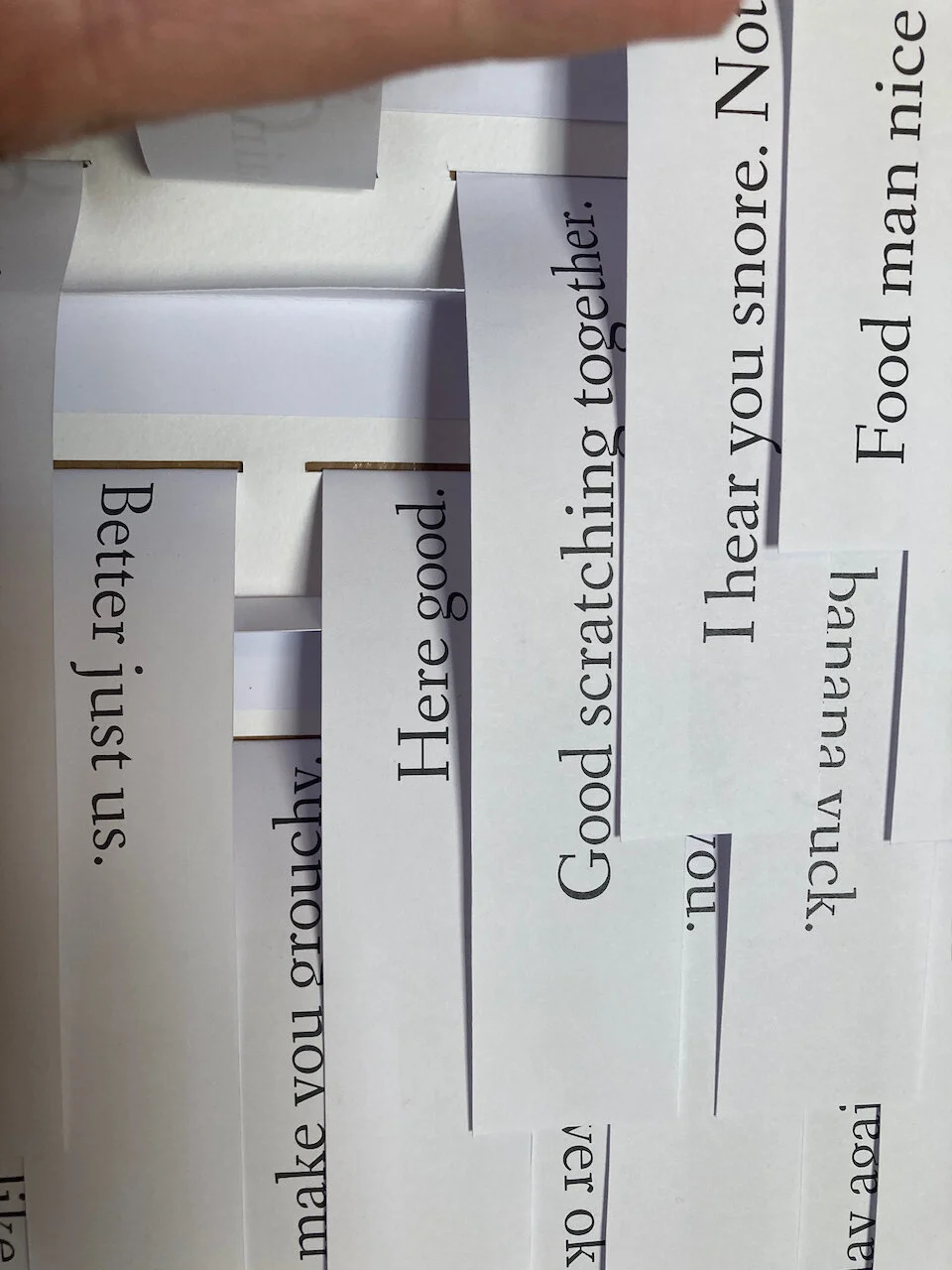

The first prototype took the entire week to make. While I had the physical form very much in my head, trying to find the right tone for the actual words was difficult. I knew that the writing would be piecemeal, that a reader would not necessarily read things in any particular order, or might skip some. This meant short sentences and I had a lot of difficulty making it feel genuine without it being pretentious and poetic. In the end, form and content combined and I turned the text into a simplified ape-speak that could still be read by humans. (I also added in an unnecessary amount of references to bananas.)

Test printing with felt and thermal transfer sheets.
Having made the prototype from paper and card, I looked into fabric printing options. T-shirt transfer sheets had a weird film on them and washproof markers were too fuzzy to read at the size I wanted. In the end I went with digital printing through a company called Contrado, who have a wide range of fabrics. After running through samples, I settled on polar fleece because it’s furry, feels nice and doesn’t fray.
Octavia was able to cut and assemble the printed pieces into these two wearable volumes.
Oubliette
A free standing story about imprisonment, written in reverse text and read with a dental mirror.
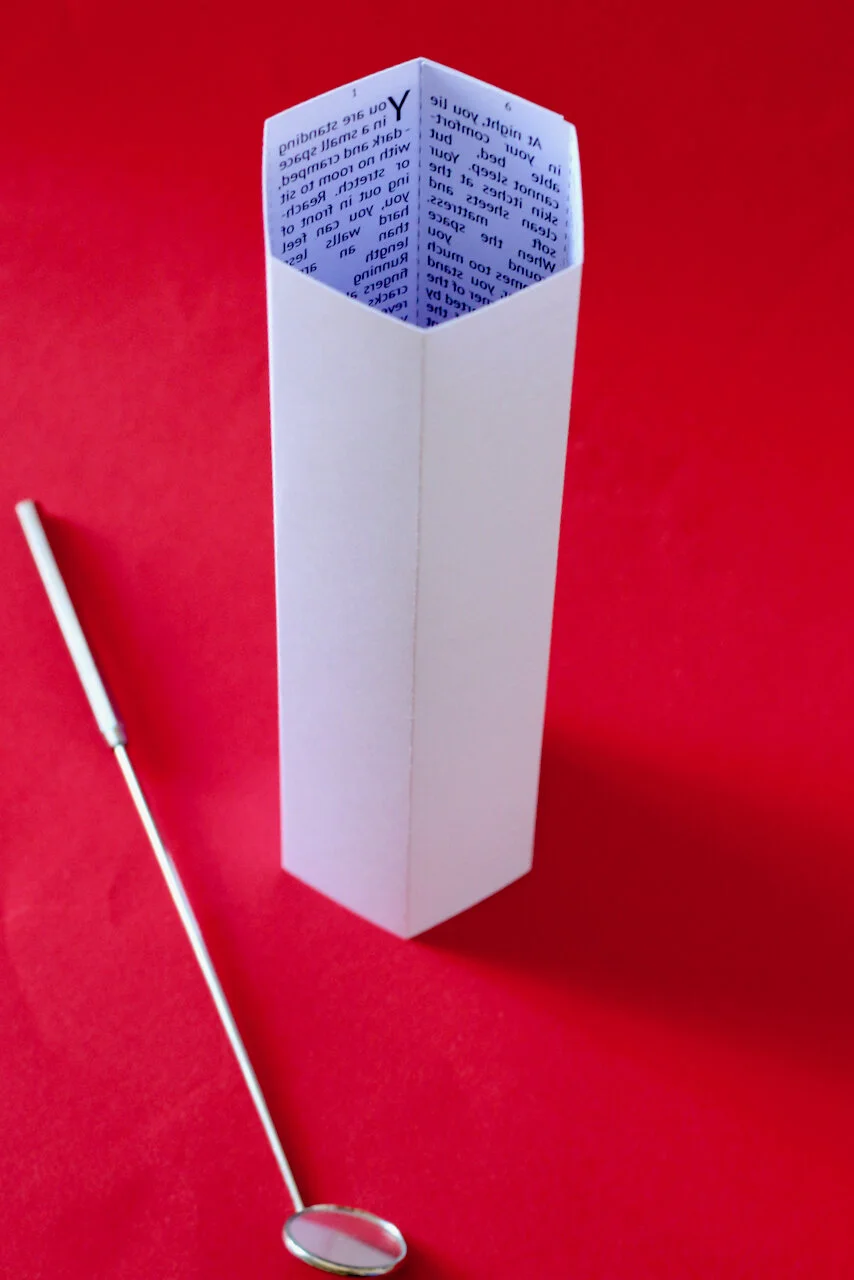
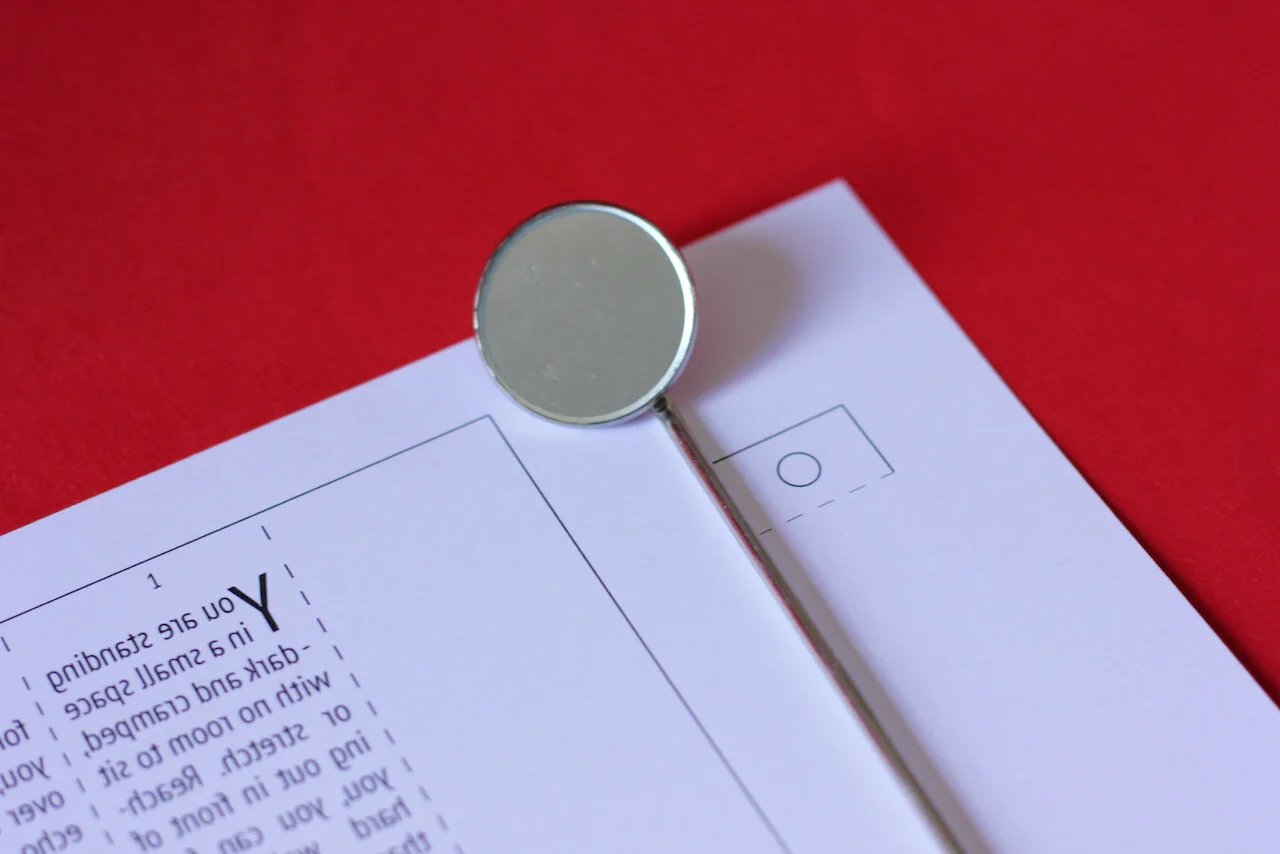
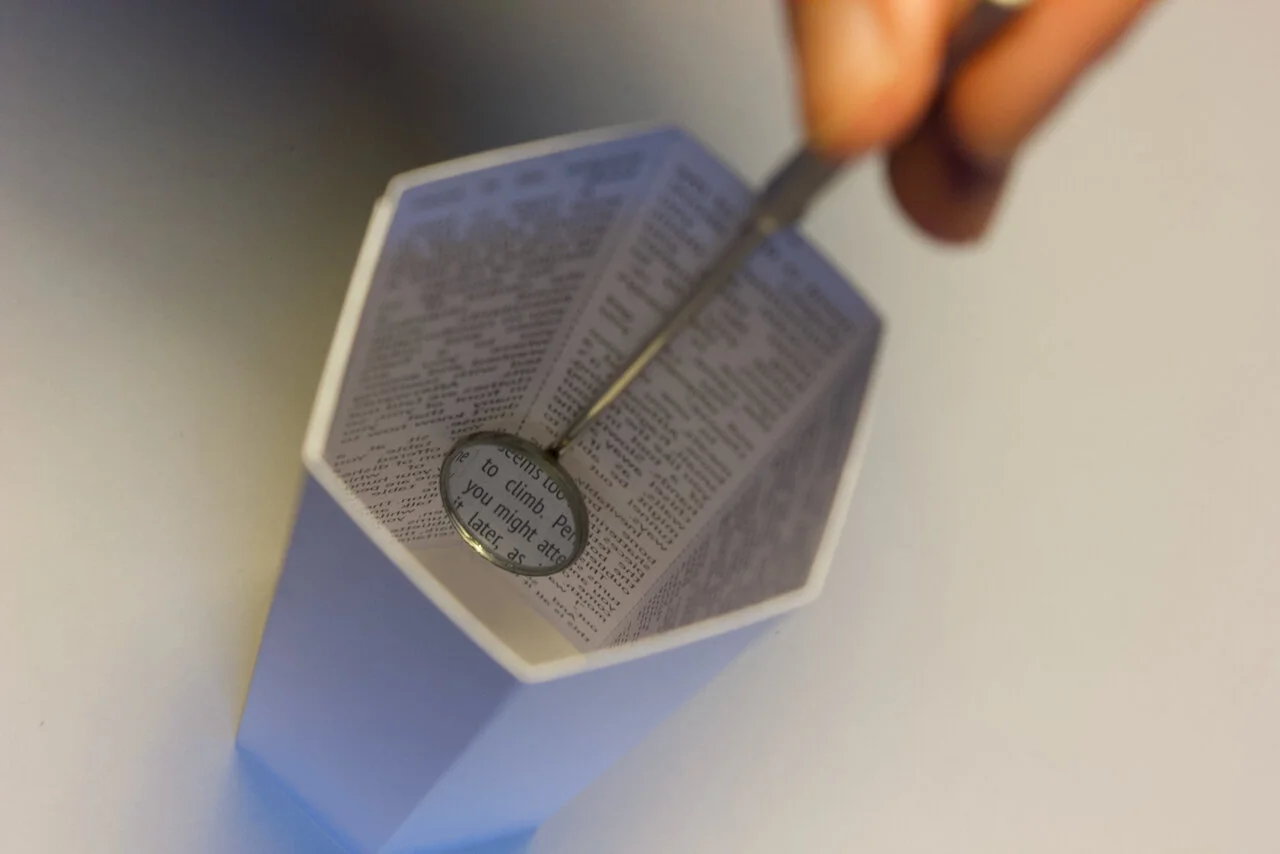
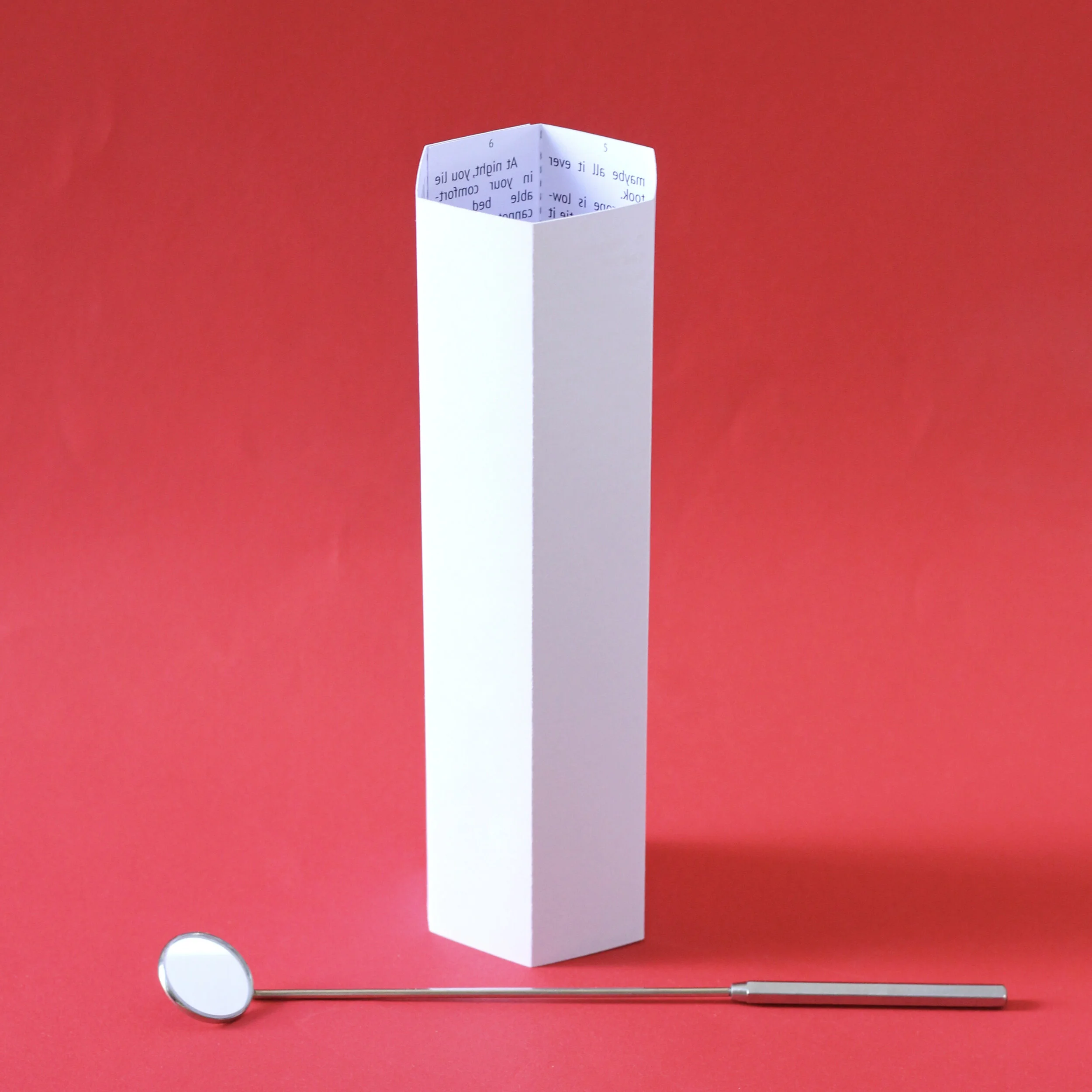
A free-standing short story about imprisonment, printed in reverse and read with a dental mirror.
This edition is pre-printed, scored and includes a professional-quality larangeyal mirror. Simple assembly required.
B&W, card
Overview
Oubliette is a story written on the walls of a free-standing vertical structure. The text is printed in reverse and must be read with a dental mirror.
Background
The first draft of Oubliette was written in 2020 as a short story exploring themes of constraint and freedom. The short (<1000 word) piece is sort of timeless and could be anyone and anywhere at any time. The use of second person perspective (“You”) is meant to put the reader directly at the bottom of the oubliette and directly understand the desire to get out and then, later, why someone might want to go back.
As I was experimenting more and more with putting text in physical forms other than flat pages, it seemed obvious to put ‘Oubliette’ in an oubliette. As reading the bottom lines would be difficult with the naked eye, I decided to print the words reversed so that they could be read with a long dental mirror.
A real oubliette has rounded walls, but mine would use a hexagonal cylinder as it would be able to lay flat. Initially, I wanted Oubliette to appear to be a thin book that would open up to reveal a pop-up structure inside. The first prototype was made from corrugated card, with text pasted on as strips of copy paper.
This prototype was documented in a short video which was uploaded to Youtube.
The first version was way too big, however, as the stem of the dental mirror wasn’t long enough to reach the bottom of the chamber. This made the text in the bottom sections unreadable.
A second version, scaled down to roughly A4 landscape, was made with grey board and coloured paper. While semi-authentic in its representation of the stone walls, the colour made it all feel a bit chintzy. I also couldn’t solve the problem of how to integrate a floor and a grille over the top. Various methods were tried, but none of them worked very well. Having them flap around, not really fitting or attaching to anything, made me hate the whole piece.
Trying to set the text took a few different approaches. I had wanted the reader to have to move the mirror both up and down the chamber walls to read the text. This proved even more confusing and although I had written the text, laid it out and constructed the piece even I couldn’t follow it. As the circular head of the mirror is only 25mm in diameter, the text was typeset as thin columns, first as one word per line, with two columns per wall.
Nothing was working very well, so I took things back to basics. I reduced the text to one column per wall, setting it in a condensed typeface that allowed for more than one word per wall. I also removed the lid and floor appendages and set the structure in simple white card of sufficient weight to stand, but also light enough to run through a printer. This one-sheet card has lines for cutting and scoring, but is a simpler and more elegant version of what came before. While this was the right move, I do sort of miss the more convoluted version. I’m sure there will be other stupidly complicated pieces in the future.
Staircase
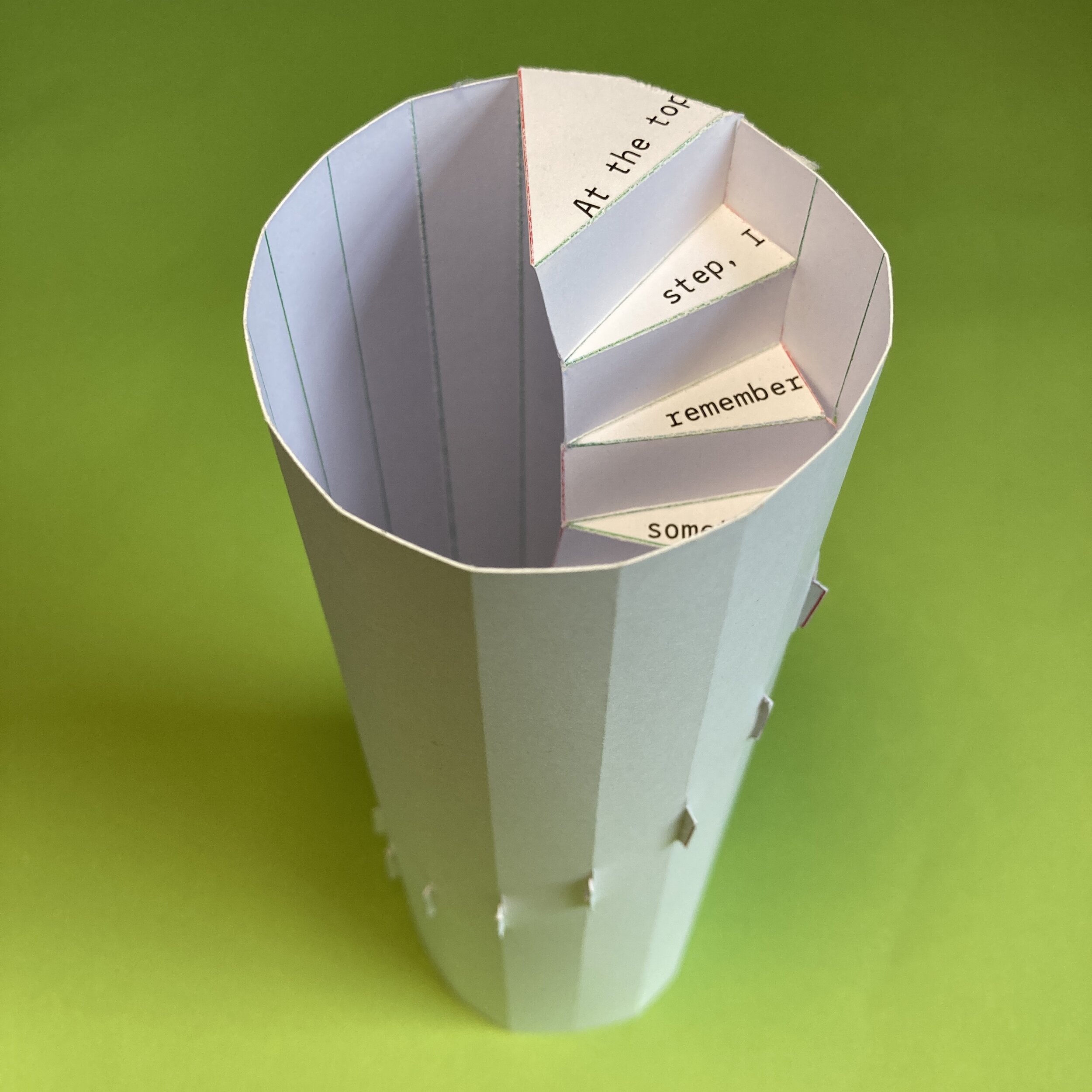
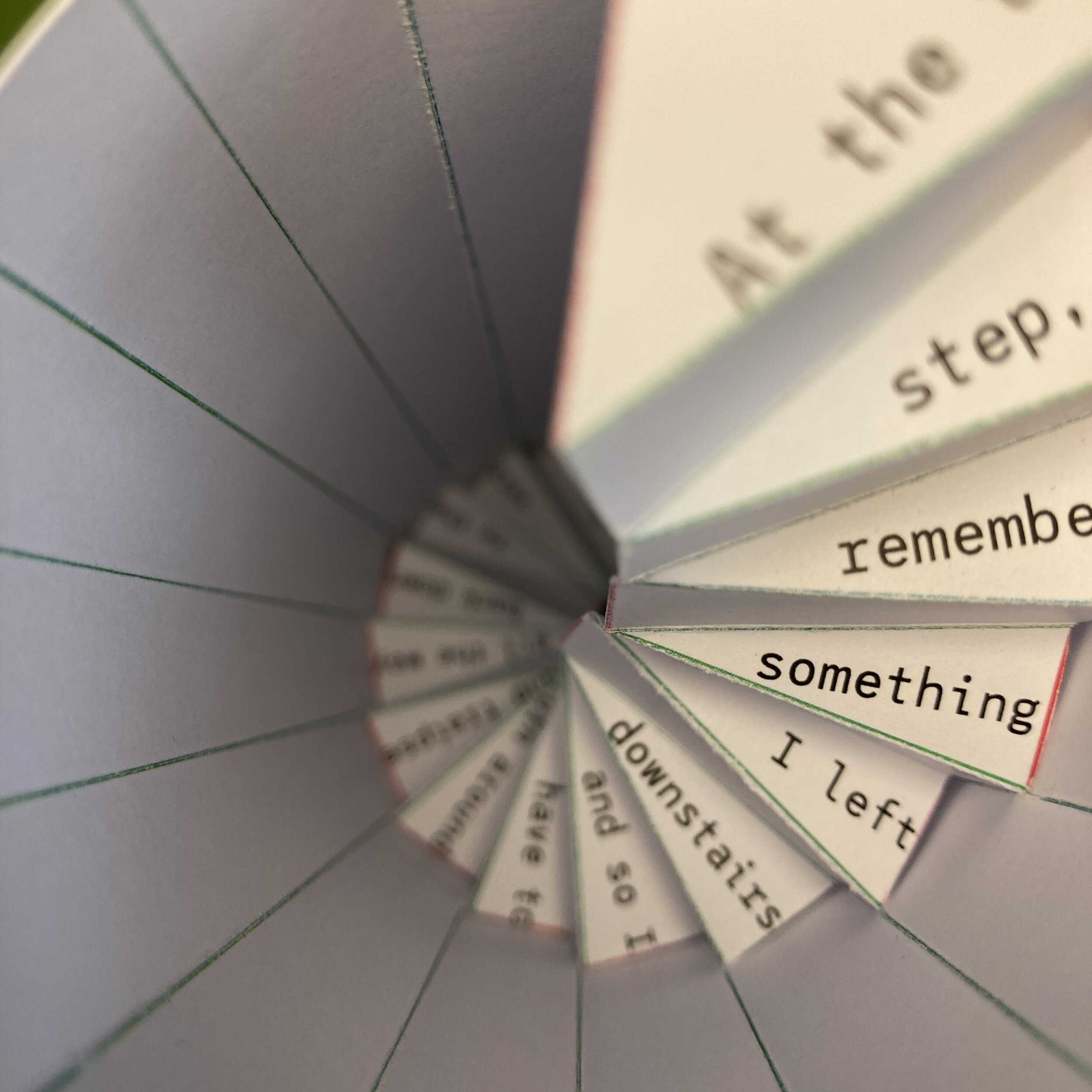
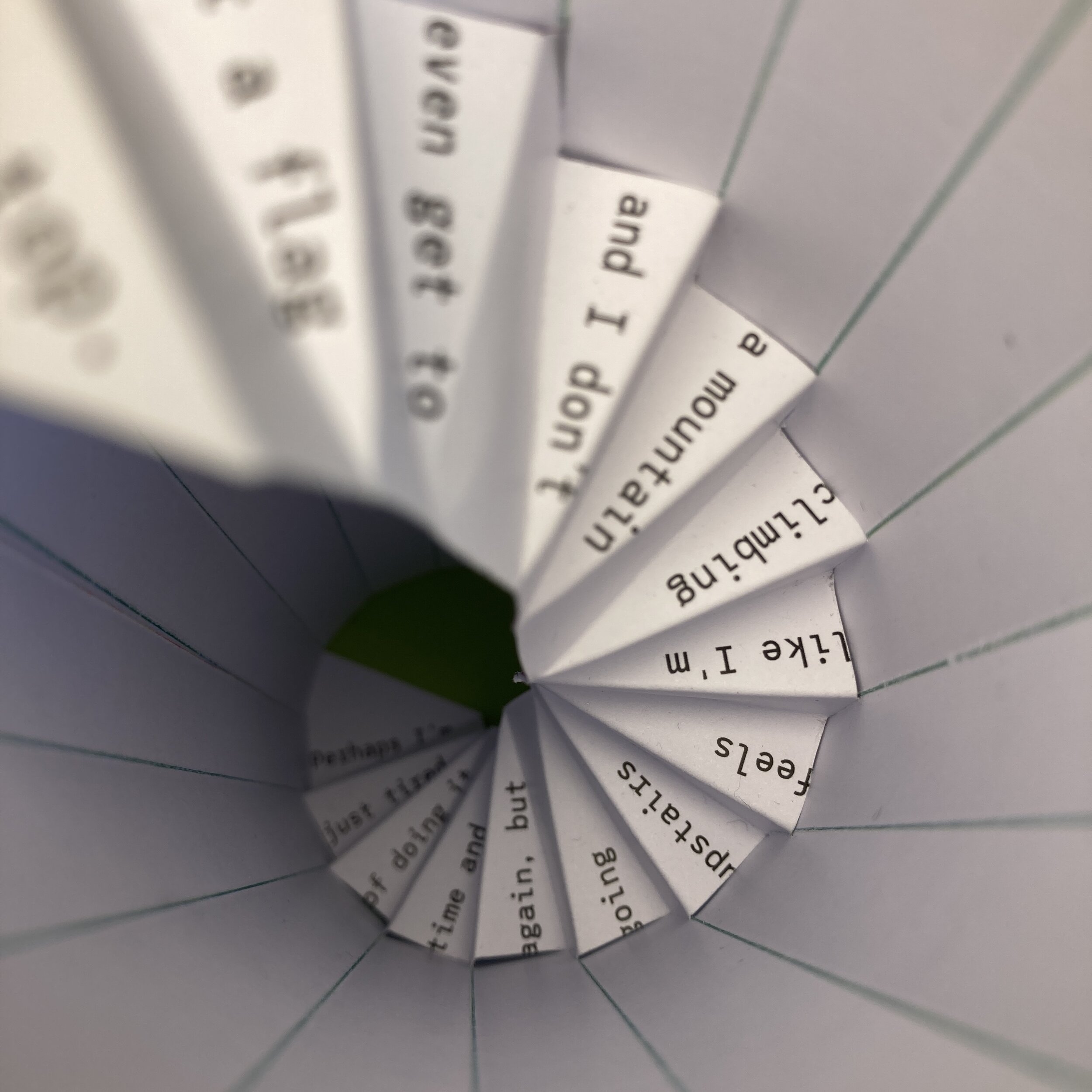
A story about going downstairs and back up again in an ever-descending/ascending spiral.
Cardboard, B&W
Overview
A story about going downstairs and back up again in an ever-descending/ascending spiral.
Background
Like a lot of people in the Coronavirus lockdowns, my usage of delivery services increased considerably. The distinct BEEP-boop of deliveries now provokes a Pavlovian response that sends me scurrying for my next treat. Our flat has a staircase down to the front door (although not a spiral one, sadly) and the process of hoofing down there to meet the postie has become all-too familiar.
It made me think about two-floor living. I grew up in maisonettes and the feeling of traversing the stairs, only to forget what you went up or down for is a very familiar one.
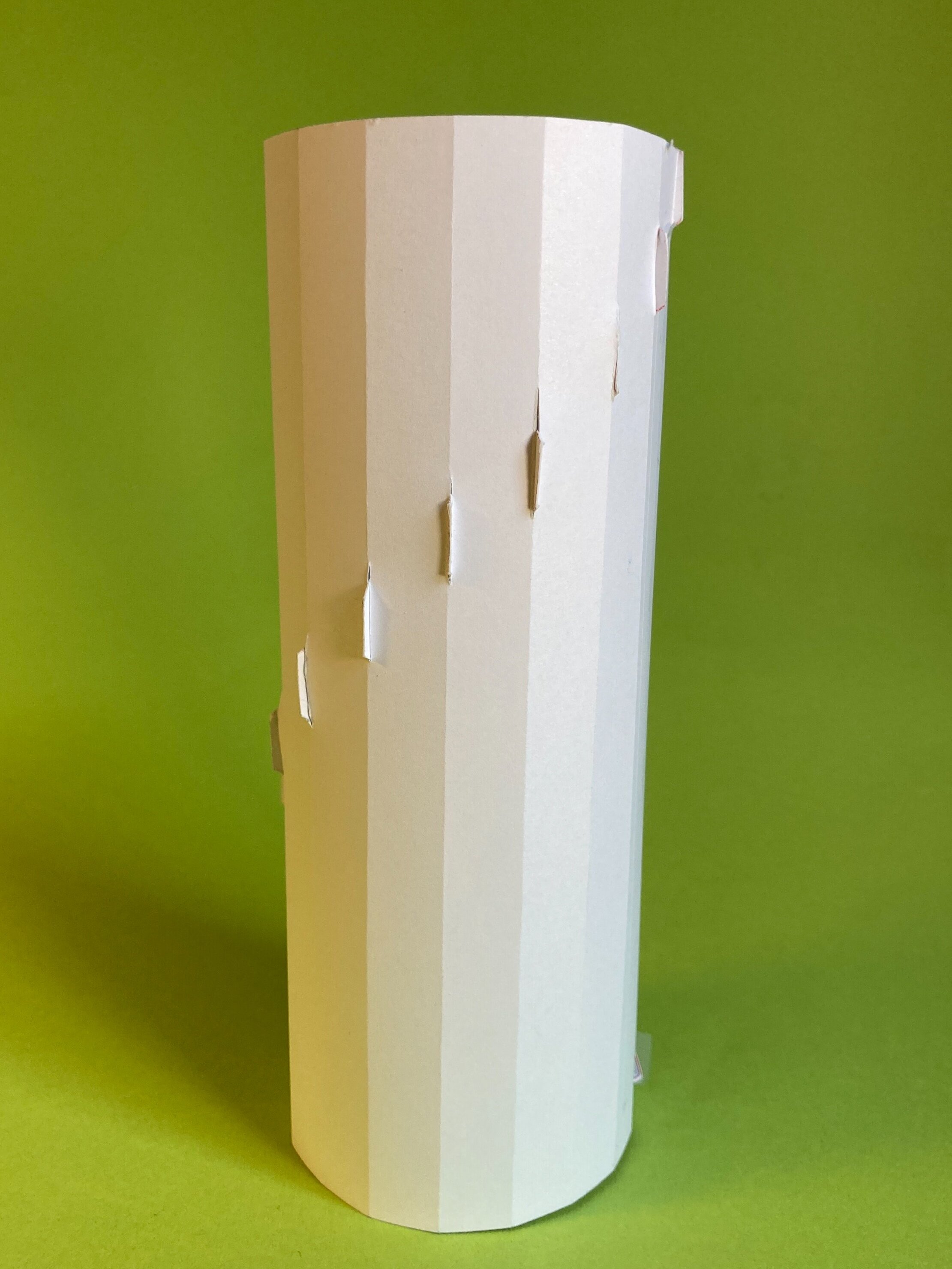
Building the structure was a mathematical challenge that was a bit beyond me. After several attempts to make the net by hand, I turned to Unfolder, a Mac app that transforms 3D models into 2D nets. I have dabbled with Blender and other 3D modelling programs for years now and although I wouldn’t call myself proficient in any way, they do come in handy sometimes. I managed to make a version of the staircase, unfolded it into a net and then added text manually.
Staircase is indicative of my increasing interest in looping narratives and stories contained in upright tubes.
Prismatics
A series of letters from a personality split by the colour spectrum.
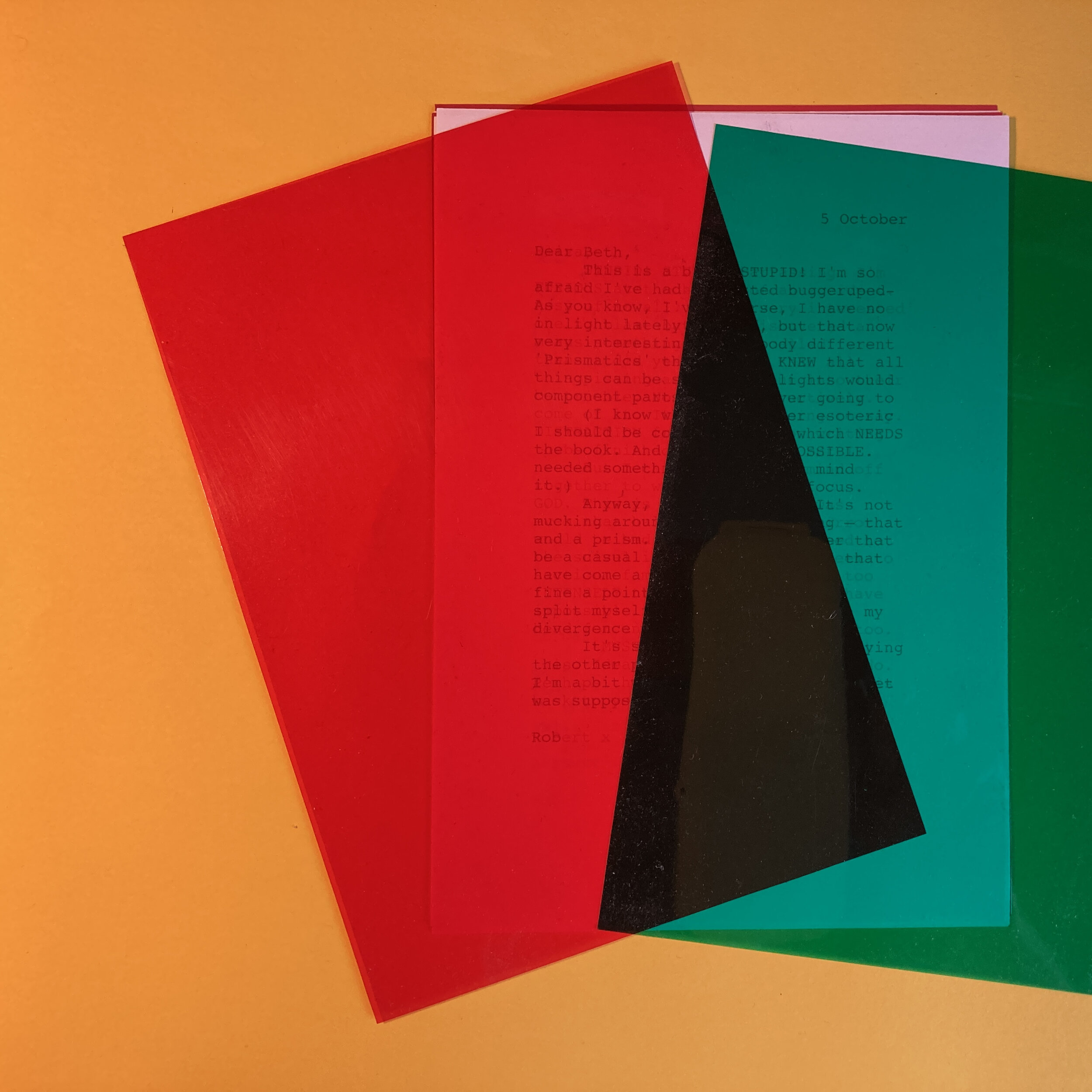
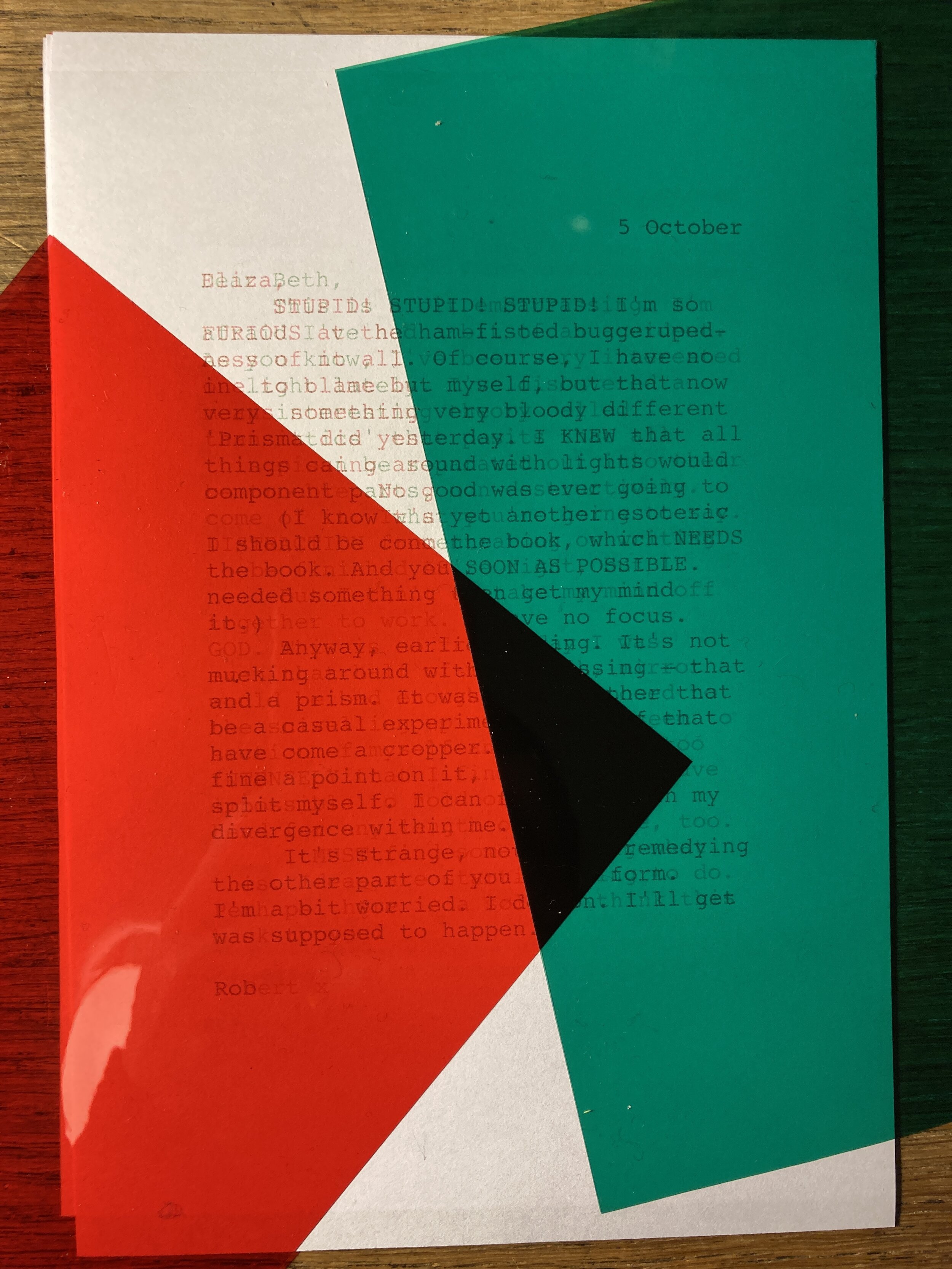
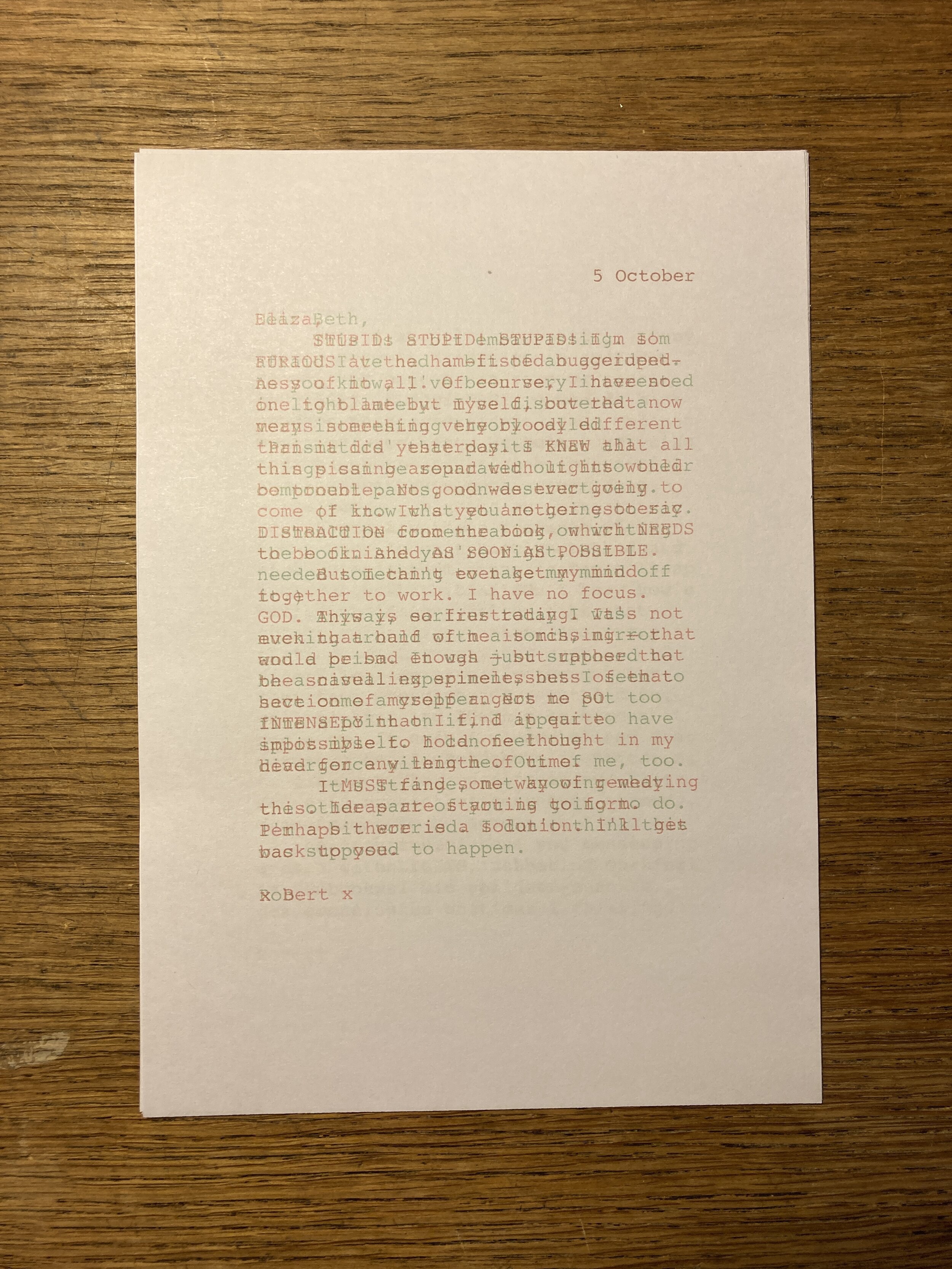
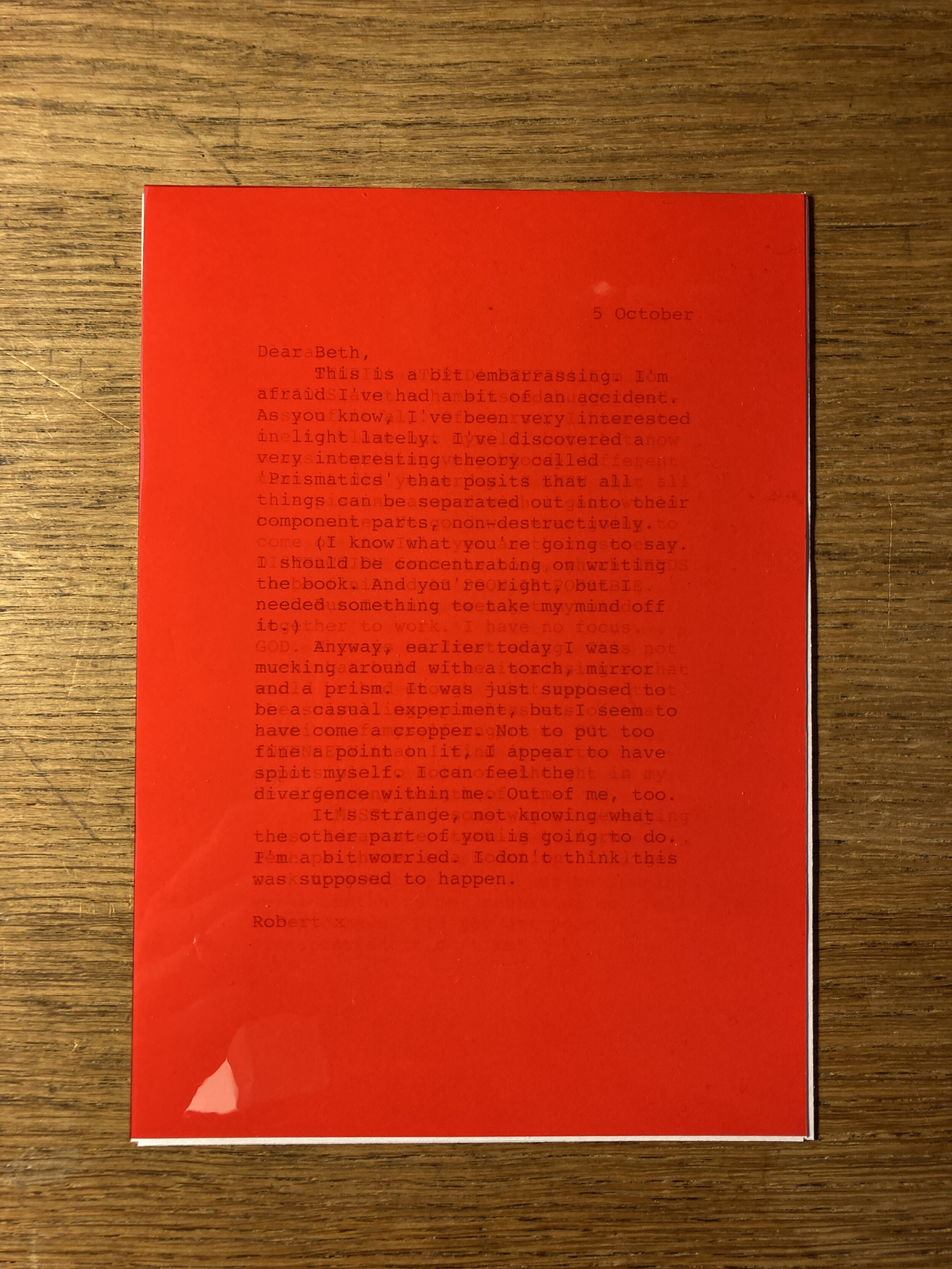
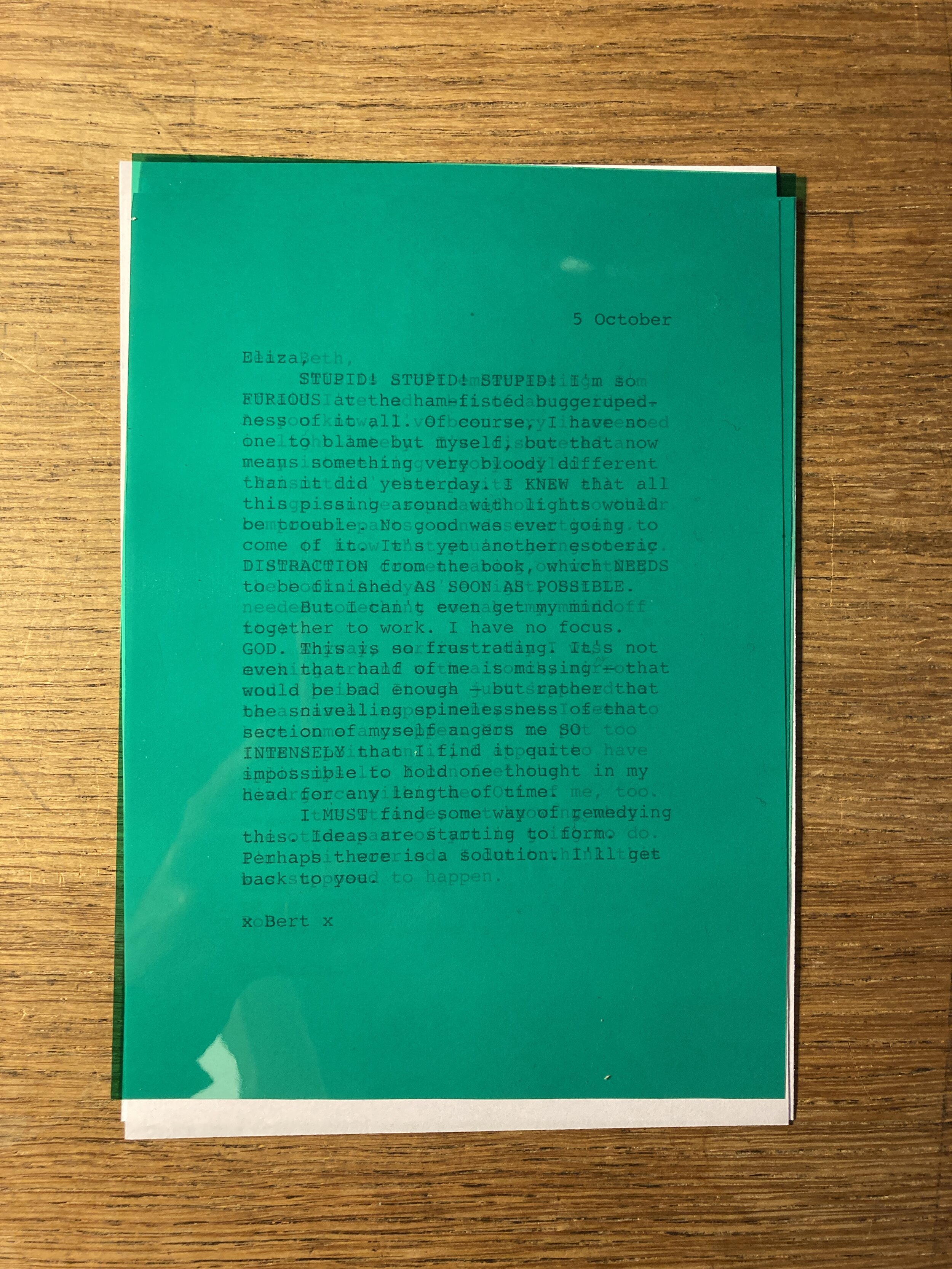
8pp, 2 colour printing, red + green coloured gels
Overview
Prismatics is an epistolary experiment. Eight letters, sent over the course of a few weeks, detail the splitting of one person into two and the conflict that brews between them. Each letter has two colour passes printed on the page, forming an unreadable jumble of letters. In order to decipher it the reader must use the enclosed coloured acetates, which filter out one of the two colours.
Background
This was not an easy piece to write. I knew what I wanted to do from a technical point of view - have two stories occupy the same space - but finding the appropriate story and tone took a while. A lot of my work is about finding the right combination of narrative and form. Often, I have one but not the other. The frustration in not being able to move forward found its way into the text - half of it, at least - and the clash between the two became the central tension running throughout the story.
GAG: Death Metal Stand-Up
Bad jokes + loud drums.
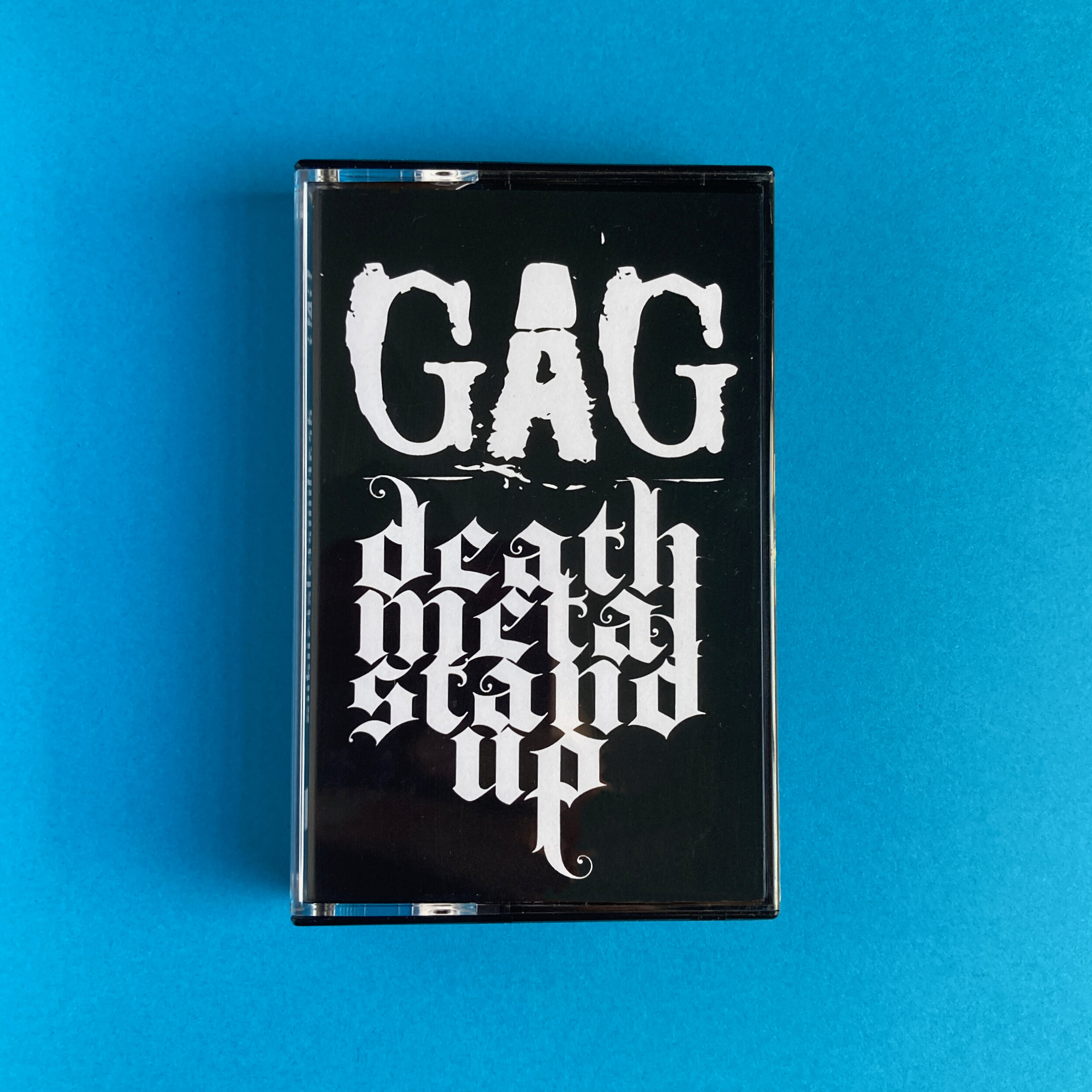
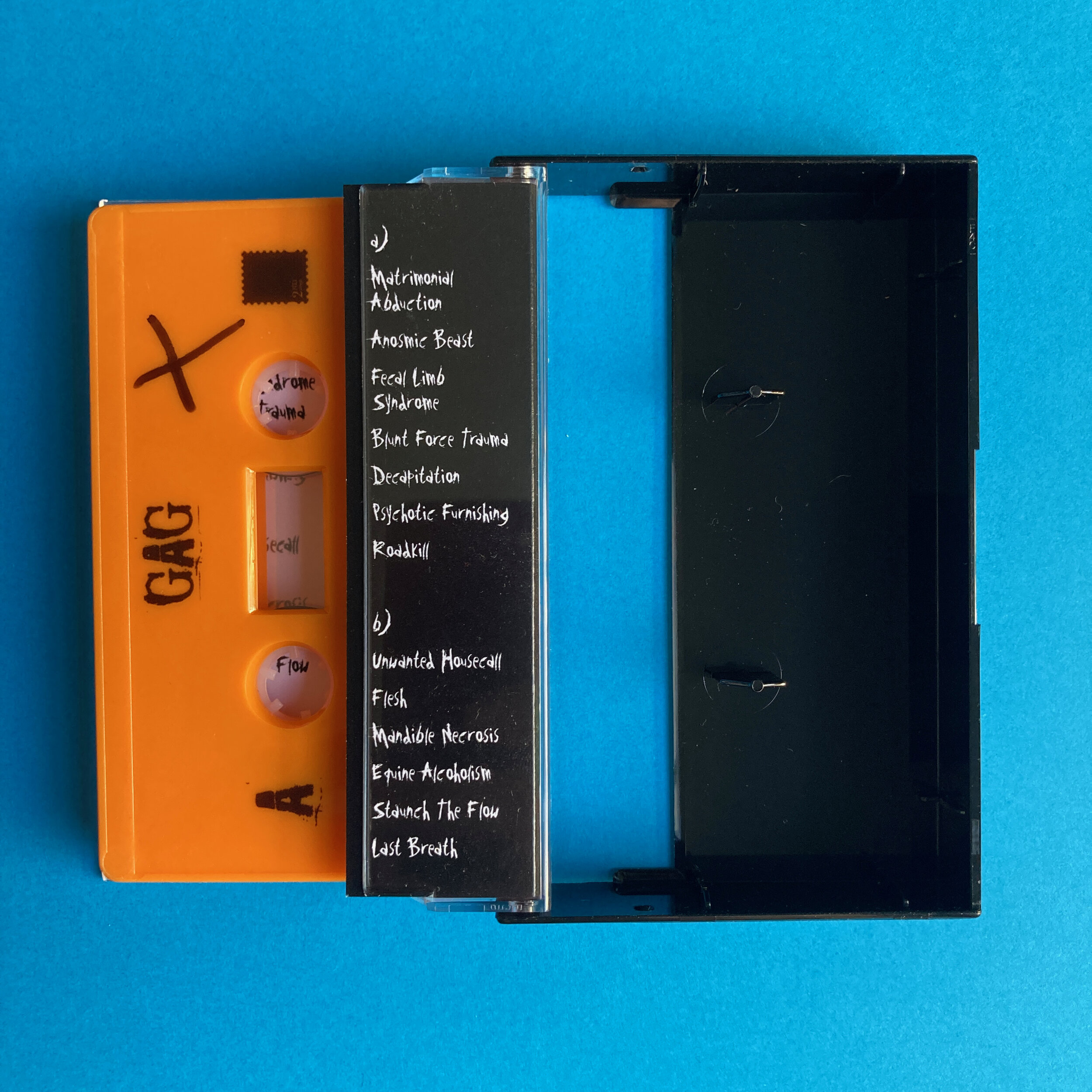
Cassette / digital download, 2 min
Overview
An album of one-liners growled over rapid-fire drums.
Background
‘deathmetalstandup’ is a rapid-fire barrage of crap jokes and thunderous drums, recorded badly and collected on an obsolete format.
Following in the grand tradition of ba-dum tish, each growled one-liner is followed by an elaborate percussive assault intended to disorient and abuse the listener.
Obviously, there’s only so much rocket fuel anyone can ingest in one sitting, so the tape is only one minute each side.
The digital download is provided as a courtesy to those listeners who don’t have a twenty year old tape player in their possession. The fools.
Tracklisting
Matrimonial Abduction
Anosmic Beast
Fecal Limb Syndrome
Blunt Force Trauma
Decapitation
Psychotic Furnishing
Roadkill
Unwanted Housecall
Flesh
Mandible Necrosis
Equine Alcoholism
Staunch The Flow
Last Breath
Equipment used
Shure SM57
Renoise
Abbey Road 60s Drums by Native Instruments
Holiday Snaps
36 colour snapshots of almost every holiday ever.


A ZIP full of memories. 36 JPEGs of a holiday you may or may not have taken.
36 photographic prints, colour, 6x4”
Description
36 colour prints of text describing typical holiday photographs.
Background
I didn’t take a camera on holiday with me this year, because I didn’t want to be thinking about taking pictures. When I came back, I produced this instead. Rather than try and give an account of my holiday, I wanted to evoke a sense of all holidays. In some senses, it’s really generic, but there’s also a specificity.
As an experiment, I’m offering the first set of prints as an original artwork for sale.
I’m also offering a digital download of the JPEGs so anyone can create their own set of prints.
Teatotum
A small plastic throwing die to determine the most important question of all: who will make the tea?

The idea for this came when I found out about teetotums (small hand-made throwing dies used in games of chance) and it seemed obvious that one letter changed would give it a different spin. Obviously, they should be used to decide who would make a cup of tea. This may have been inspired by the arduous negotiations that happen between my niece and nephew whenever the subject of a brew comes up.
“I’ll make it if you put the kettle on.”
“I’ll put the kettle on if you fill it.”
“I don’t mind filling it, but I’m not getting the milk out of the fridge.”
“I don’t want milk.”
“But I do.”
“Then you can get it out the fridge.”
“OK… but only if you get the mugs.”
And so on and so on, until the end of time.
My Teatotum is designed to settle some of these debates. Its four sides offer unequivocal directions:
I’ll make it, where the thrower does the honours.
You make it, where the other person has to.
We’ll make it, where the honours are split equally
No Tea, in which case nobody gets anything and ten minutes must pass before the matter is broached again.
(The threat of No Tea may be enough to forgo use of the Teatotum entirely, as it is a situation that everybody wants to avoid.)
The piece is 3D printed plastic and fits into a standard matchbox. I wish the Teatotums themselves were printed at higher… resolution?… but I’d been through many iterations by this point that I had to accept what I was given.
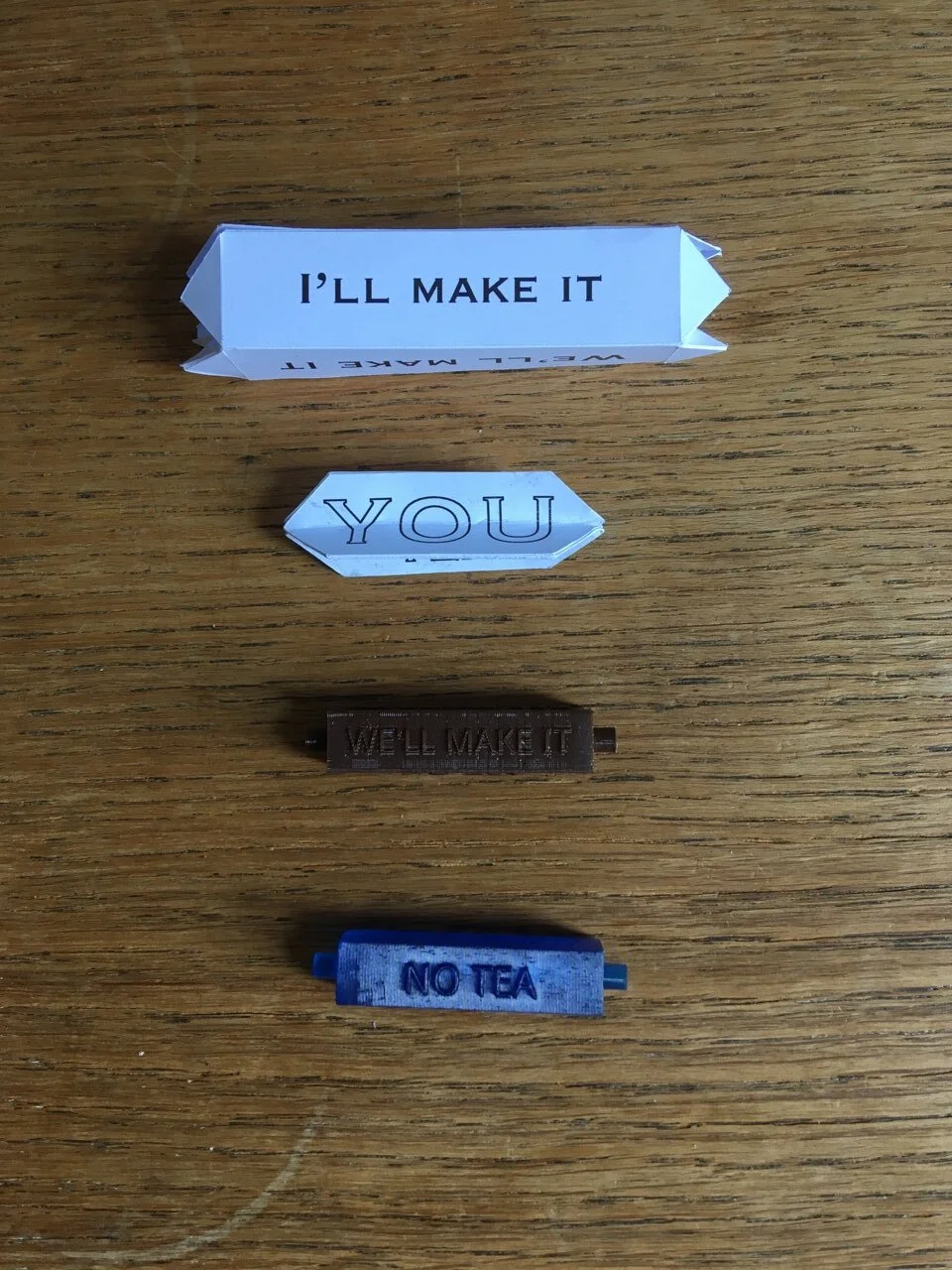
Teatotum prototypes in paper, card, ABS and… some weird resin stuff

This version was a bit bigger and the recessed text might have been an improvement, but it couldn’t be printed in a vertical orientation, apparently, meaning that one side’s text was always mangled.
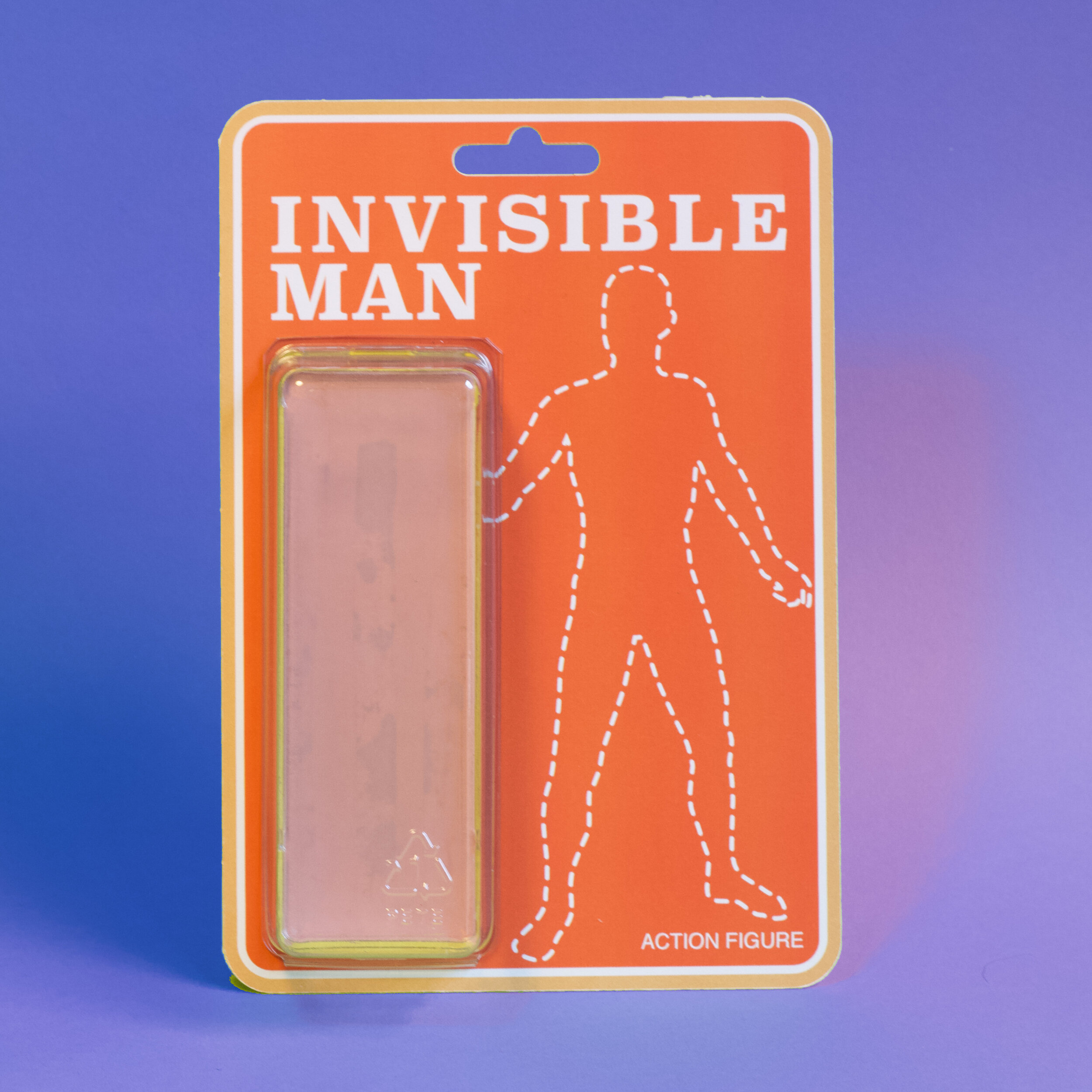
Invisible Man Action Figure
A card-backed, clear plastic shell containing an intangible representation of HG Wells’ classic character. Alternately, an empty piece of packaging.
Description
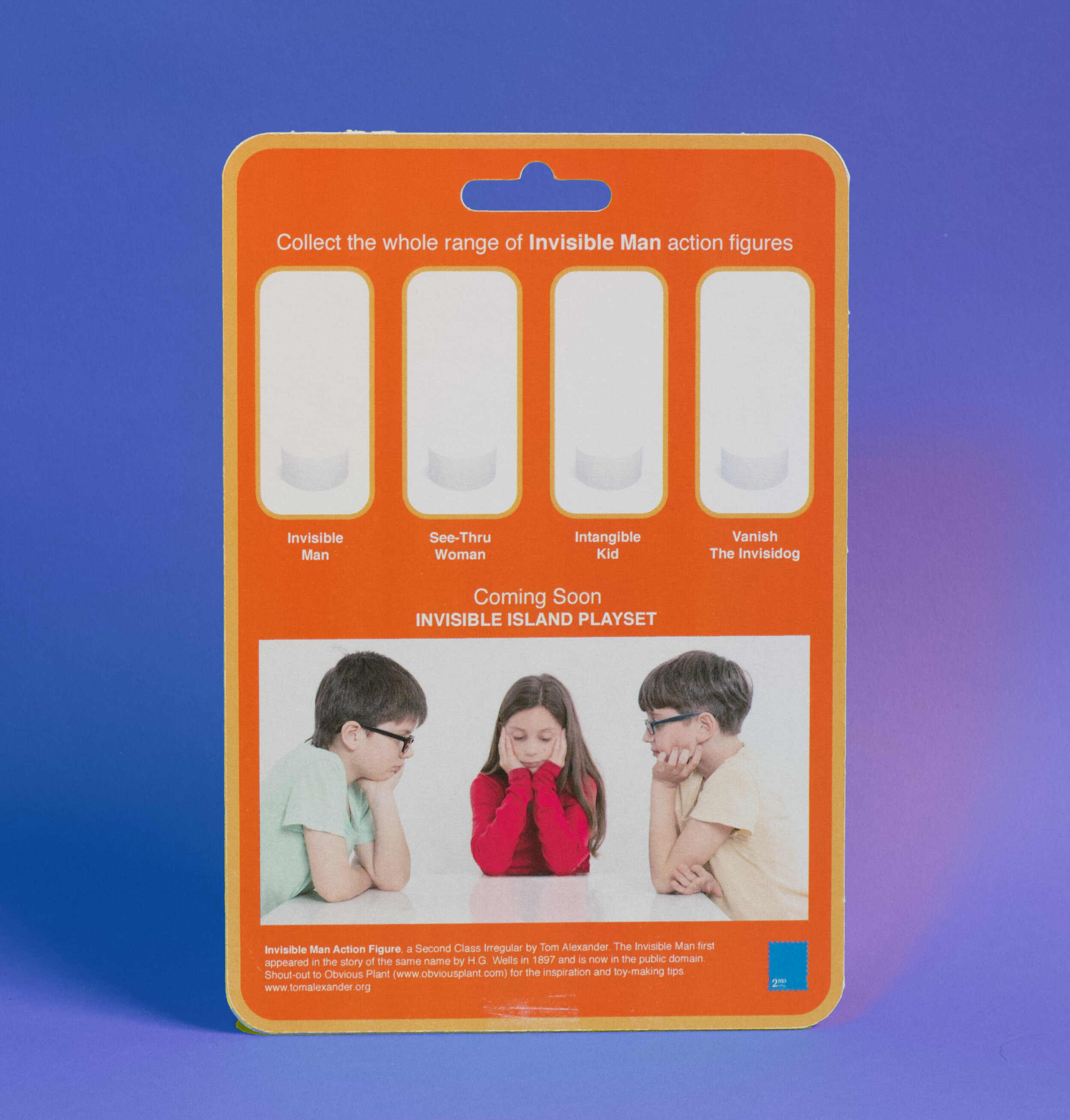
A card-backed, clear plastic shell containing an intangible representation of HG Wells’ classic character. Alternately, an empty piece of packaging.
Background
This seemed like one of those ‘so obvious, someone must have already done this’ ideas. But research didn’t find anything, so I pressed on with it. (This is not to say that someone hasn’t done it before, but just that I wasn’t deliberately ripping someone off.)
I had a lot of Star Wars figures when I was a kid and I think most people my age did, too. But my collection was made up mainly of ones acquired from jumble sales and charity shops. My collection was made up mainly of Rebel Commanders or Imperial Walker Captains - mid-level bureaucrats who could be seen in the background while Luke and Han did more interesting stuff. That was OK, though. I quite liked making stories around these utility players and they could fit in more easily with other types of figures in a way that movies stars like Harrison Ford couldn’t.
Looking back on it, I must have had some new figures, though, because I distinctly remember poring over the group photo on the back of the packaging, learning the names of all the different characters and trying to remember where they had been in the films.
But these were childhood toys. I’ve never really got the whole collectables market and certainly never kept anything in its box. They were meant to be played with and any that survived the trip to adulthood did so battered and bruised, with their paint flecked off and their accompanying laser guns long since lost. The thought of paying a hundreds of pounds for something that cost £1.75 when I was little seemed odd.
(I sadly remember a university friend of mine buying into the errant notion that merchandise from The Phantom Menace would appreciate in value the same way. I’m pretty sure he asked everyone to give him Star Wars toys for his 21st birthday and even then I thought it was an odd time to be alive. Who knows, though? Maybe in another twenty years, those Jar Jar Binks action figures and Liam Neeson face masks really will be worth a fortune.)
Anyway, the Invisible Man Action Figure is a homage to those days and a pretty obvious comment on the collectables market. It should be pointed out, though, that it wouldn’t exist without said market. Buying authentic plastic shells to stick on card would be impossible if figure collectors didn’t want to do exactly that.
It should also be noted that it was while researching this piece that I discovered the work of Obvious Plant, who makes all manner of weird toys before secreting them onto store shelves. As well as thinking that their work was brilliant, I’m also grateful to them for introducing me to Crafter’s Tape, which is as effective as it is ecologically profligate.
The background photos were modified images from a stock image library. I wondered whether those miserable kids looking at the invisible island playset were a little too ‘winky-winky’ in-on-the-joke, but their expressions won me over.
Forms
Odd bits of bureaucracy to complete at your leisure.


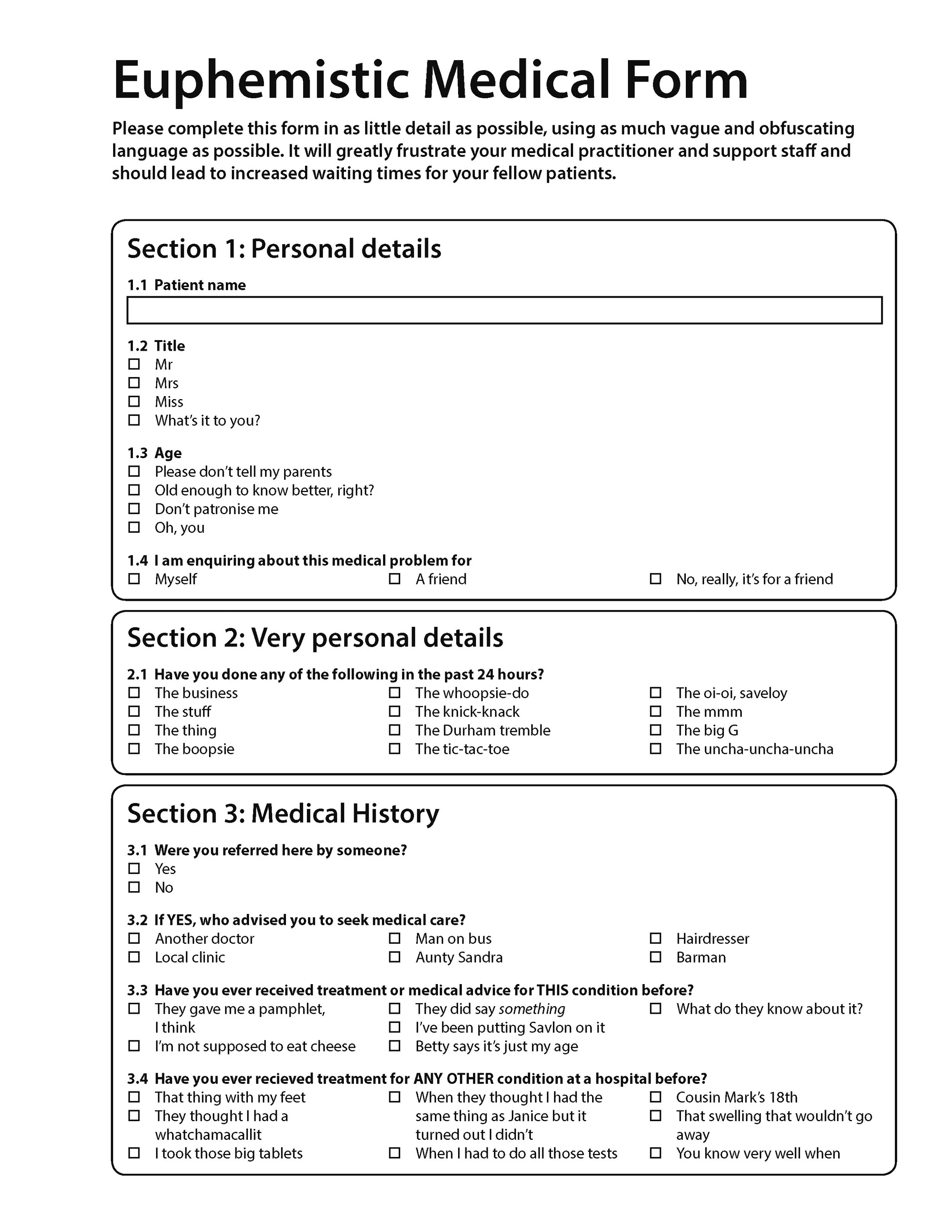
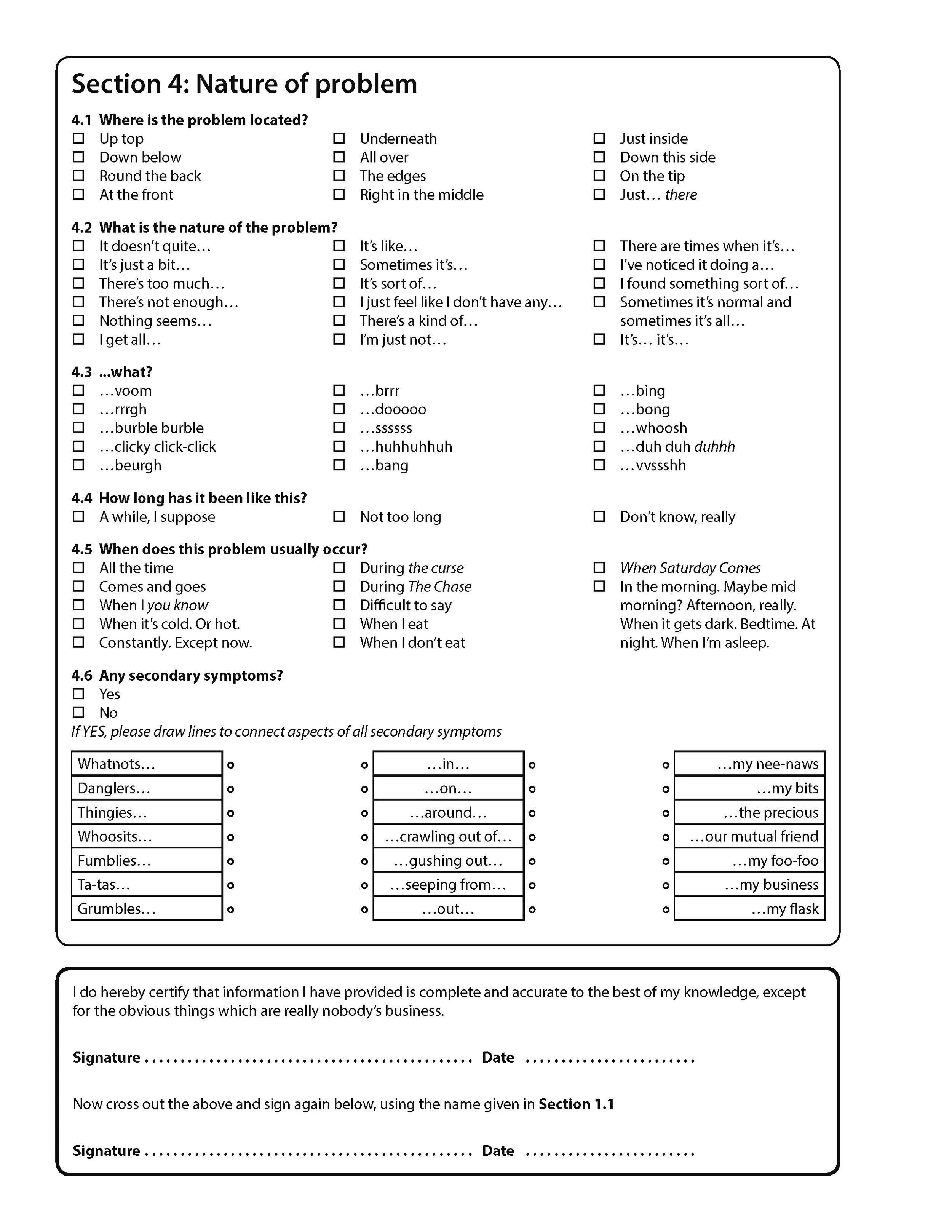


Everyone loves filling in forms. Now you can enjoy bureaucracy at home with this amazing activity book. Whether you need to communicate with the spirit plane, apply for a friend with benefits or just create a scene, 'Forms' has the proper paperwork for even the strangest situation (black ballpoint pen not included).
Paperback, 60pp
ISBN 978-1-9160373-0-4
Overview
A collection of 60 pieces of paperwork for readers to fill in themselves. Billed as “The nation’s favourite paperwork”, the book is a weird piece of novelty publishing.
Background
Forms is the realisation of a long-held dream - to publish a book that the readers write themselves. I had the idea quite a few years ago when I was focused on writing commercial gift books. My publisher at the time passed and I had the distinct impression that another publisher nearly published it, because they held on to the manuscript for 14 months before I got a full-page handwritten rejection letter from the editor. (That might not sound like much of a big deal, but publishing rejection letters – when you even get them – tend to be terse and automatically generated).
Although it hadn’t found a home in commercial publishing, I was always fond of the idea and a few years later dusted off the files, rewrote some stuff and made the layout more consistent. This was mostly catalysed by learning that IngramSpark could publish books with perforated pages. As soon as I set up the title with them, they stopped offering it. Monsters.
Anyway, it’s here. I still quite like it. It’s fun to fill in and I honestly do recommend you do that, rather than just read it in a pristine state. Filling out the stupid questions may provide you with some interesting answers.
Sometimes I Feel Sad
A little book for small people who are a bit blue.
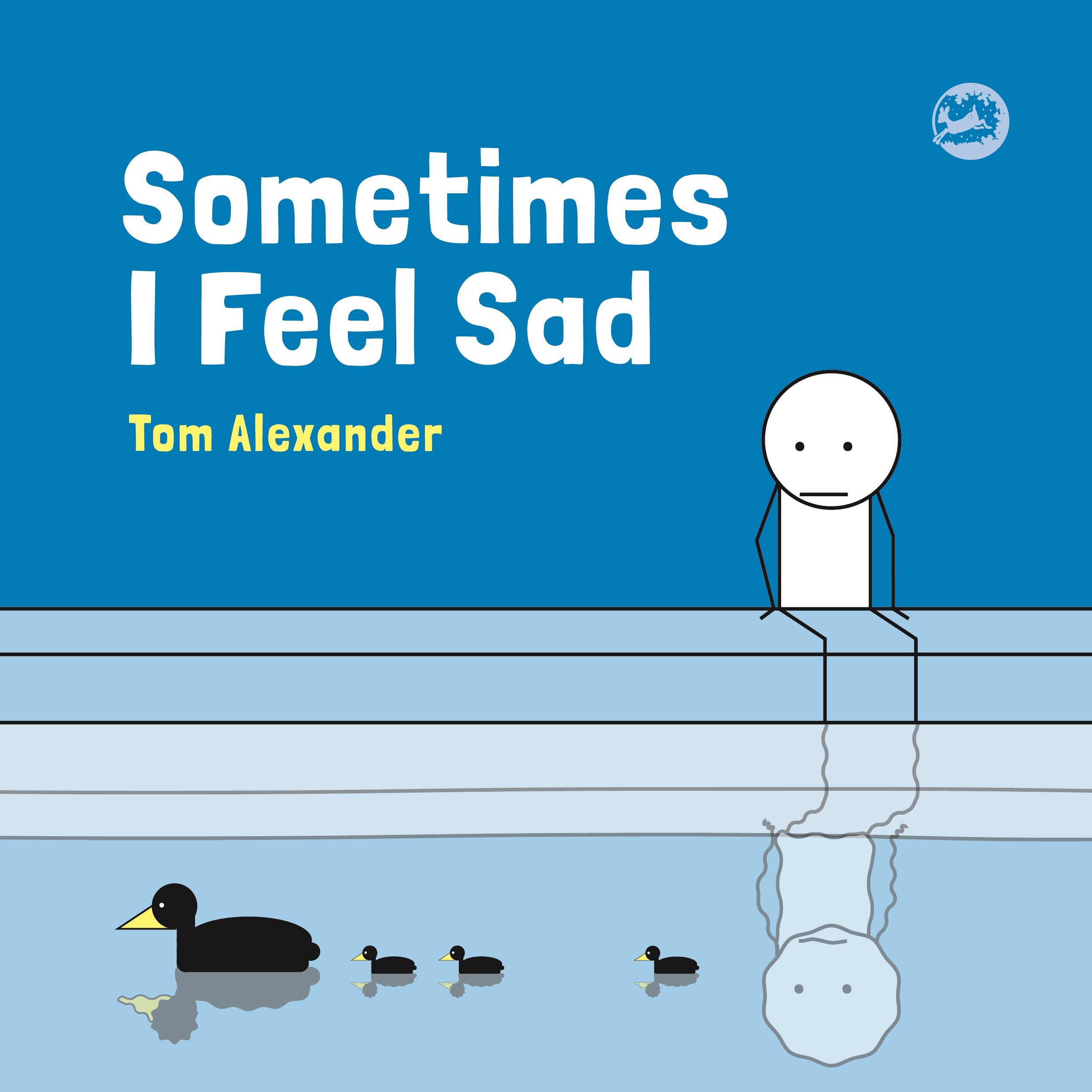
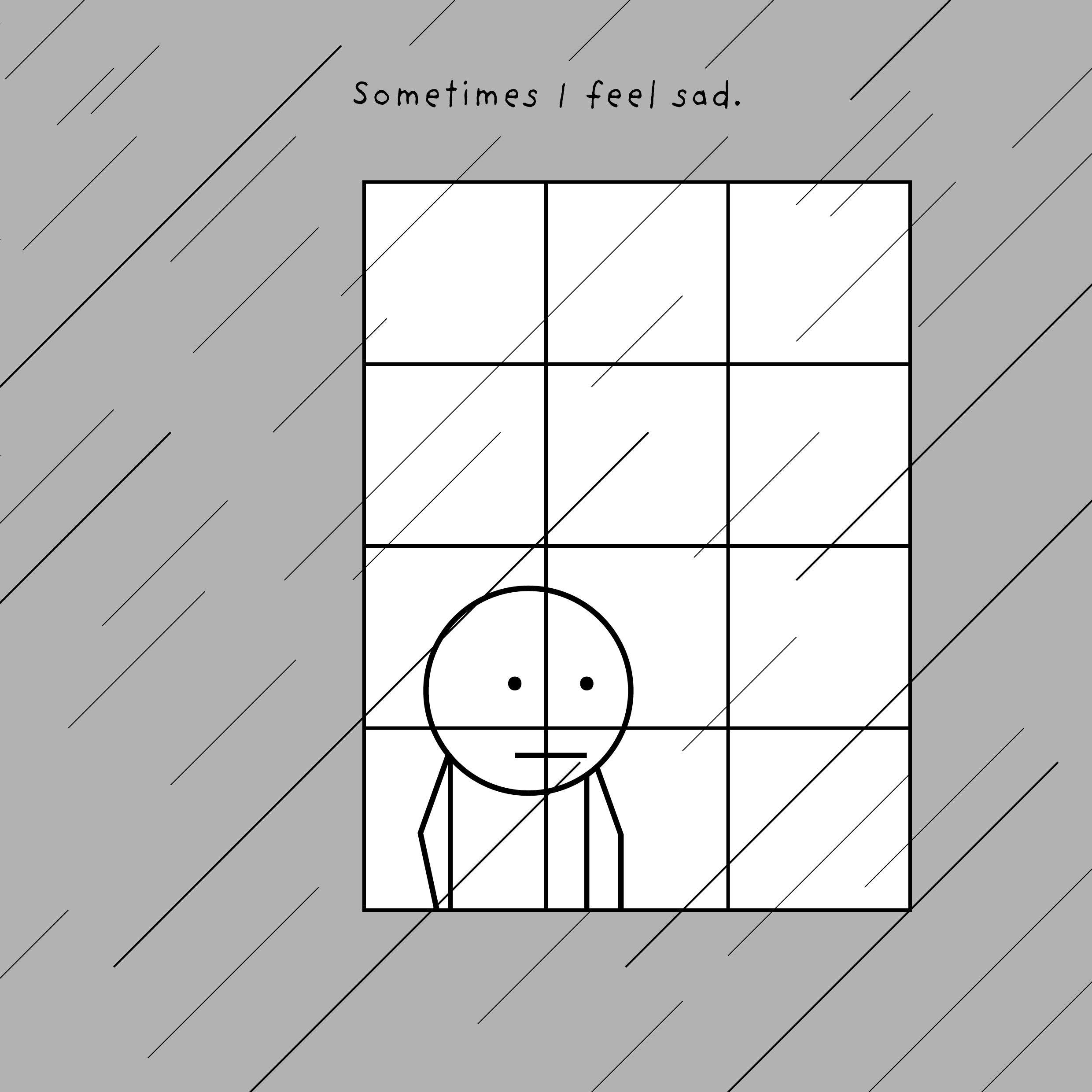
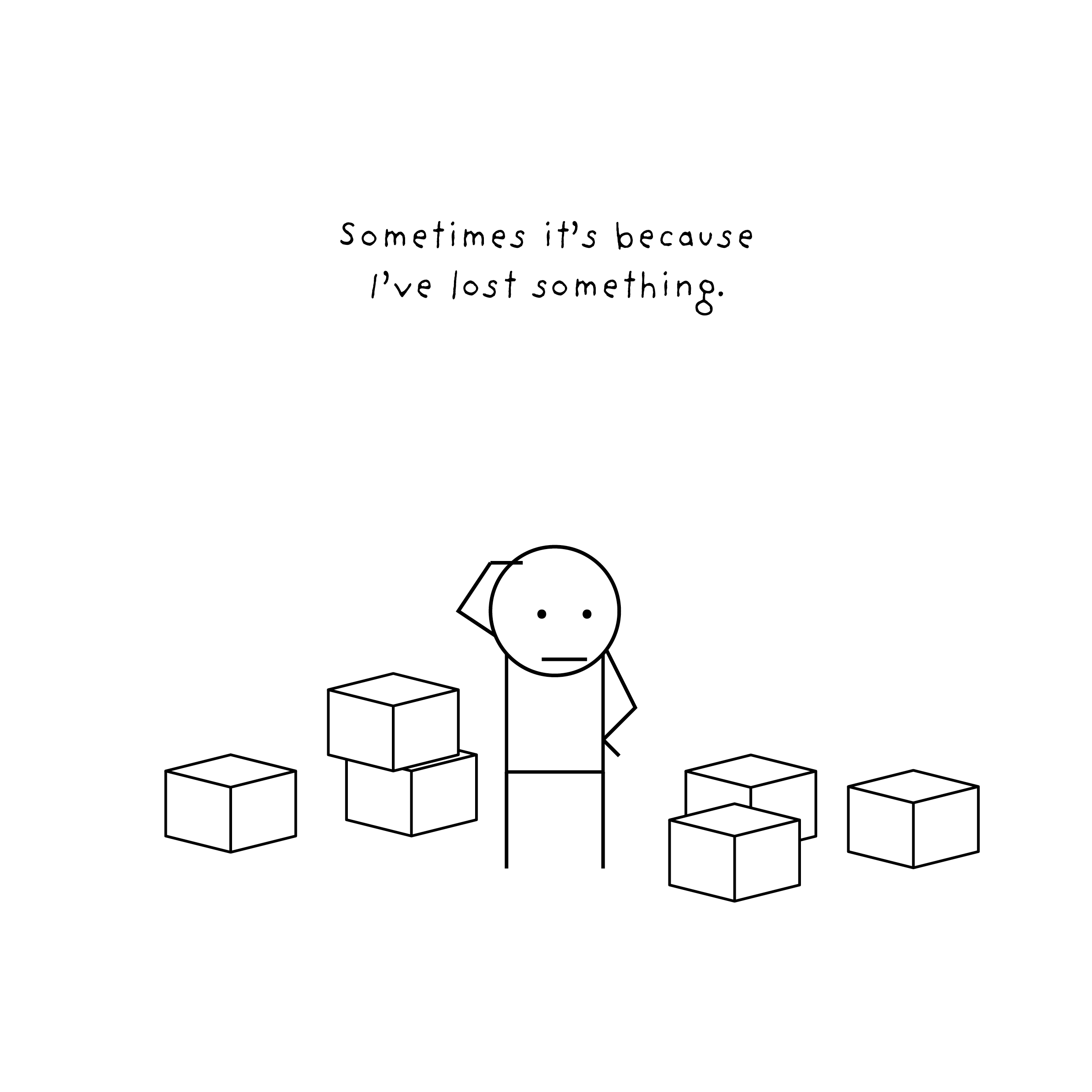
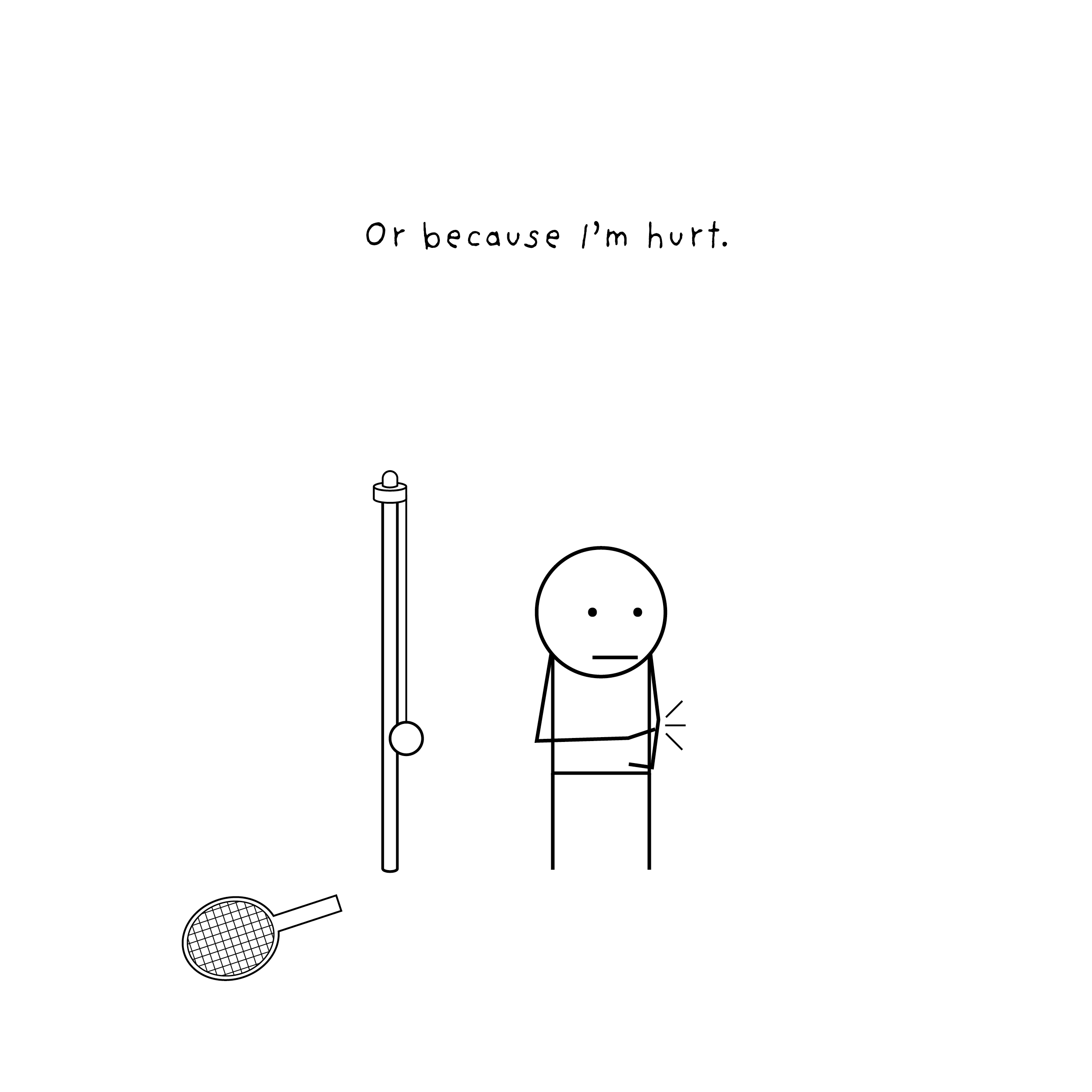
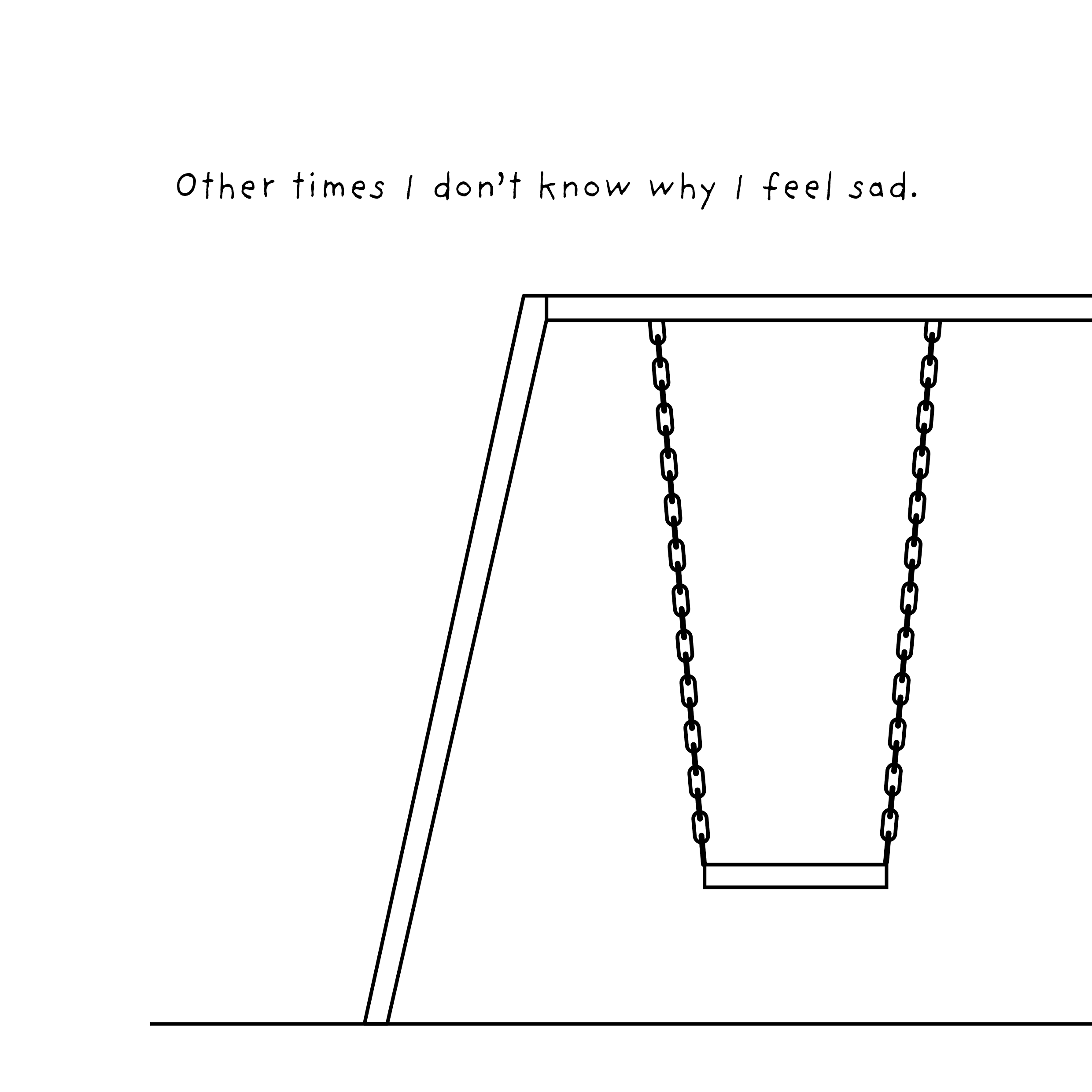
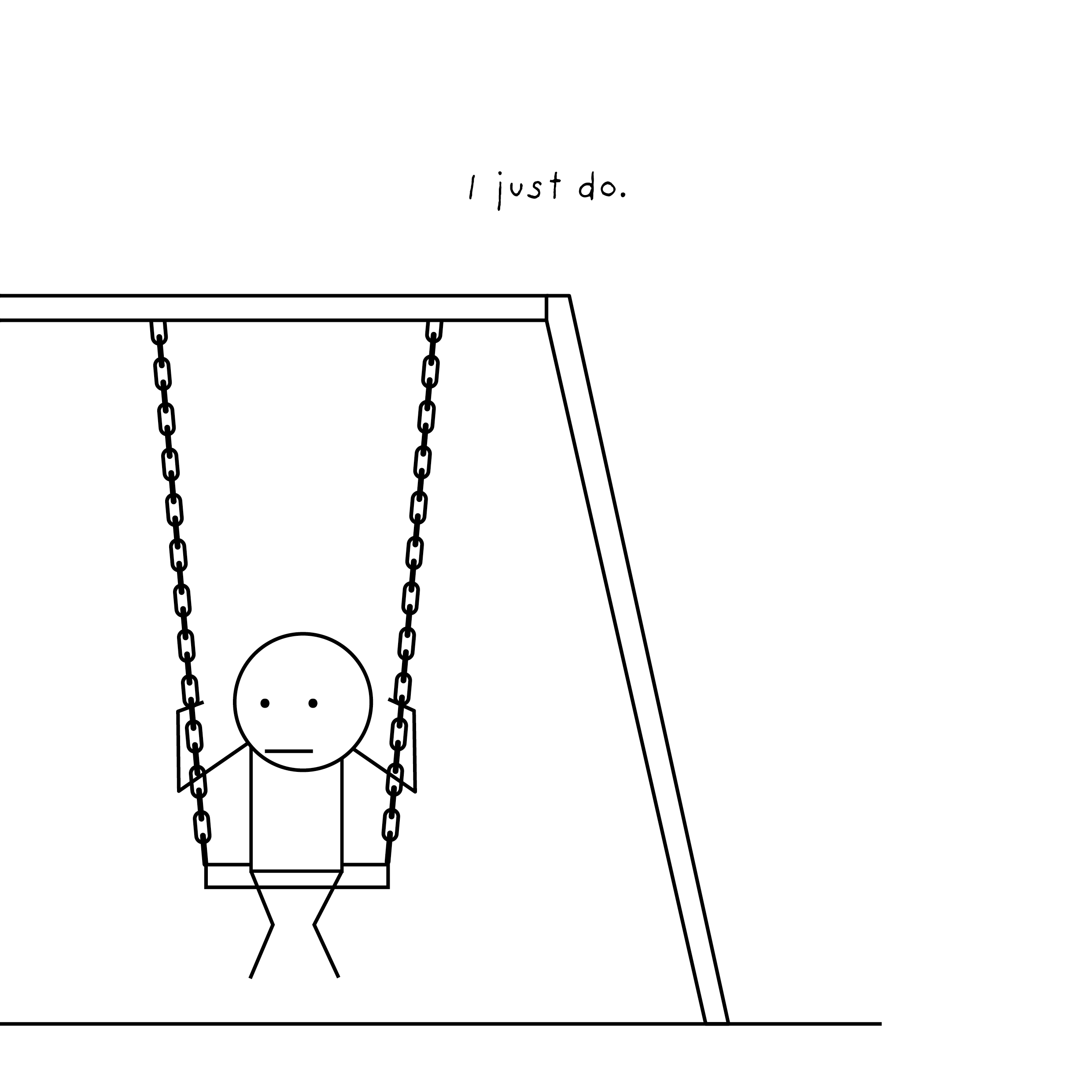
Picture book, 32pp, B&W
Overview
My second children's book for Jessica Kingsley Publishers, Sometimes I Feel Sad is a little book for small people who aren't always happy.
Publisher's blurb
Feeling sad is, unfortunately, a part of everyone's life, and there's not always an easy fix. This touching book helps explain to children aged 5+ that they're not alone in feeling this way, and is especially useful for children who struggle to express their feelings.
Background
This is a really simple book, but an important one for me personally. After I'd done it, I realised it was the most honest thing I'd ever written. It made me wonder if children's books were what I was meant to be doing all along.
It's also the first time since I was a kid I've ever consciously sat down to draw anything, knowing it would be seen by other people.
The book was selected for the Reading Agency’s Reading Well for Children list and was distributed to schools and libraries in England. Which was nice. Honestly, it was the best result possible for the book. Having the book on a shelf, where a child could discover it for themselves, was what I always had in mind.
I made a couple of animated clips to promote the book on social media.
My Secret Dog
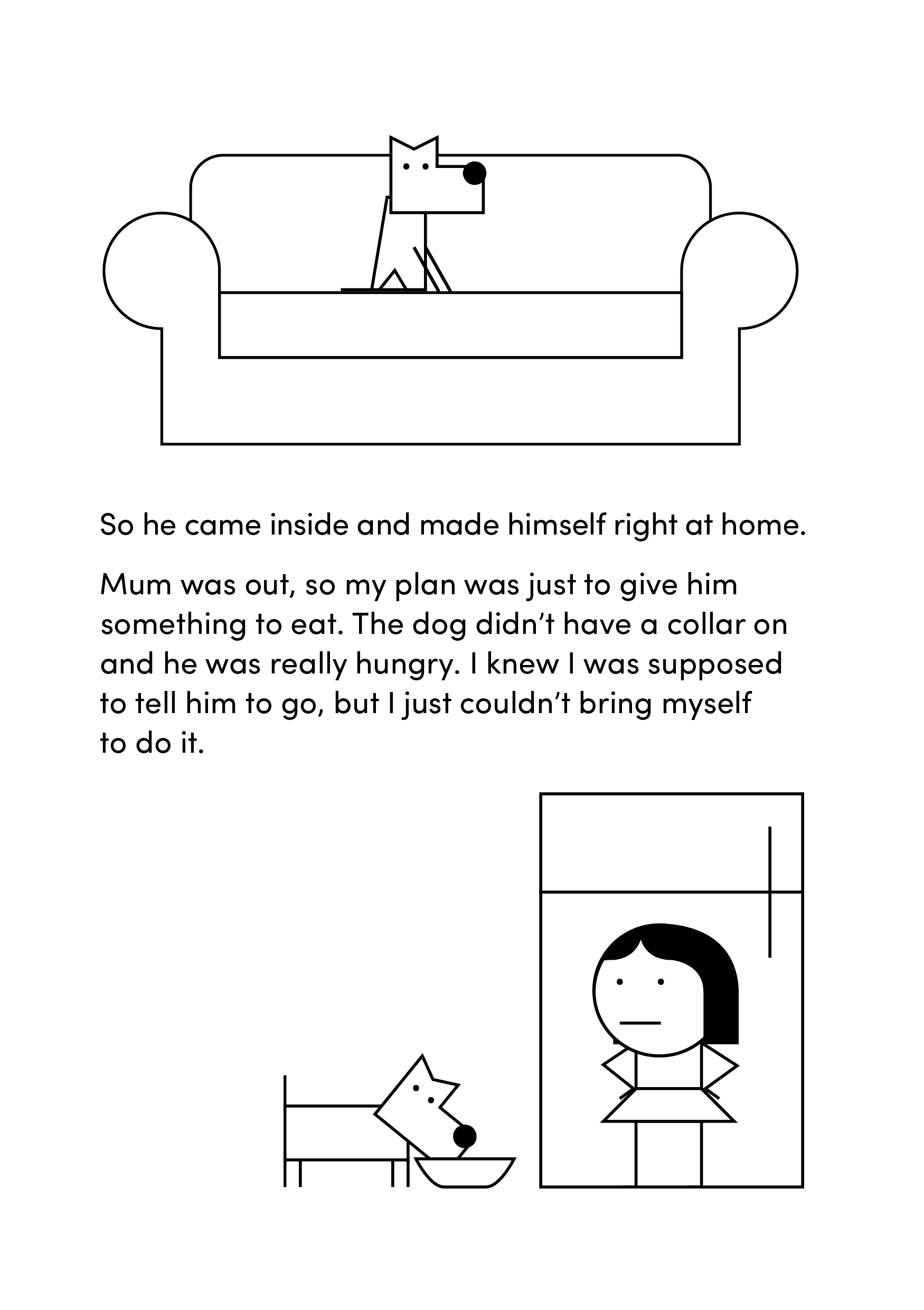
I always wanted a dog, but Mum said I wasn't allowed.
So I got one anyway.

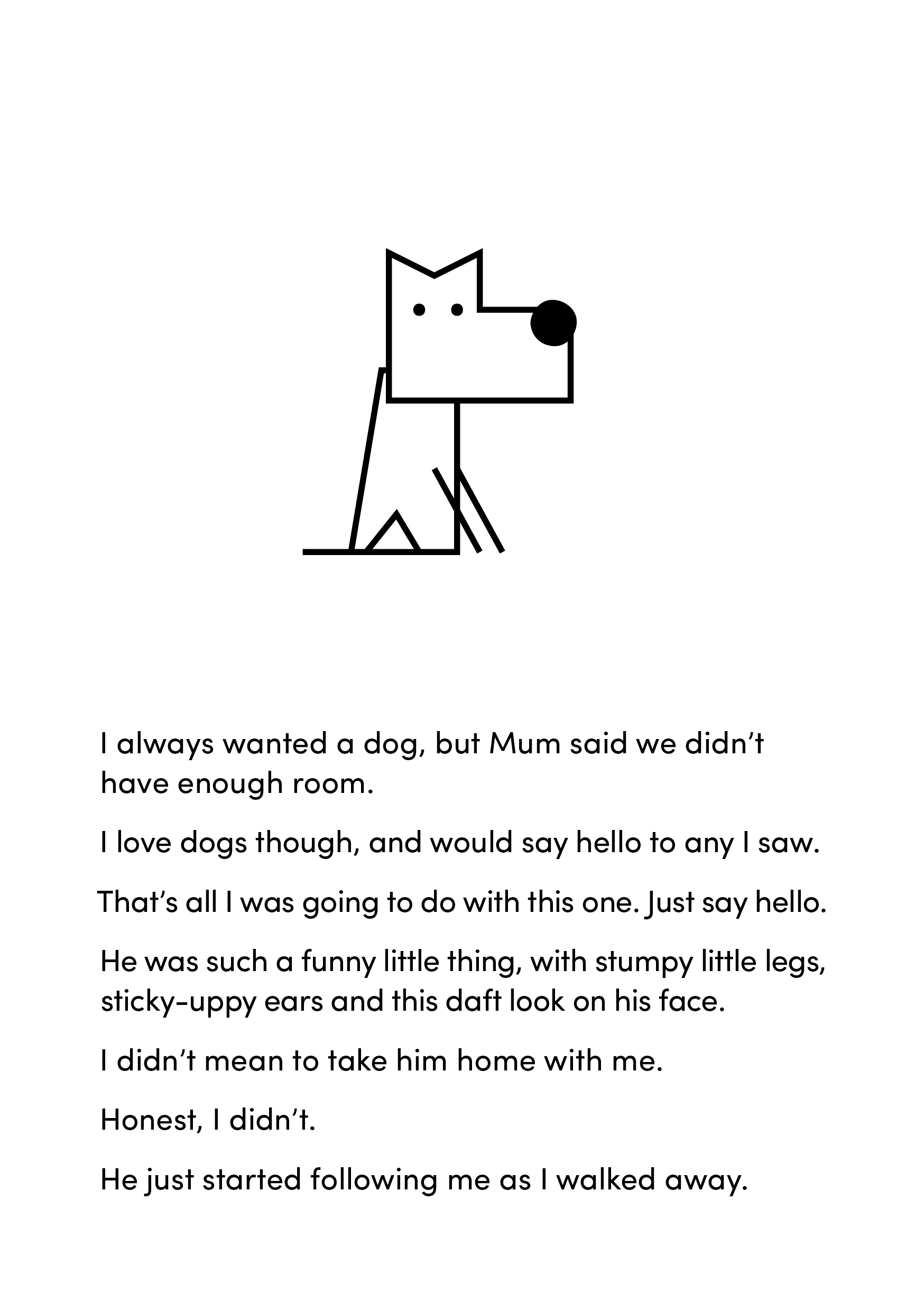
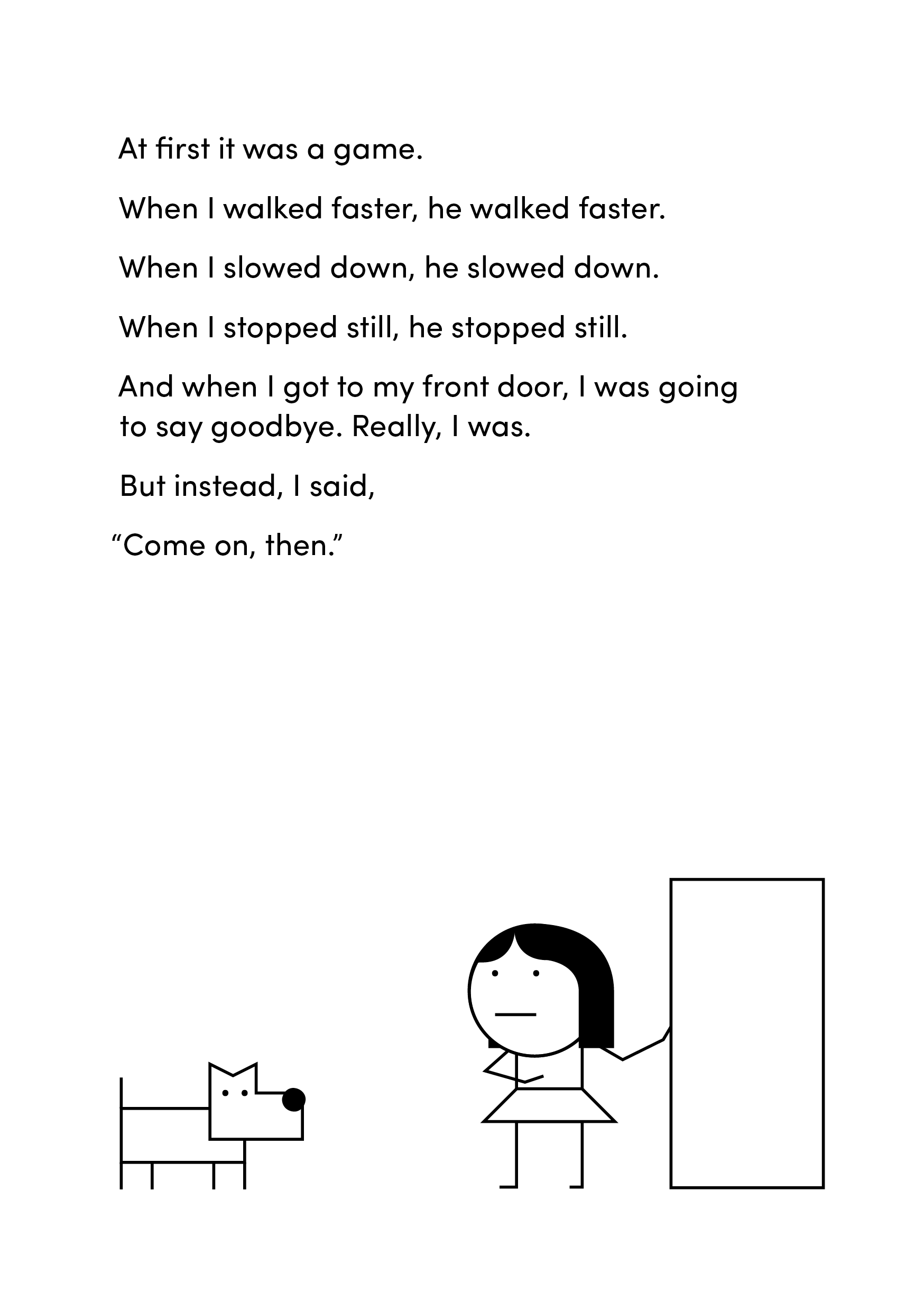
Children’s picture book, 32pp, B&W
Description
I always wanted a dog, but Mum said I wasn't allowed.
So I got one anyway.
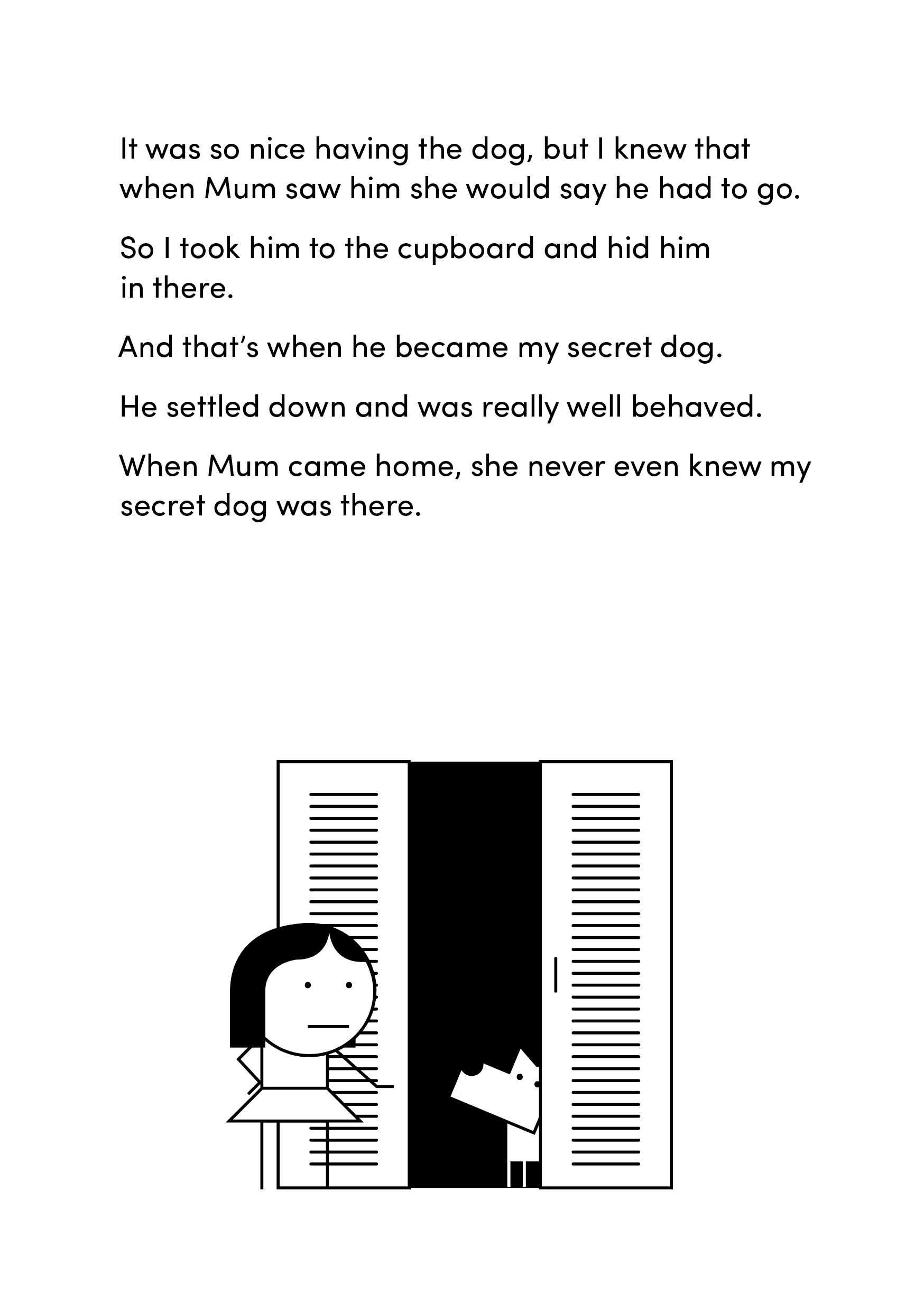
My secret dog lives in the cupboard and we sneak out at night to play.
We'll be best friends forever.
As long as Mum doesn't find out...
Background
My Secret Dog was my first published book for children aged 6-9. It was published in the UK and US by Jessica Kingsley Publishers.
It was originally written for my sister Lois, who lives in a small flat and wanted a pet so badly. The illustrations were originally just make-do placeholders for the handmade version I made as a gift for her.
A few years later, I was working at JKP as a production designer and in a meeting about children’s books, I showed the prototype to some colleagues. It went from there to the commissioning editor and without really meaning to, I became a children’s author.
I’m pretty fond of this book. It was one of those stories that just flows out from you, almost fully formed. That happens so rarely that it feels amazing when it does. I wonder more and more if that’s because it’s written with a particular person in mind. Perhaps that’s the key – having that one reader as your target audience, rather than a mass of them.
There’s some other bits and bobs here.
A link to an article on JKP Website about the book.
Also some animated GIFs I made to promote the book on social media.

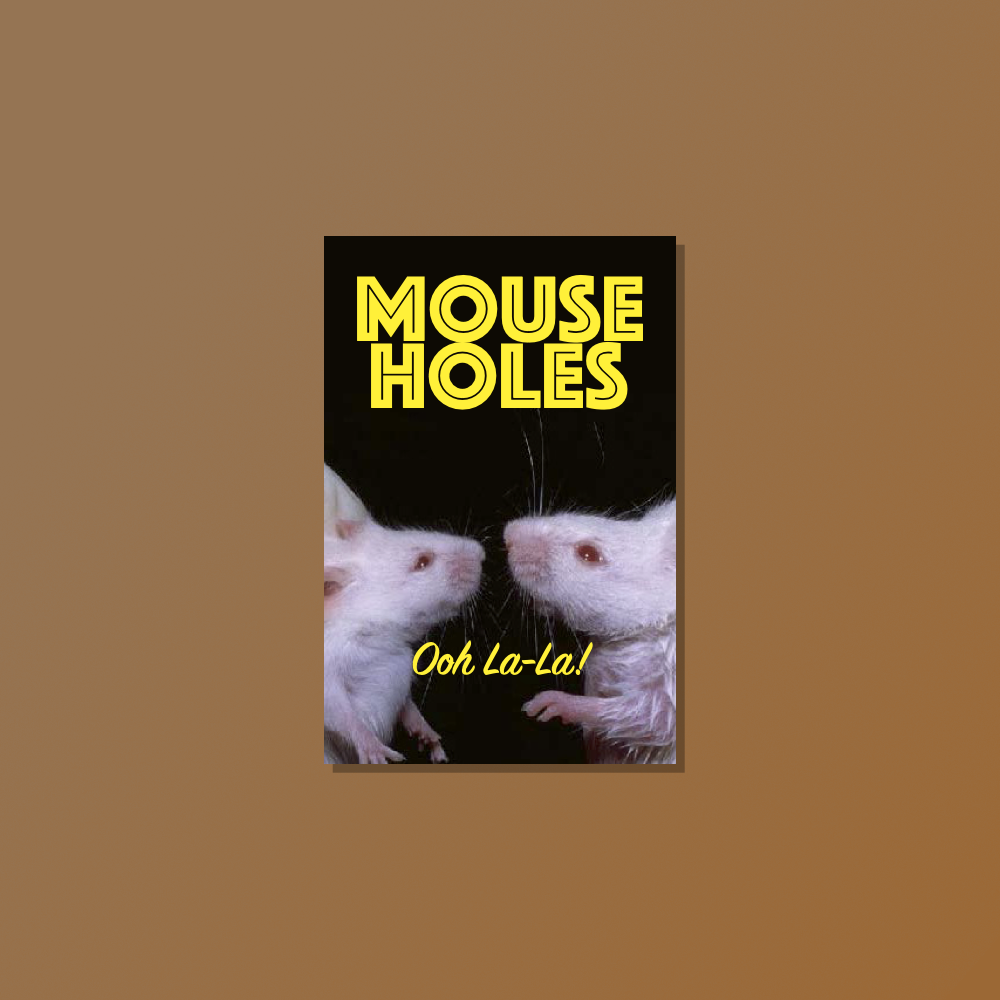
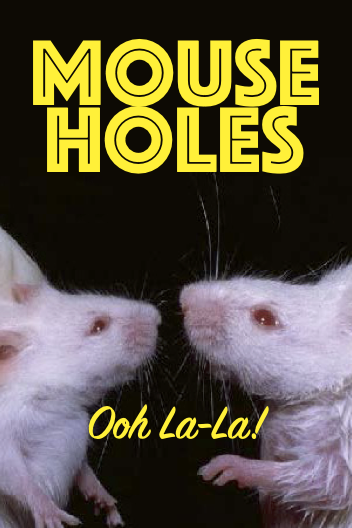
Mouse Holes
A tiny piece of titillation for discerning rodents.
Minuscule magazine, 16pp inc centrefold, colour
Overview
A tiny piece of titillation for discerning rodents.
Background
We live in an age where if you want to look at pictures of nakedness, you can do so at the blink of an eye. A few taps on your smartphone and there they are. The idea that you once had to go to the newsagent and furtively reach up to the top shelf to get a magazine full of said pictures has become so anachronistic that it’s almost quaint. Apart, of course, from the corrosive effects of pornography on society and individual mental health and so on. But still, you know what I mean.
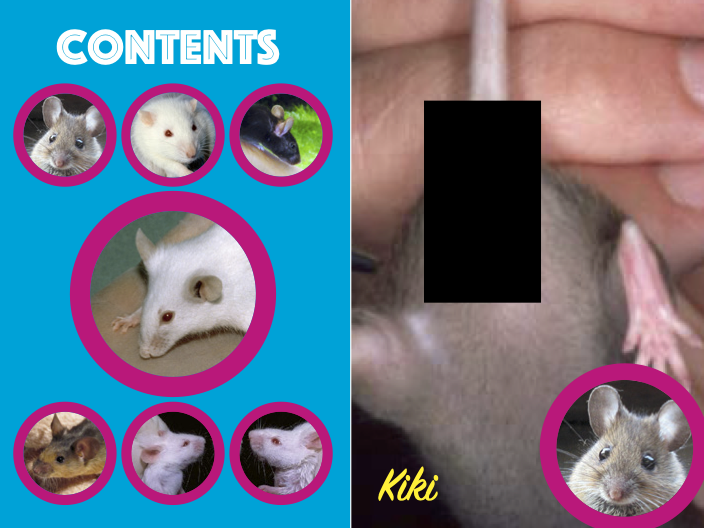
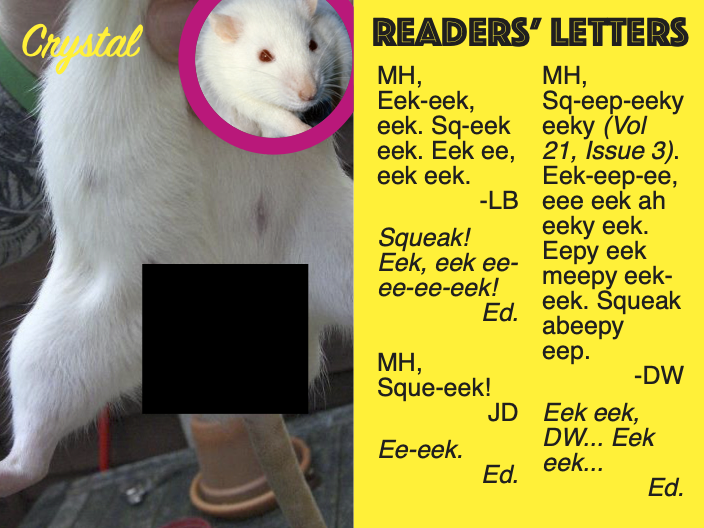
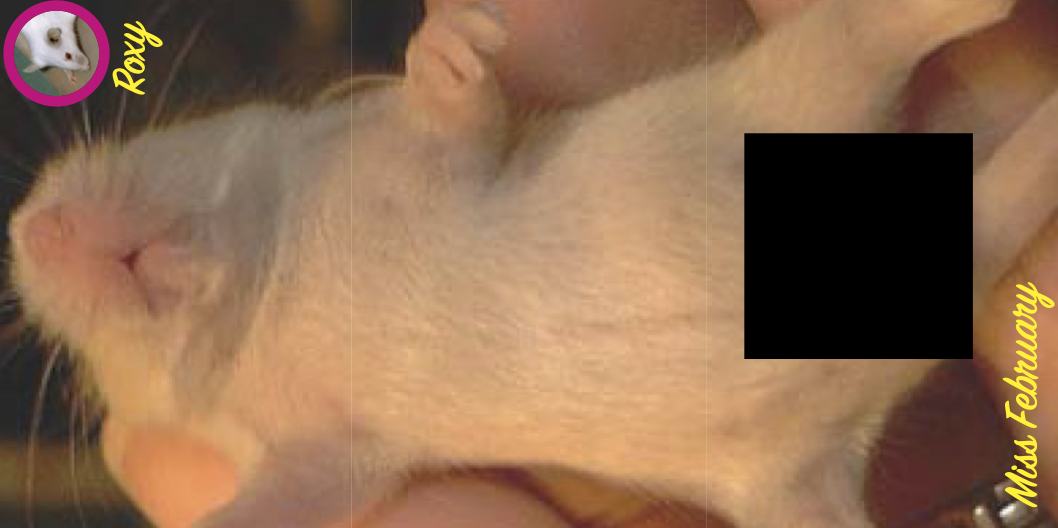
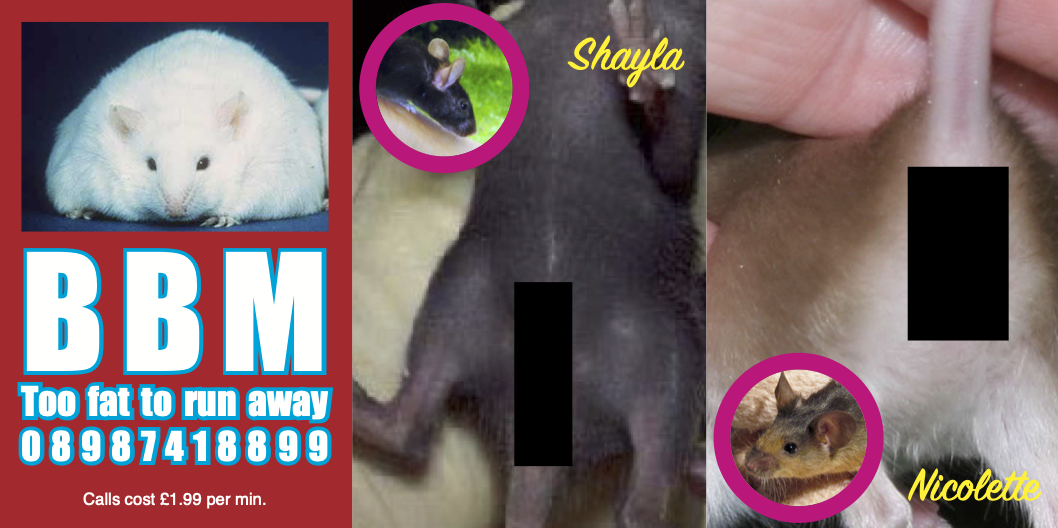
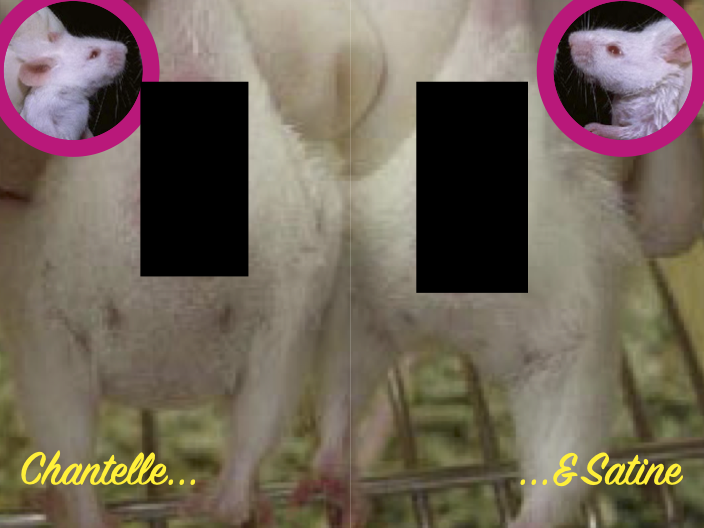
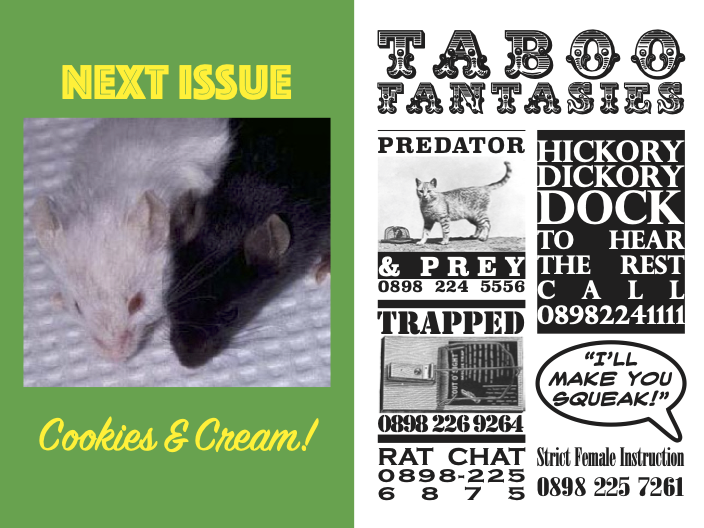
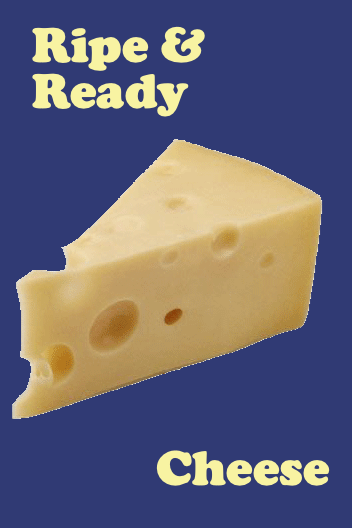
Mouse Holes is meant for those who don’t have access to smartphones or high speed internet, in order for them to have access to high quality nudes. I’m talking about rodents, obviously. This tiny magazine is packed with explicit-yet-tasteful pictures of ravishing rodents. In addition, there’s the other things you would expect from a top quality magazine like this, including a centrefold, reader’s letters and adverts for premium-rate dirty chat lines.
There are certain challenges inherent in making magazines and they become more difficult as the publication gets smaller. These pages had large bleeds so that elements wouldn’t get lost in trimming and registration (making sure the fronts and backs of printed pages are aligned) was a bit of a bugger, too. It was a fiddly one.