Third Eye Test
A kit for opening up your inner vision.
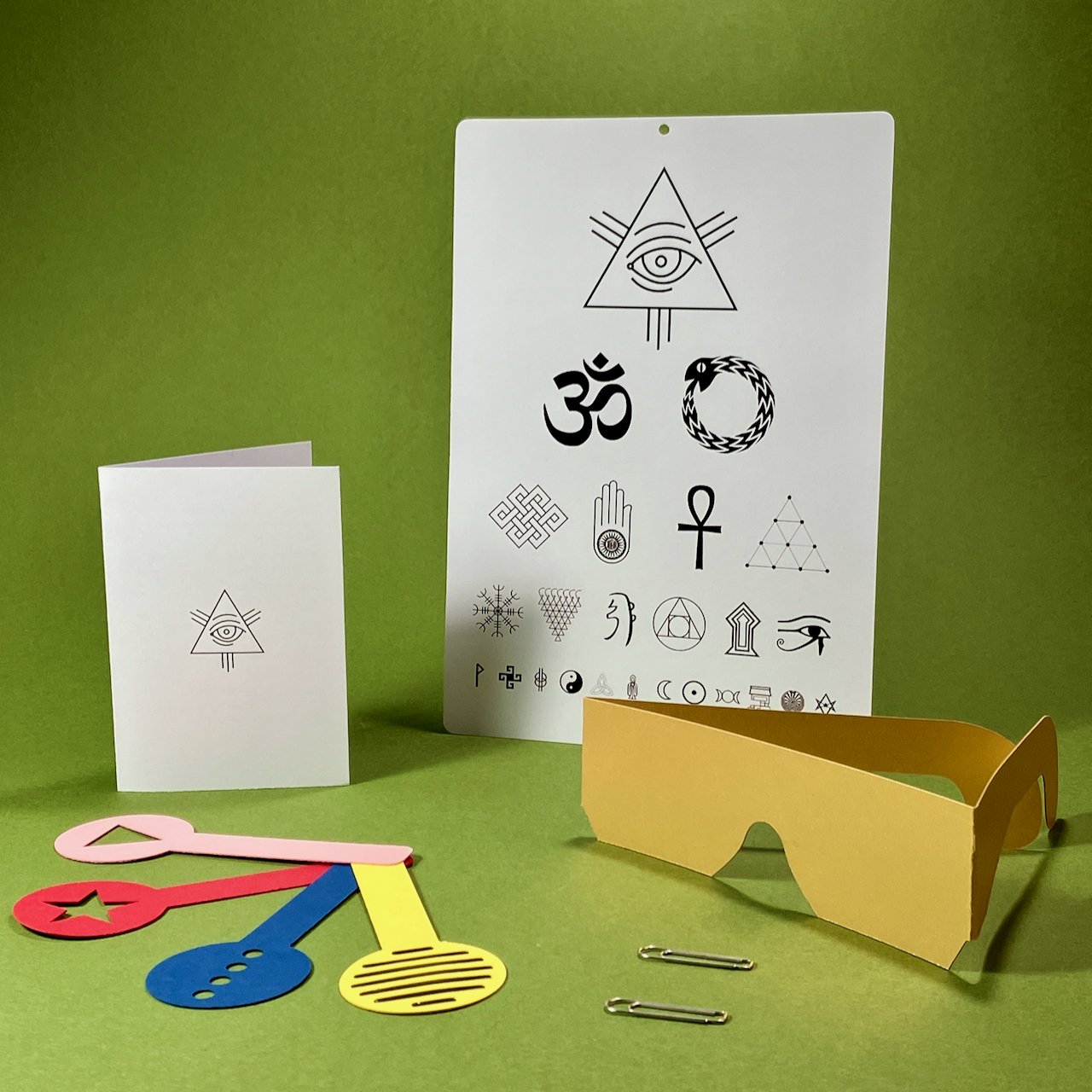
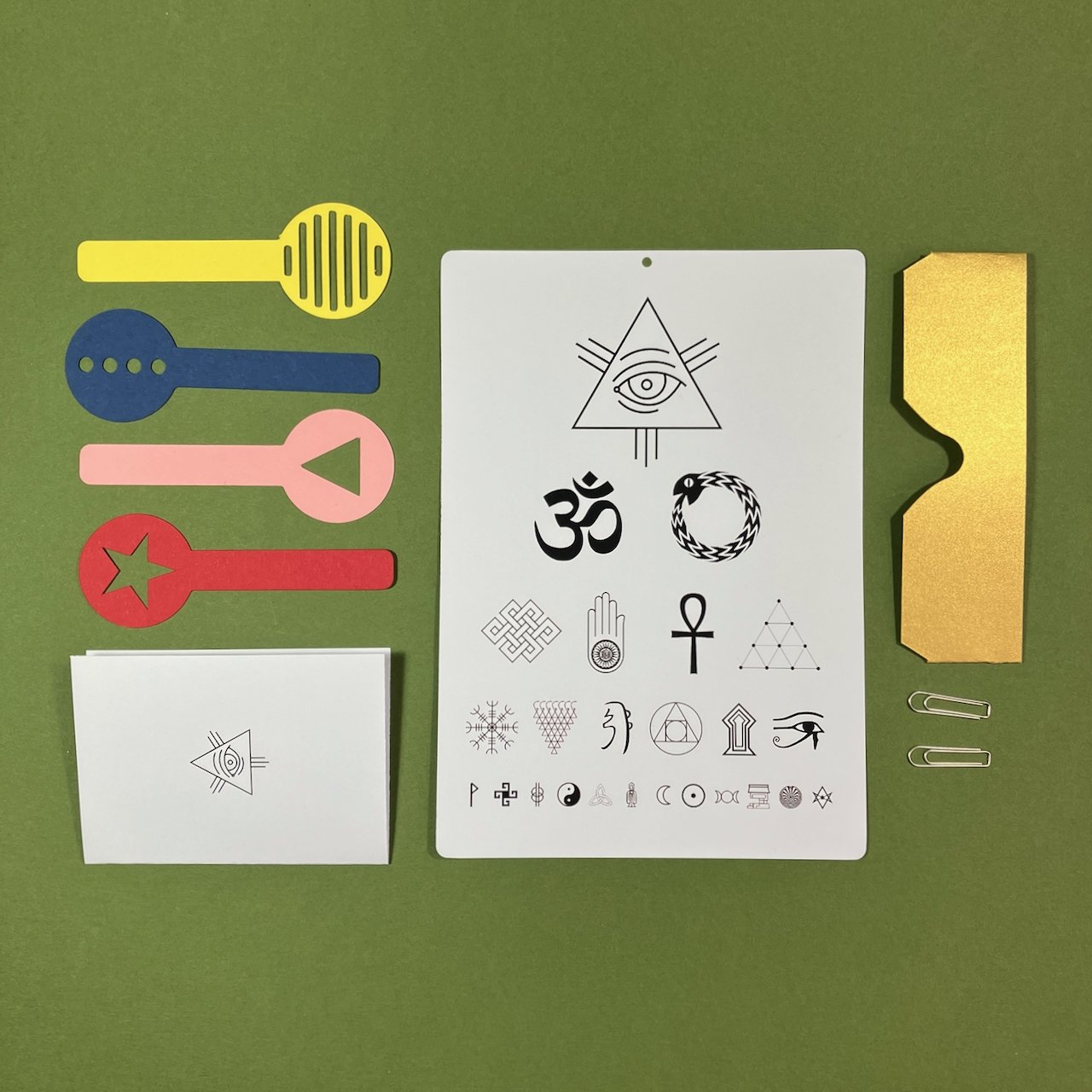
An at-home kit for testing your inner vision. Comprised of a Third Eye Chart, a covering for your First and Second Eyes, four corrective lenses, two lens clips and a short set of instructions.
Multi-part, assorted colour card, 2023
Overview
A kit for opening up your inner vision.
Contents
1 x Third eye chart
1 x Covering for first and second eyes
4 x Corrective lens paddles
2 x Lens clips
1 x Instruction leaflet
Background
I’ve been trying to buy new glasses for at least two years now. My current ones have the unfortunate habit of falling apart at inconvenient times. Apart from that, I like them. They’re light and they help me see.
That said, sometimes it’s difficult for me to read the train indicators on the Victoria Line and this told me that I should get my eyes checked. I went to the opticians and they told me that my eyes were exactly the same as when I last had them checked. When I asked about the problems seeing train times, they told me that was just being old and I shouldn’t worry too much about it. Huh.
Anyway, that led to this - an at-home testing kit for measuring the visual acuity of your third eye. It takes its cues from the equipment used to measure your other eyes and was originally going to be just an eye chart. Obviously, people would be able to see the symbols unless they were blocked out, so some sort of blindfold would be needed. Originally this was going to be a strip of cloth, but then I remembered the Peril-Sensitive Glasses that were packaged in with the text adventure adaptation of Hitchhiker’s Guide To The Galaxy (see here for a gallery of all the ‘feelies’ bundled with that and other Infocom games). I made my own version, but used some jazzy metallic card I had in the drawer. That would have been enough, but I always find an eye test isn’t an eye test without an optician holding lenses in front of my eyes and asking if it’s better “with…? or without…? with…? or without…?” and me saying things like “I’m not sure… maybe… with? …a bit?”. I really wanted people to be able to replicate that experience in their at-home tests, so created the little paddles that they could hold up in front of their foreheads.
But once they were done, I remembered that another great part about going to the opticians was wearing those incredible Frankenglasses with the lenses dropped in. Again, I wanted people to have some part of that with their Third Eye Tests, so set about fashioning some customised connectors that would allow people to attach the lens paddles to the coverings for their regular, ordinary eyes. I did not just buy a box of paperclips. No.
Anyway, the small idea ended up being 8 separate pieces (including the little explanatory leaflet that I was really in two minds about making and a little fold of card to stop the lens clips digging in to the main chart). Five of these elements required the use of the cutting machine, which is a slow process, meaning the simple little idea to knock out in an afternoon took a bit longer to put together. Still, once you embark on these things, you have to see them through.
Classifying stuff like this is kind of weird. Although it does have printed pages, it’s not a book. It’s not a wearable, although an element of it is worn. I guess it’s just a thing.
Intern
A short story about a hapless member of the marketing department.
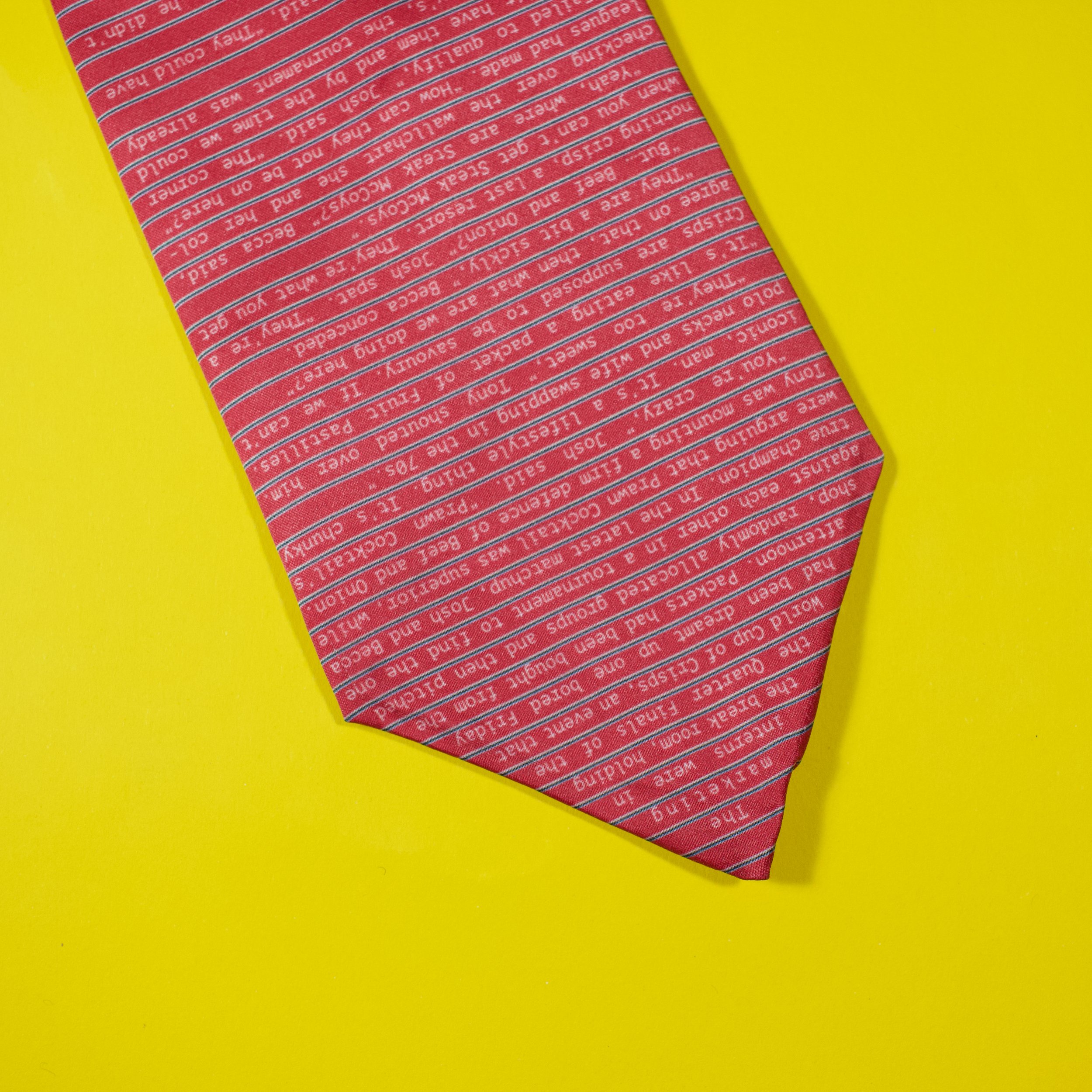
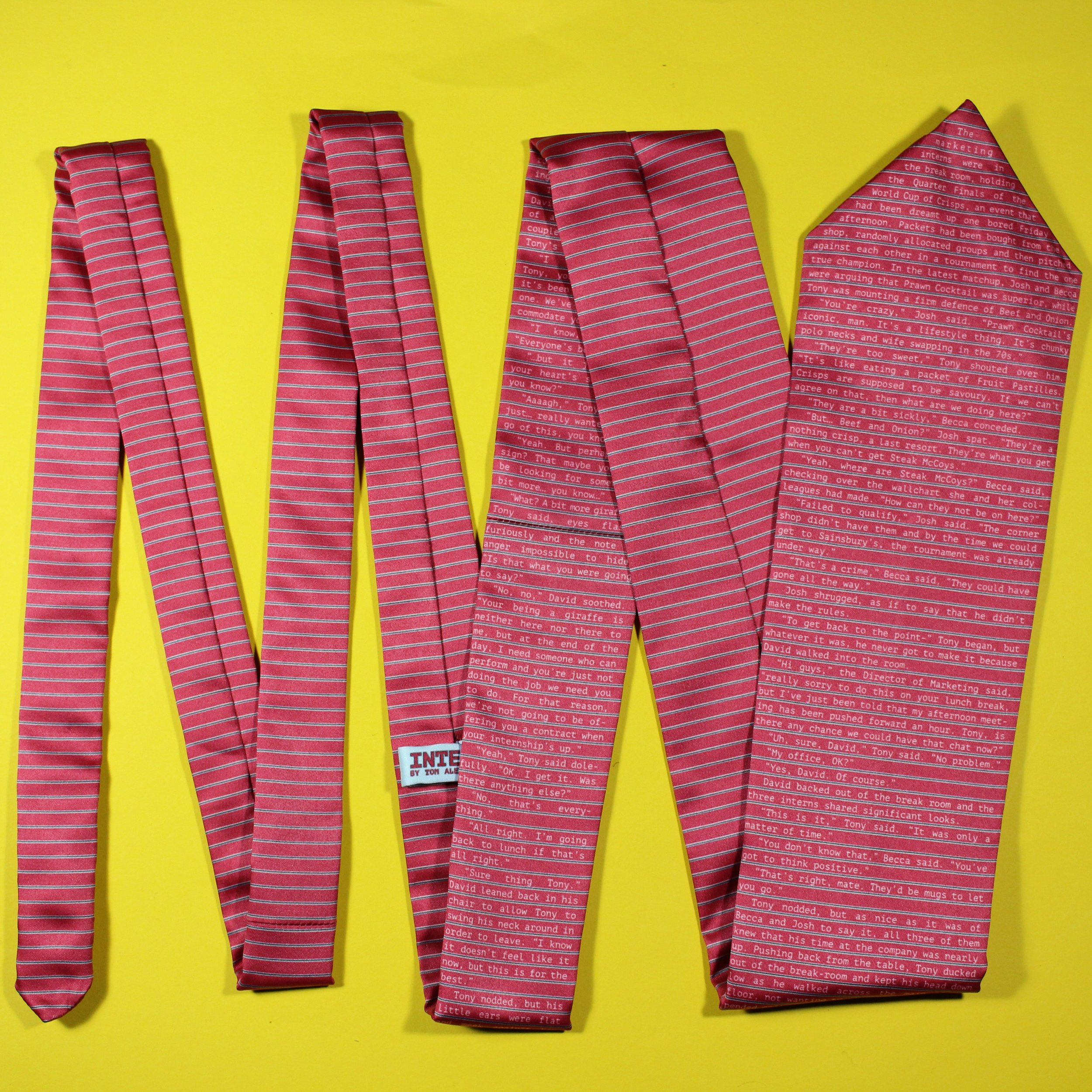
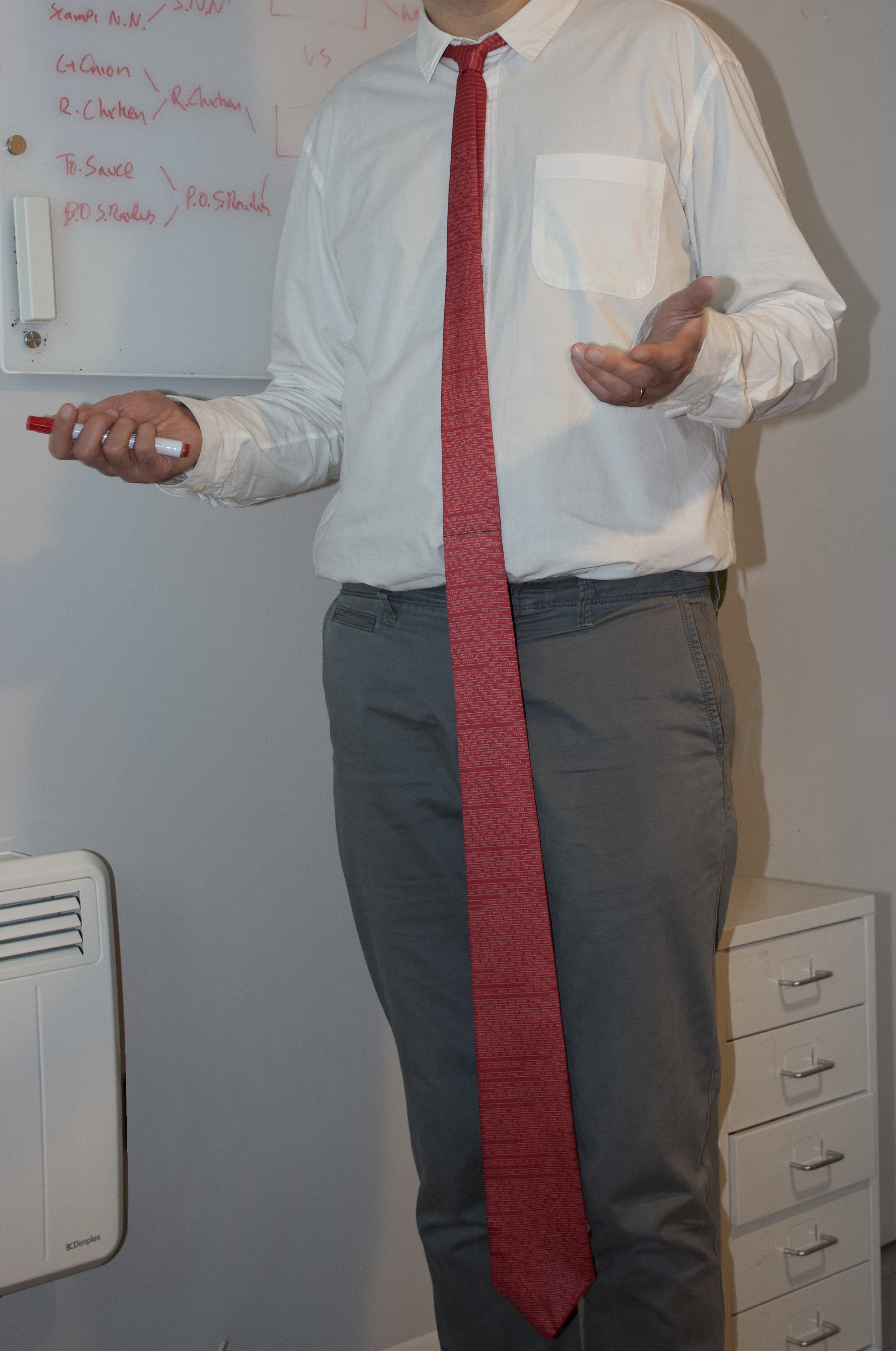
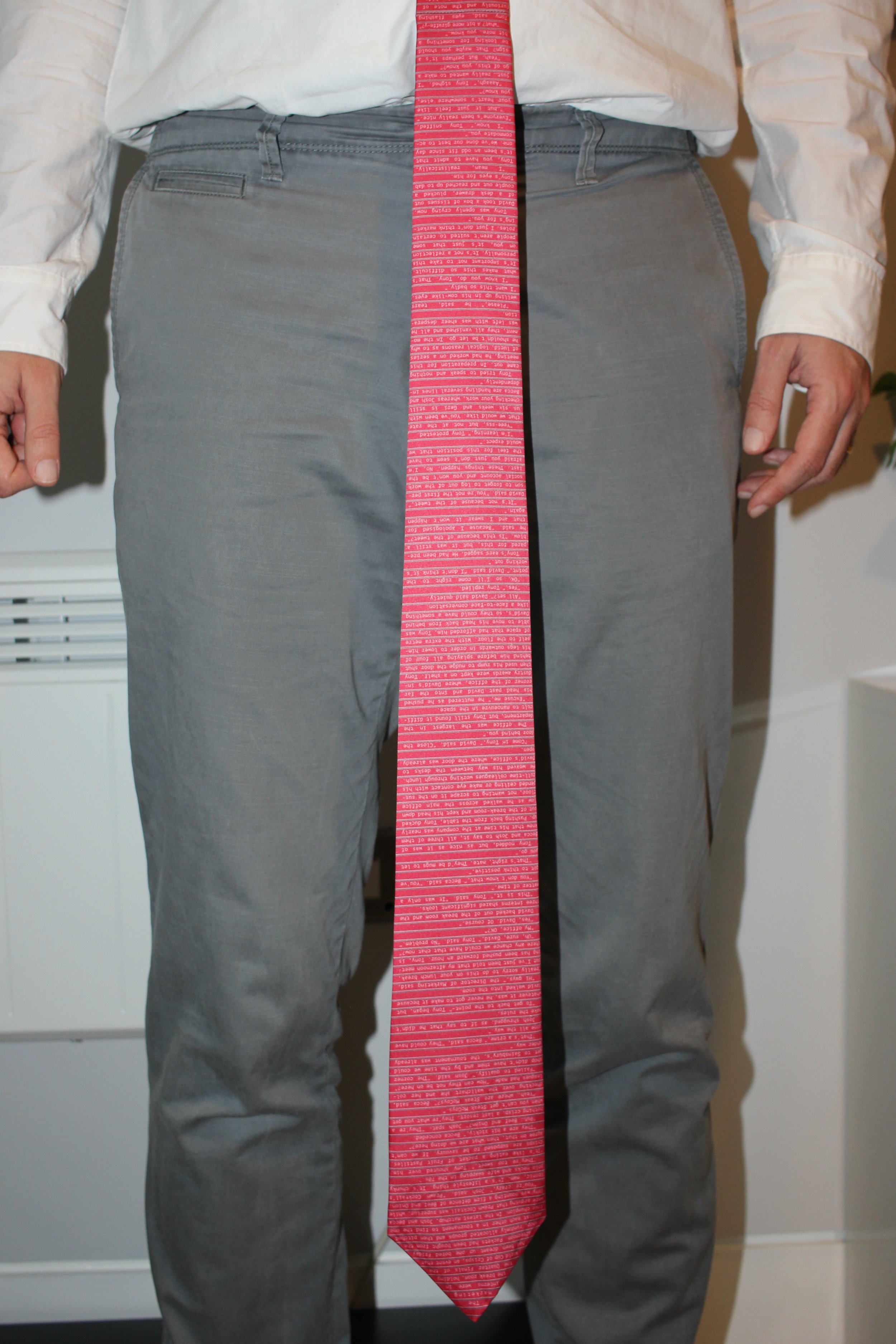
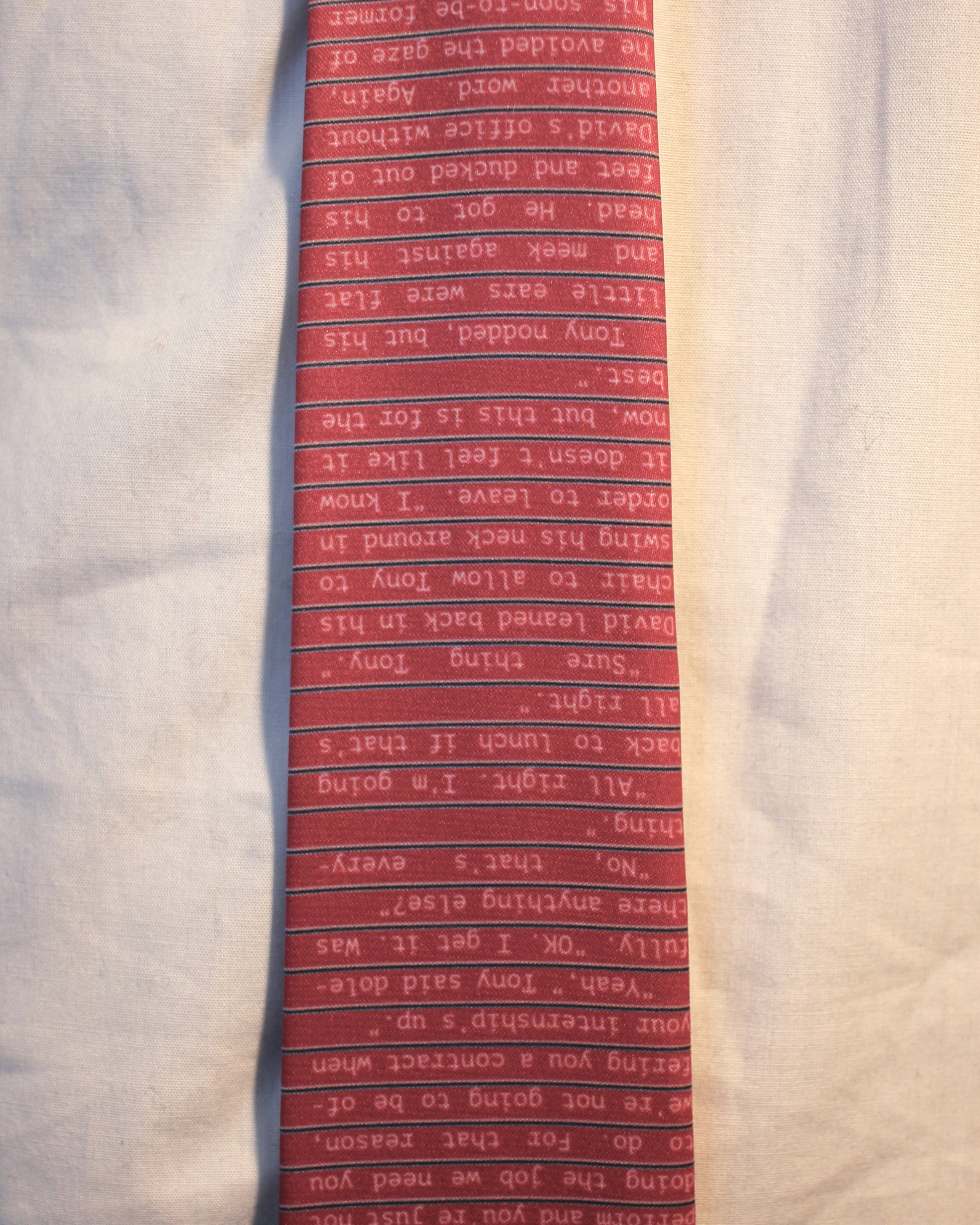
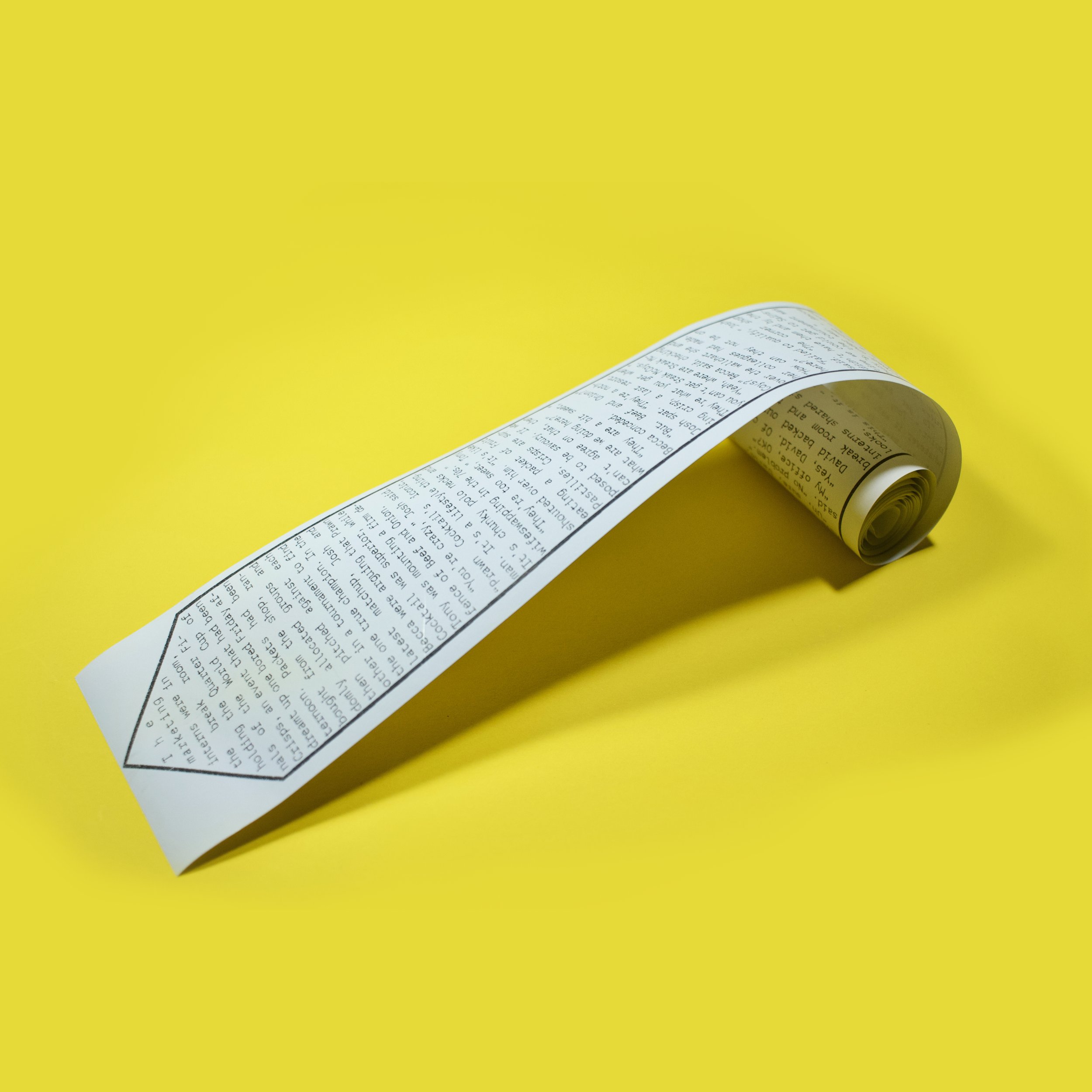
A short story printed on a tie. The text has been digitally printed on silk-like polyester and assembled by hand. It is approximately 2.5 metres long in total and is designed to be read by the wearer.
2023, multiple editions
Hand-sewn necktie, unique edition
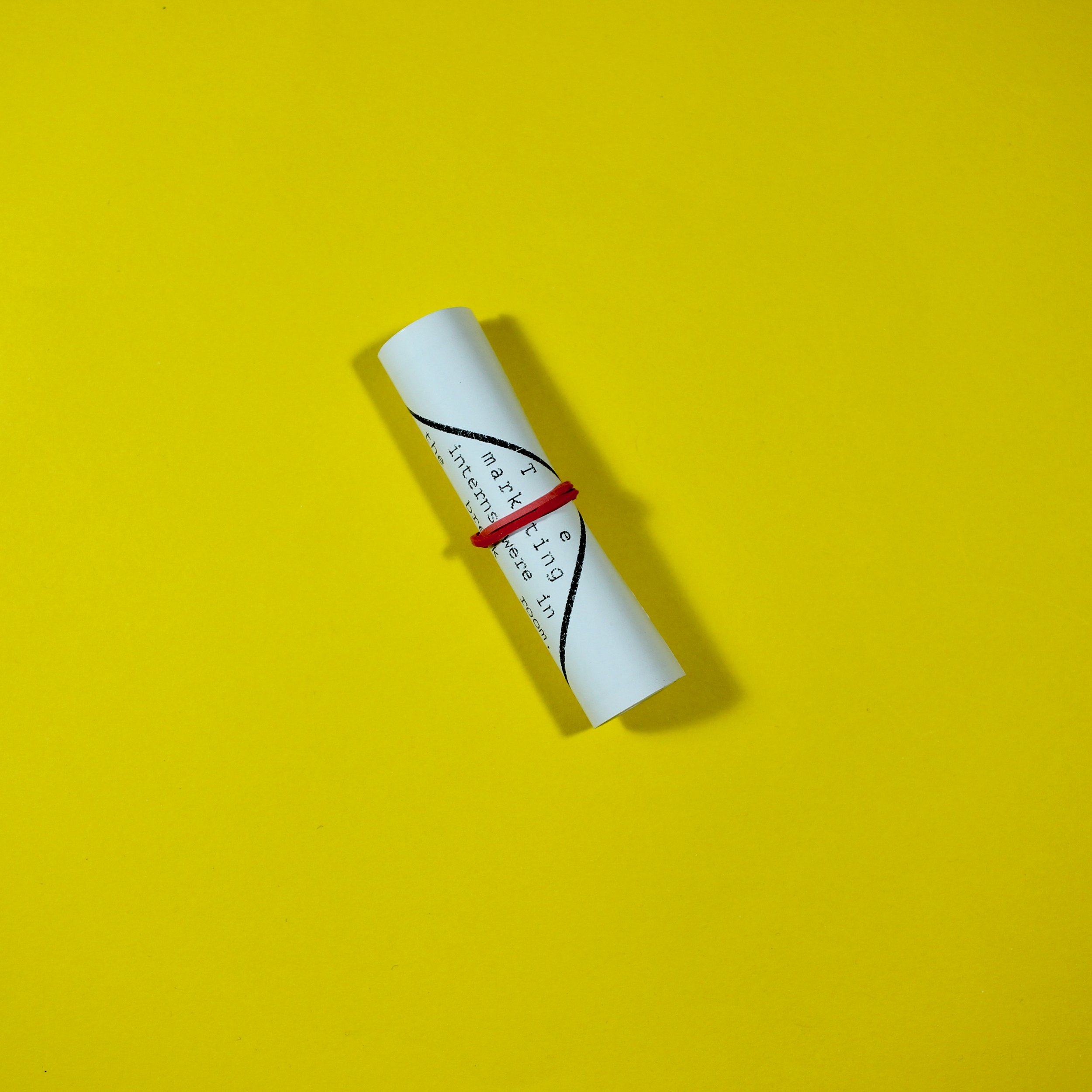
Thermal paper, multiples.
Overview
Intern is a short story about a hapless member of the marketing department who is about to be let go. It was published by Idle Ink on 4th March 2023 and two physical editions were made to coincide with the story’s release on their website.
Background
So, it’s probably best to read the story on Idle Ink before continuing here. You’ll understand the rest of this a bit better and I’d like you to not know about the text before you read it.
Done? OK, let’s proceed.
This was one of several stories I wrote at the end of last year, when I really wasn’t feeling enthused about making books and instead was just concentrating of writing. This happens. I swing between those two modes - the simplicity of writing against the potential complexities of designing and constructing narrative vessels - quite frequently. Each time I do, I convince myself that I’ve stopped oscillating and that this is what I’m truly about. Then, inevitably, I go back the other way. Perhaps one day I’ll realise that they are, in fact, not two polar opposites, but in fact two complementary parts of the same thing. Anyway, I was loving the simplicity of writing by hand on lined paper and one of the stories that came out of that period was this short thing about Tony the intern and his crushing failure to make an impact on the Director of Marketing, who - and let’s be categorical about this - was not letting Tony go because he was a giraffe. It was short, silly and also kind of sad. That’s exactly where I like my stories to land, so I sent it out for submission.
It’s a weird thing, sending stories out. The wheels of literature turn slowly. I’m sure even the smallest publications are inundated with stories so the process is a slow one. Sometimes you sort of forget what you’ve done with a story. Or you pretend to, because you’re always hoping that it’ll find the right home.
While Intern was out, it occurred to me that I could use the digital fabric printing at Contrado to make a really long necktie with the story printed on it. I had previously used their services for Primates and found them to be quick and of good quality. Instead of a fuzzy fur, I was looking for a silky feel. I decided on a fabric (Silk Sensation poly 90gsm ID 2924, if you’re interested) and laid out the text. Trying to get my head around cloth patterns was a bit of a challenge. Luckily, I’m married to an expert, who took me through the things I needed to know, like seam allowances and the importance of the bias. Some of this I understood.
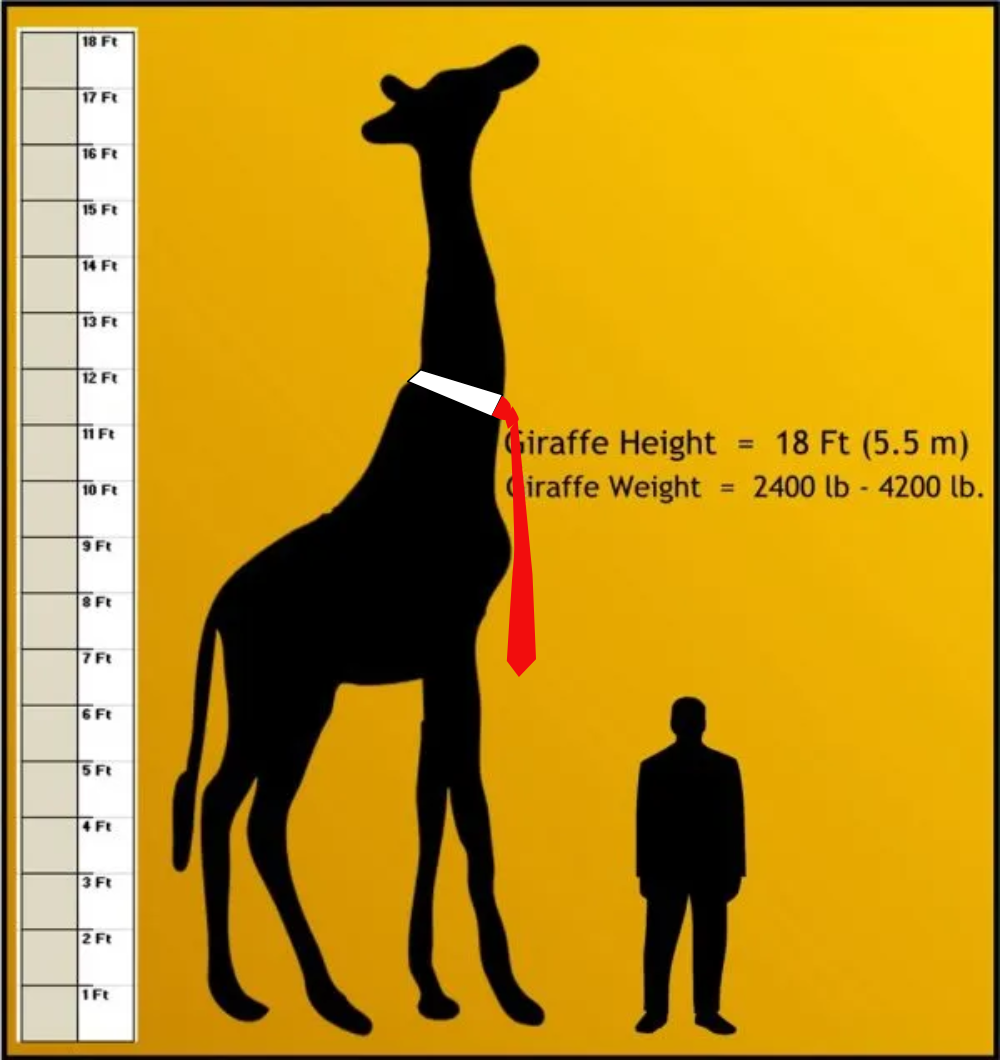
(In case it’s not clear - I added the tie.)
The question then presented itself - just how long would a giraffe’s tie be? This graphic helped me figure it out:
By my estimation, that put the tie at around 2 metres long, at least for the story part. I’m not going to lie, it wasn’t as long as I initially hoped. A six foot long tie didn’t seem as ridiculous as I’d wanted. One could imagine Donald Trump wearing one as a power move. But I told myself that this wasn’t some big joke - this was Tony’s tie and I had to remain true to that. Also, y’know, the story’s only about 1200 words long.
Working with a two-metre long document presents some challenges. The Affinity suite1 did… ok in this regard. Large documents are quite a lot of for my now-quite-old Mac and I think pasting the pattern inside a text box caused more problems than it should. Anyway, I laid out the long skinny tie and then, because I was ordering a sample print at A1 size, placed cropped copies of this document on a standard sized page. Then it went off to Contrado and within a few days I had a red silky pattern ready to be assembled.
This part of the process I had nothing to do with. I get the impression, though, that it was quite annoying to make. We had failed to account for the fact that a 2.5 metre piece of cloth is just plain unwieldy. Added to that, I had placed the pieces a little too close together, making the construction tolerances a bit tight. I thought it came out pretty nice, though.
With that done, I started to think about taking a couple of photos and posting it online for the fleeting glory of a dozen or so likes. What I wasn’t expecting was for someone to actually want to publish the story. Idle Ink, a nice website of weird stories, accepted it and I had a bit of a chat with the editor there and they agreed to mention the tie version of the story.
The process of photographing the tie was frustrating. It felt like the tie needed to be seen in an office environment. That’s fine when you have a job, but you can’t just stroll into a random office wearing a six foot long tie and start taking pictures. (Maybe you can, but I don’t have the front for it.) In the end, we went round to the in-laws home office, which is much tidier and efficient-looking than either of our workspaces. We took some pictures there, but they didn’t come out quite how I would have liked. There was a combination of daylight and tungsten lightbulbs which gave everything a mixed pallor. Although the shots with the flash going off were accidents, they ended up being the ones used. Flash photography isn’t really a look I like, but it is at least a look. If I’d had more time, I might have done them again, but it was all thrown together quite quickly on a Sunday afternoon. So, thanks to Jemima and Sarah for putting up with an impromptu photoshoot taking place while they were still working. If you want a website made, get in touch with them at www.websitedepartment.co.uk.
Anyway, it was while doing the photoshoot that it occurred to me that it would be pretty easy to make a cheap paper version of intern using the Epson TM-88V thermal printer I acquired a while ago. It would be pretty straightforward to do, as I had all the files and so long as I got the print settings right, I could have a long, narrow strip of paper with the story on. These went out to mailing list subscribers on publication date.
Some might say that three separate editions of one short and admittedly quite silly story is perhaps overkill. To them I would say… yeah… well… you just don’t get it.
I switched from Adobe a few years ago. For the most part Affinity has been a pretty good substitute. Sometimes I miss the more esoteric parts of Creative Suite, but I never really did enough with them to justify the cost. ↩︎
Primates
A set of two backpack-like volumes about a pair of animals sharing their habitat.
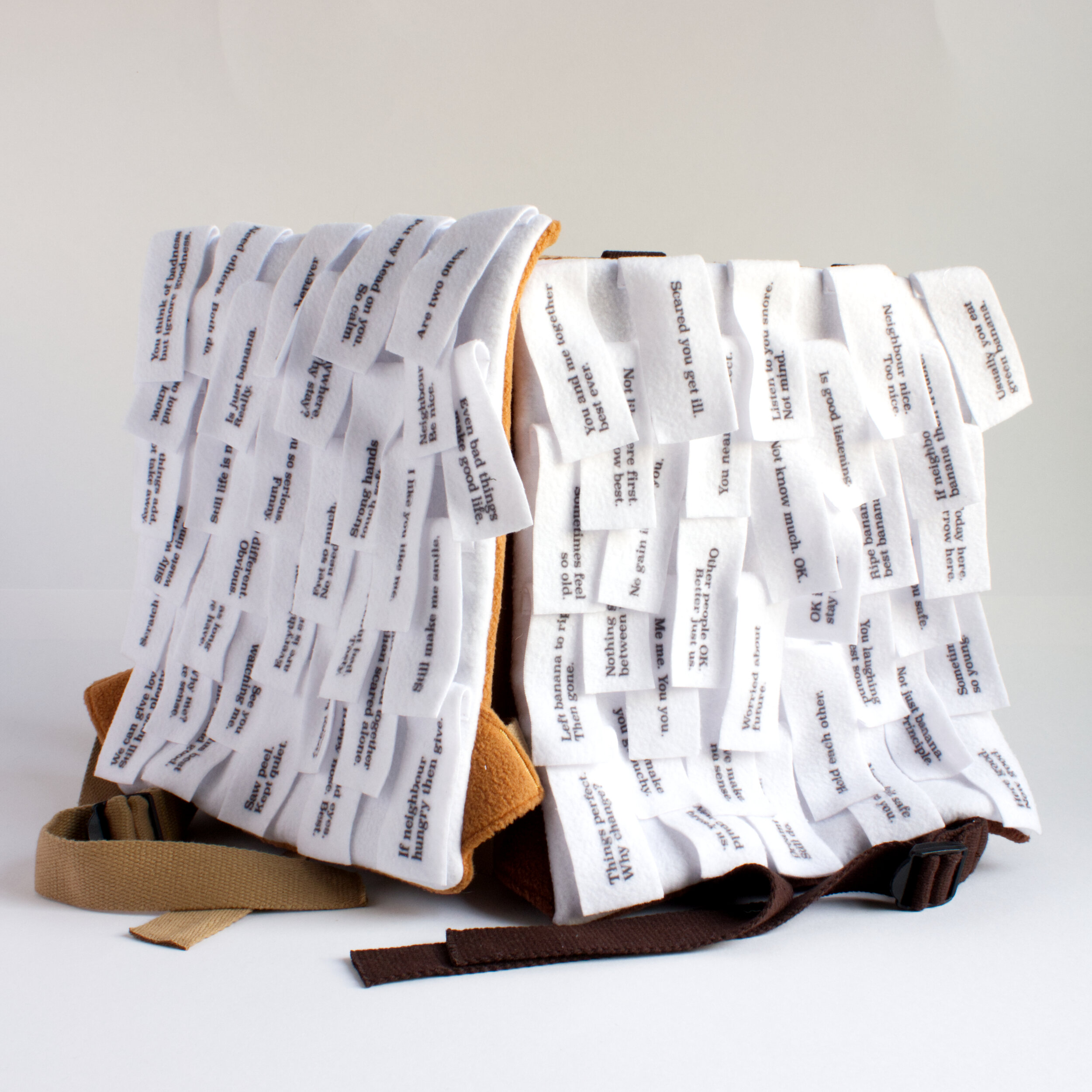
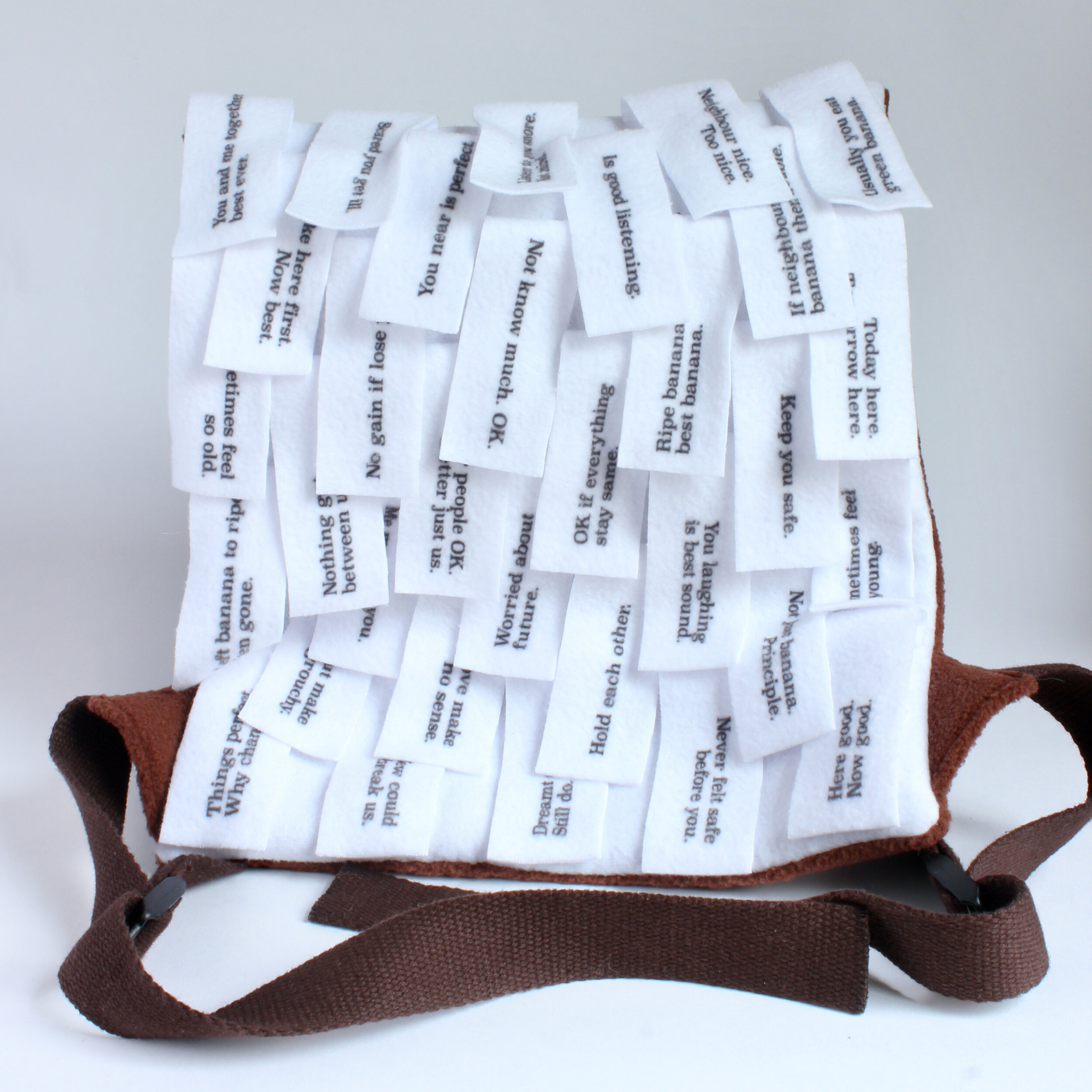
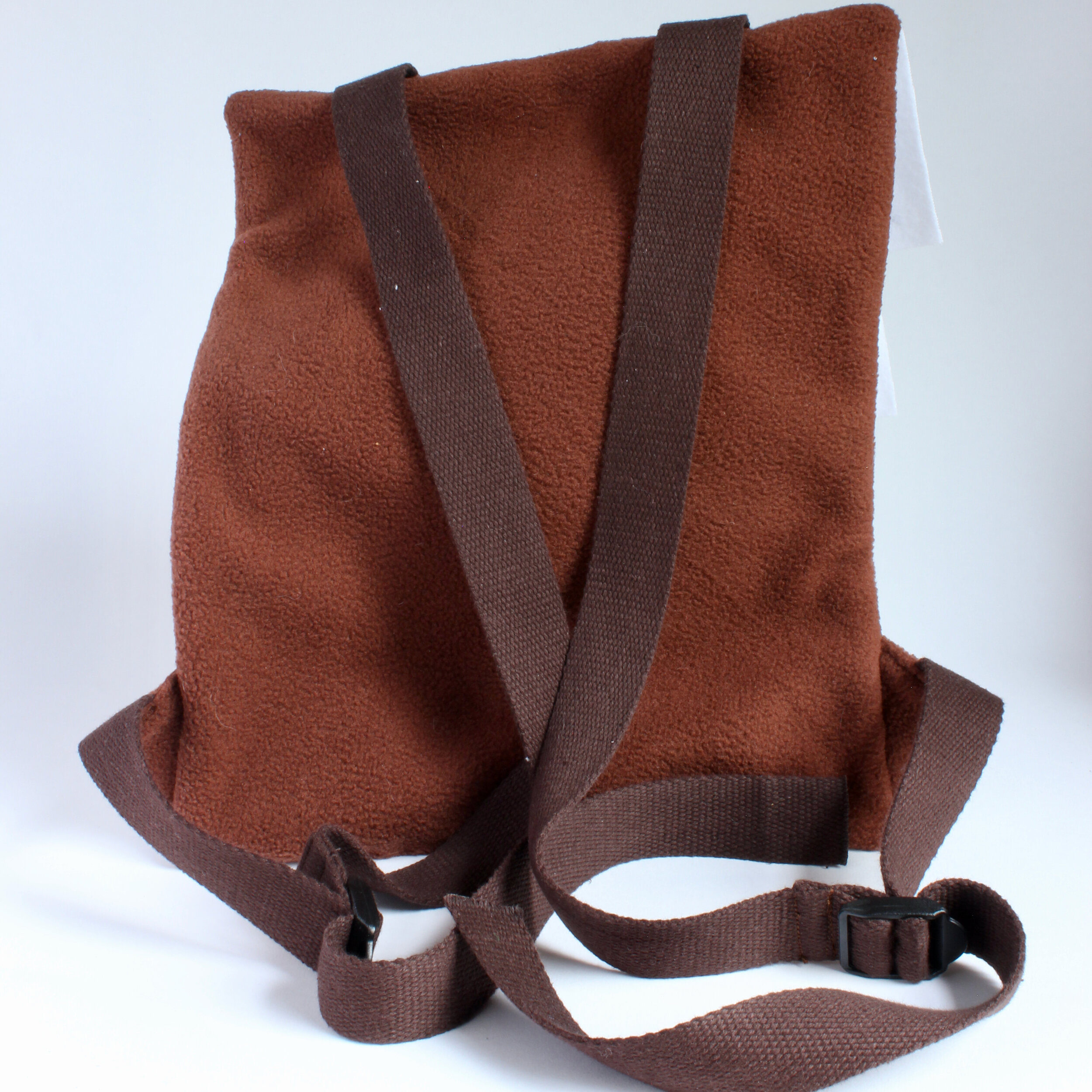
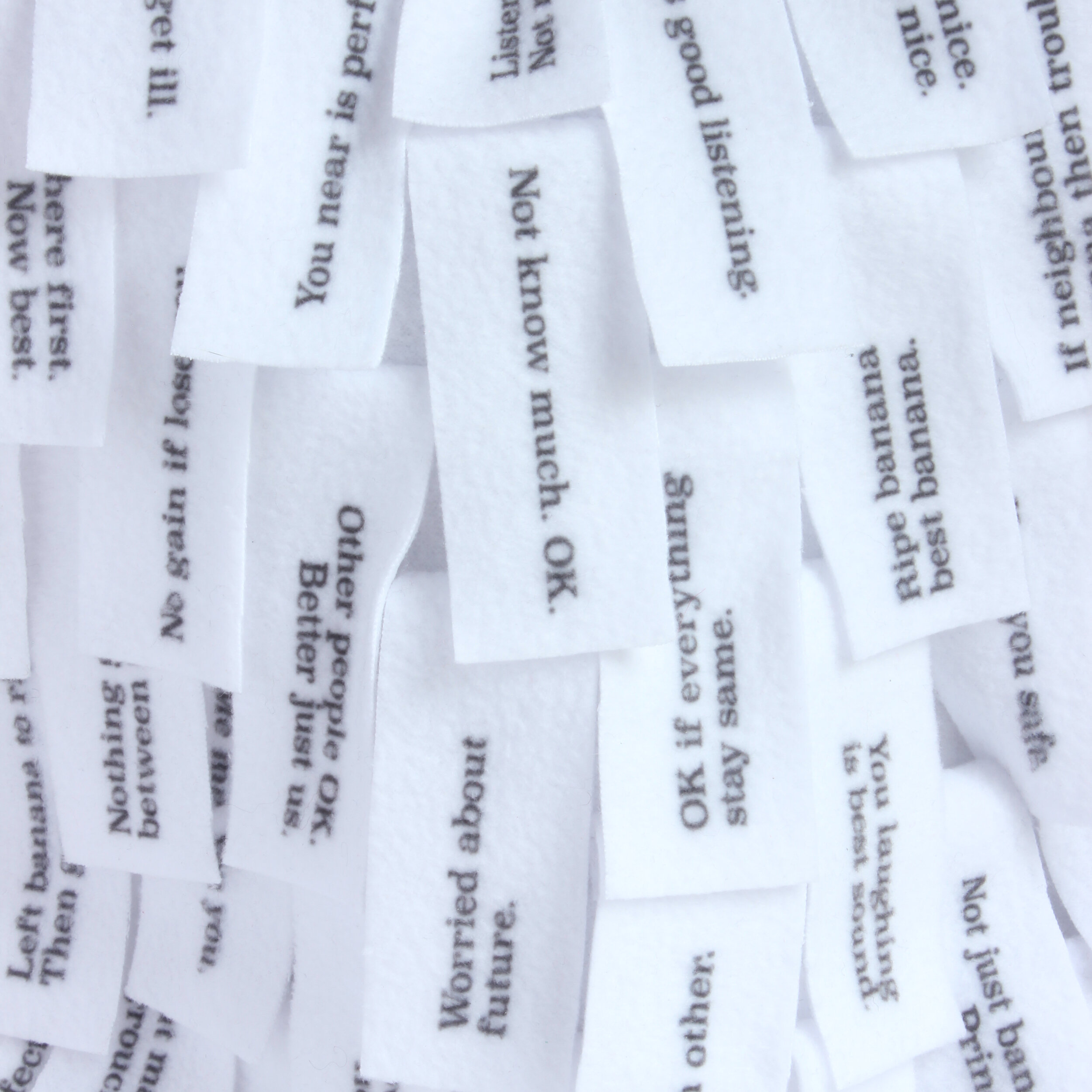
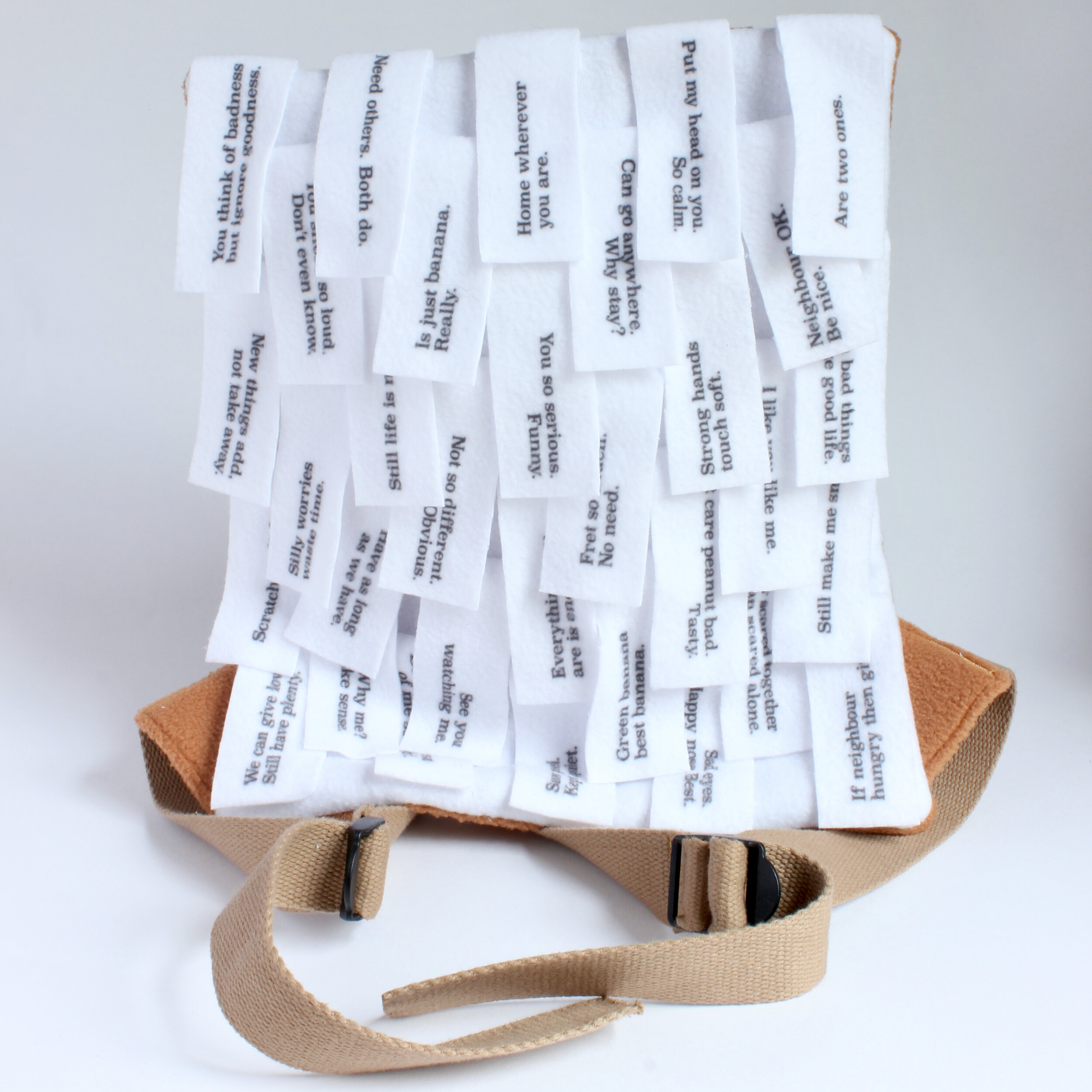
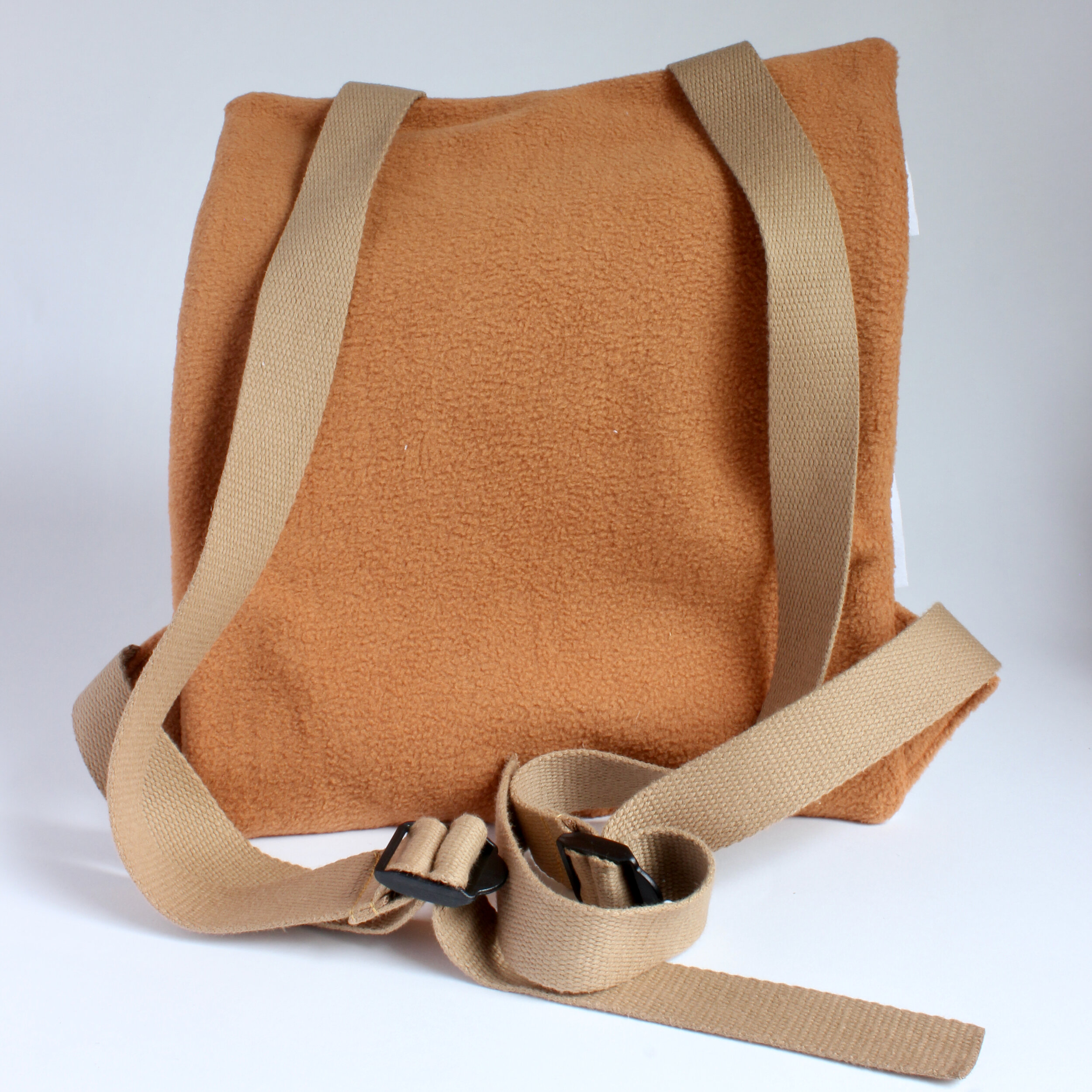
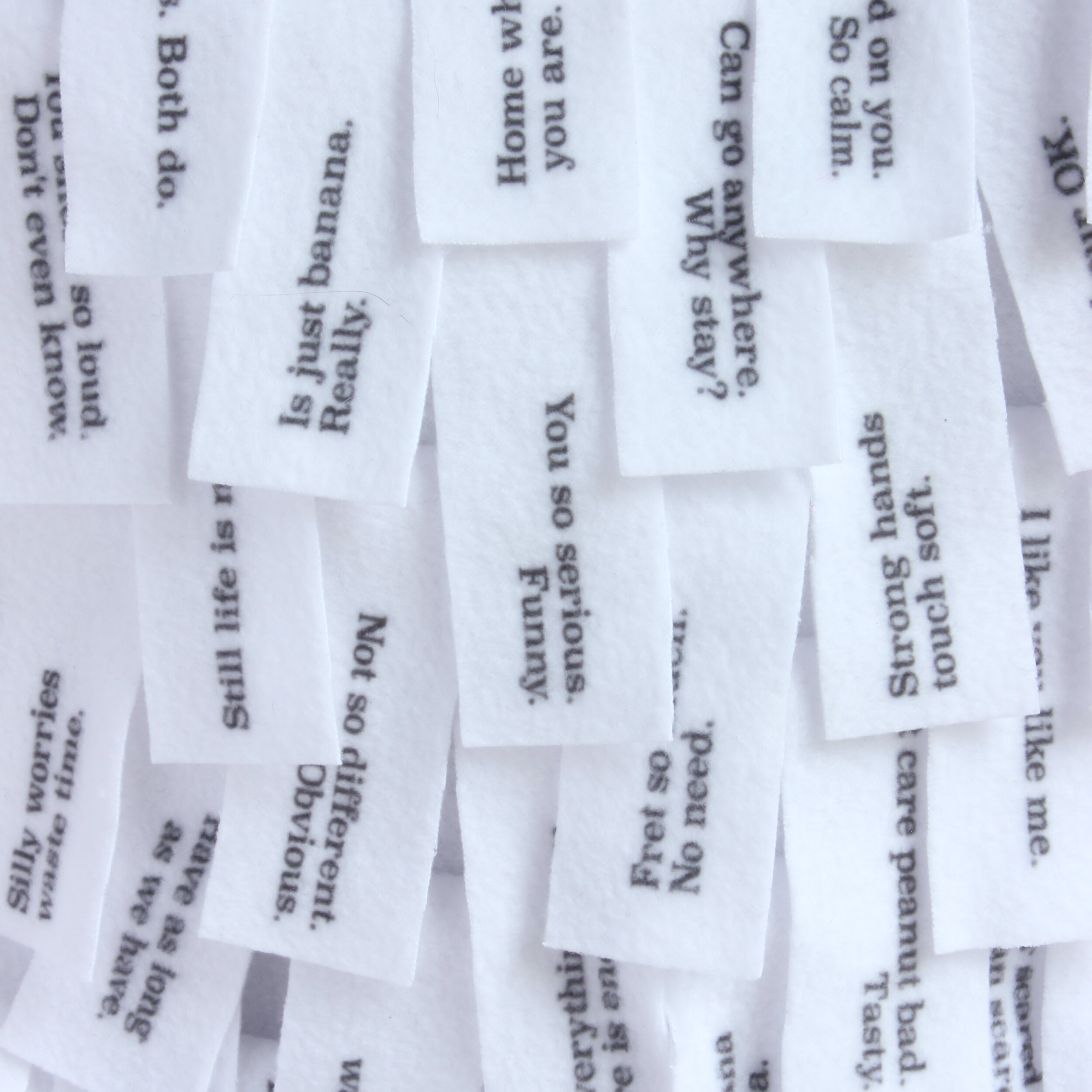
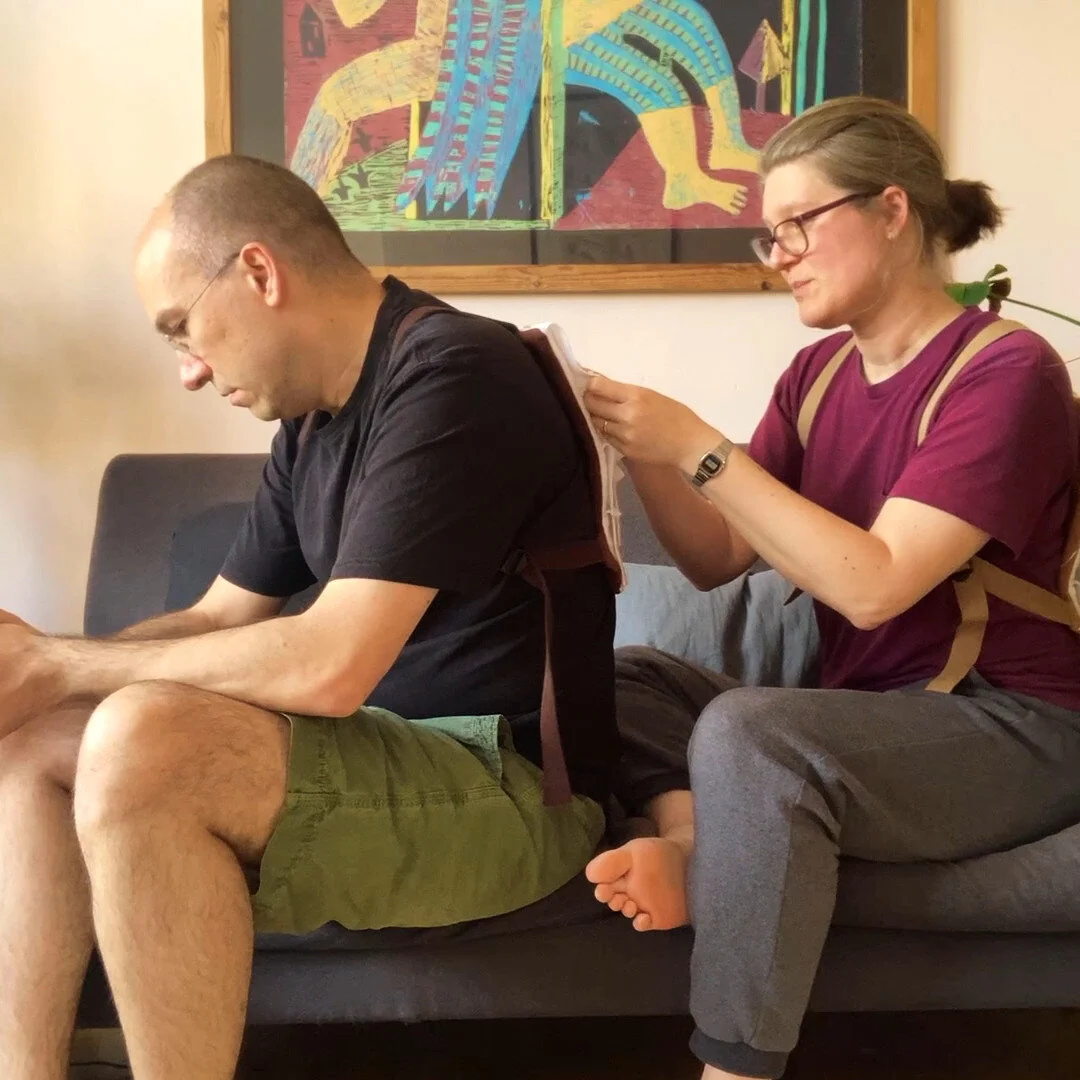
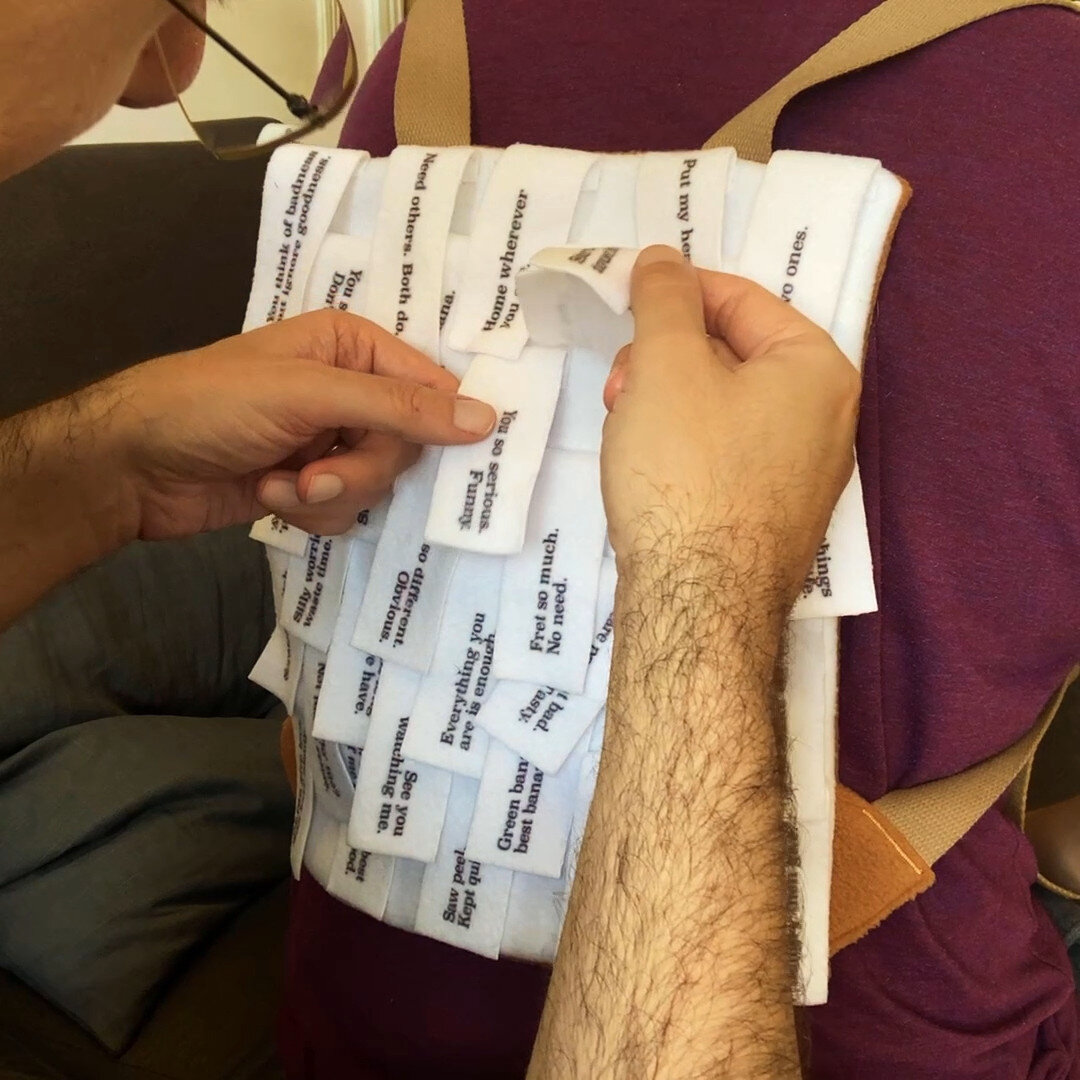

Set of two back-pack like volumes, made of fleece. It is designed for two people to read aloud to one another. It tells the story of two animals sharing a habitat.
Click here for more information about the book and how it was made.
Printed fleece and fabric rucksacks, two pieces
Overview
Primates is a set of two volumes, intended to created a shared reading experience. The pieces are worn on the readers' backs, meaning each has to read to the other. The text is a fragmented narrative in two halves, from two perspectives, about the shared lives of the two protagonists and their differing perspectives thereof. The text is printed on fleecy fabric and the tactile experience of stroking, smoothing and preening the material is an inherent part of the book. This sensuous element, combined with the suggested position of the readers, creates a sense of closeness, care and intimacy.
Background
For a while now I've been wanting to do something that allowed the reader to get more hands on and really dig in to a text. I experimented with a few things, but these early prototypes were unsatisfying, as I didn't really have understanding of what I could and couldn’t do.
Two courses helped bring this project in to focus. The first was a five-week paper folding and pleating course at the Working Men's College, taught by Thomas Prendeville. This gave me a better understanding of what was possible and also deepened my appreciation for the hands-on feel of working with paper and card.
The second was Artists Books - Theory and Methods by Ben Denzer, taught online from the Center for Book Arts in Brooklyn, NY. In just two short sessions, Ben introduced the wide world of artist's books and explained a lot of the theory and practice involved in making them. The first week was this overview and we were briefed to come up with our own artist's book for the next session.
The vague notions of folds and tactility combined with the living situation we were experiencing during Coronavirus lockdown. My partner and I get on well for the most part, but each of us was the only person the other saw for several months at a time. Being in such close quarters for so long requires patience and kindness to be active practices.
The image of apes grooming each other struck me as an intimate act of caring. Reading books is usually a solitary act and adults seldom get the opportunity to read aloud to one another. I wanted to explore the idea of reading as a shared experience. I sketched out a rough idea of two backpacks with strands of words on them that each person would have to untangle and read to the other.


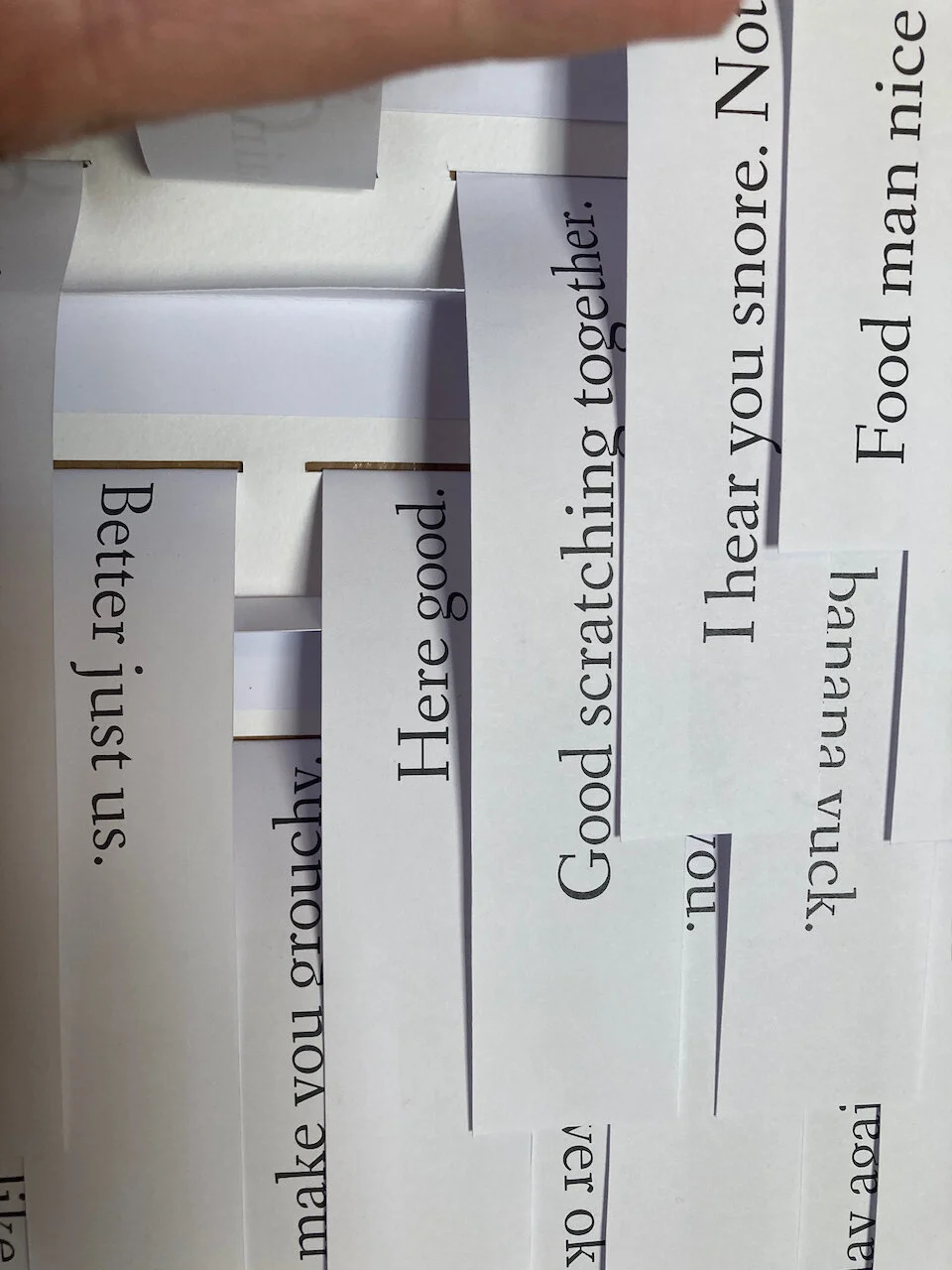

The first prototype took the entire week to make. While I had the physical form very much in my head, trying to find the right tone for the actual words was difficult. I knew that the writing would be piecemeal, that a reader would not necessarily read things in any particular order, or might skip some. This meant short sentences and I had a lot of difficulty making it feel genuine without it being pretentious and poetic. In the end, form and content combined and I turned the text into a simplified ape-speak that could still be read by humans. (I also added in an unnecessary amount of references to bananas.)

Test printing with felt and thermal transfer sheets.
Having made the prototype from paper and card, I looked into fabric printing options. T-shirt transfer sheets had a weird film on them and washproof markers were too fuzzy to read at the size I wanted. In the end I went with digital printing through a company called Contrado, who have a wide range of fabrics. After running through samples, I settled on polar fleece because it’s furry, feels nice and doesn’t fray.
Octavia was able to cut and assemble the printed pieces into these two wearable volumes.