‘The Infinite Blacktop’ by Sara Gran
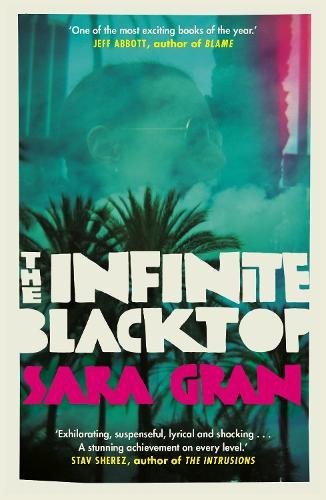
I like messy detectives, particularly if they’re not cops. I’ve read the previous instalment in this series and enjoyed it and this one was pretty good, too. It sort of petered out towards the end, but I think that was just my attention waned a bit as it tried to pull the plot together.
The story’s not wildly important, but there are some passages about art and creativity that I pulled out:
"He came over—you all kind of work in a circle in class, it's like the movies he came over and he said, 'This is realy good, and you're obviously very talented. But now, I want you to make the worst painting you can. I want you to just completely fuck this up. Just loosen up your horizons of what you ought to be doing.' And I did–"
Now Tiffany started to cry outright. Her nose turned red and her eyes and forehead scrunched up.
"And that was the hardest thing id ever done i my life. I spent all semester on it. Making the worst painting I possibly could. Just totally fucking up everything I’d worked for all my life. Just diving into it. Just really coming to terms with how much I hated myself and my own art. How disgusting I really thought I was.”
"So what happened?" I asked. "Was it the best panting you ever made?"
"No," Tiffany said. She finished crying and even smiled a little. "It was horrible! Like seriously the worst of the worst of art school– which is really saying something. But when I was done, I was still me. I was still Tiffany Stockton. After that, I knew I could fail and live. And I knew I could take risks, like I had with the welding, and that sometimes those risks wouldn't work, but I would be a better artist, and a better person, because of it. And the next painting I did after that, that was really good. Like, way better than anything l'd done before. And I knew that who I was was not entirely dependent on my results. I am who I am because of who I am, not because of the commodities I generate or even the, you know, the sacred objects that I generate. I am not my results. I am my process."
I let that sink in for a long minute and realized that I agreed with her.
p123-124
"All I wanted," the lady said, "was to make her see how she had hurt me."
Later, I would learn that was all most people wanted: to make everyone see how they'd been hurt. Eventually I would see that I was one of those people-that huge swaths of my life had been a message with no receiver, a dramatic story in a language no one spoke but me. We were screaming. No one was listening.
p226
There was also a good bit about the primary motivator in all artistic relationships is about asserting who is best, but the book went back to the library before I could think to scan it.