Well, I wasn't expecting that

The reviews for the Freddie Mercury biopic Bohemian Rhapsody were not good, but I had a vague sense that I should watch it because an old friend of mine has a role in it (hello Dickie). The first half of it was fairly pedestrian, with the rise to fame and all that stuff. I already knew that the last half an hour was an almost exact recreation of Queen’s Live Aid set and I thought I would probably skip that.

Something about the last third of the film absolutely floored me, though, and by the time fake Queen came off their obviously shot on a greenscreen version of the Wembley stage, I was in tears. I knew I was being manipulated, but god it really worked on me. Freddie Mercury was just so good and what they did there was so big and it was so shit that he died so young. It was such a gut punch to watch it and afterwards I couldn’t believe it had affected me so much.

Even bad films still have the power to move.

Invincible by Amy Lawrence

Well, I’m trying to keep track of all the books I’m reading because I’ll do anything to escape the incessant emails from Goodreads (which I have somehow managed to sign up to twice, despite not really understanding what it’s for or how it works) and it helps me to write things in a blog post because it’s such a disposible format. That said, I found myself wanting to self-censor a little bit because this isn’t literary or experimental. But I read it cover to cover, pretty quickly as it turns out.

I am an Arsenal fan, but a pretty weak-sauce one. As a child, my allegiences switched around depending on which shirts I liked. My best friends were Spurs fans and I sort of vaguely followed their lead. Almost everyone in my secondary school was an Arsenal fan and my university years coincided with the arrival of Wenger and I was quite happy to chase that glory, particularly as I was in Manchester at the time and defensive of my Londoner status. Watching Arsenal games was also a way to bond with my youngest sister, who was a bigger fan than me by some stretch. I still don’t know much about the game, but I had eyes and I knew that when Arsenal were on form, they were aesthetically pleasurable to watch.

Truth be told, my favourite way to follow football was by reading about it in the Guardian, both the newspaper and their daily email newsletter The Fiver. The running battles between Arsenal and Man United were an ongoing saga that spanned many years, with untold twists and turns.

The undoubted high was the Invincibles season, when the team went through the league without being beaten. This book looks at how that was done, talking to players and coaches involved in this unprecedented feat of modern football. It doesn’t go game by game or player by player, but instead tries to unlock the philosophy of how it was done. Arsene Wenger became something of a divisive figure at the club in his latter years because he stayed at Arsenal too long, but this was a good reminder of what made him remarkable. Reading about his coaching methods and attitude to player development gave me perspective on what it is to undertake a task, whether that’s winning a trophy or writing a book. Rather than being a harsh taskmaster, Wenger preferred to nourish the whole human, not just the bit that kicked the ball around. It’s tempting to think that it’s all about knucking down and not accepting failure and that’s sort of true, but that comes about through positive reinforcement, repetition of your craft and trust in those around you. Not by locking yourself in a cellar and punching the walls until your knuckles bleed.

There’s also the idea that it’s about calm, which is a stark contrast the Ferguson hairdryer school of management. I don’t know. Maybe winning the Treble and the league all those times is better than going undefeated one season. Logically it probably is. But there’s something classier about the Invincibles that appeals to me more. I guess that’s why I’m an Arsenal fan.

I just developed my first roll of film

Honestly, it was a bit of a faff and I’m not entirely convinced that it’s worth the effort. If all you want is pictures on your computer, there are much easier ways of doing it (the shot above was taken with my phone and transferred to my sharerd folder in seconds).

But – there are other reasons to shoot film that I’m exploring. I snaffled a developer tank from my partner’s dad (thanks Bob) and used Cinestill df96 to make the process as simple as possible. It turns out that getting distilled water was the hardest part of the prep.

Things went… ok. The dev came as a powder which took a long time to dissolve. I think I did something wrong with the dev tank (or it’s broken) because it was a bit leaky. Also, loading the film resulted in a broken sprocket hole which meant I had to use two reels in the tank. Despite all the setbacks, there was a small feeling of triumph when I opened up the tank and saw that there were actually pictures there. Whether they’re properly developed or not is a matter for another time. For the moment, I’m calling this a victory. I’ll have a go at scanning the pics, possibly with one of those cameraphone apps which makes this all seem utterly redundant. As I said before, the aim of this isn’t to get pictures on my computer, it’s to have developed films as a physical object irl.

Laserwriter II by Tamara Shopsin

This is a lovely little book for a very specific kind of reader. I never properly owned a Mac pre-Intel, but always admired them from afar. This fictionalised account of real-world New Mork Mac repair shop TekServe is written with real affection. It reminded me of Douglas Coupland’s Microserfs in that it’s about an eclectic bunch of nerds, but without quite so much archness and irony and a lot more details on printer repair.

A brief note on typesetting: It’s laid out with ragged paragraphs, each with space above and below. This gives each one an individuality and gave me the impression that it had been precisely crafted. Pages often had only a couple of paragraphs on them and sections rarely carry overleaf. I’m guessing that this goes beyond just typesetting and perhaps was how the author wrote the text. It feels very much like a collection of pages. I can imagine a folder on the author’s desktop containing 001.doc, 002.doc and so on.

Some sections of the book are written from the point of view of printer components - laser, fuser, paper feeder, etc - which I didn’t think worked as well as the human characters, but whatever. I liked it. It hasn’t been published in the UK as far as I can tell, but copies are available on eBay and Amazon (use eBay).

Kraftwerk: Future Music from Germany

A problem with music books is that they tend to be written by fans. This Kraftwerk biography is probably pretty good if you’re into the music. I’m not really, so I’m not entirely clear why Iread the whole thing. Probably just interest in their processes. Anyway, I wonder what a music bio written by a non-fan would look like. Probably not a commercially good idea, but it would be refreshing to have passages explaining why a particular album wasn’t very good or why the guitar sound so crap. If anyone wants to commission a book from me about all the things wrong with the Manic Street Preachers, then they should get in touch. I reckon I could bash that out in a couple of months.

Shantaram

There’s many things wrong with AppleTV’s adaptation of Shantaram, but whoever decided to cast Charlie Hunnan as a master of accents was taking the piss.

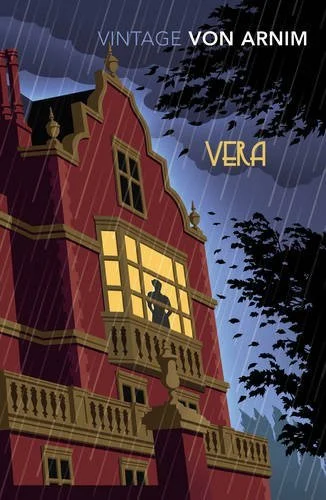
'Vera' and the sheer terror of tea, toast and buttered bread

Honestly, I found the opening 80 or so pages of Vera to be a real slog. The pace is so slow and mannered that it makes it difficult to get through. While the interaction between the middle aged man Wemyss, twenty-something (but much younger looking) Lucy and her maiden aunt is sort of interesting, the amount of detail is laborious.

But.

Without it, the latter half of the book wouldn’t be nearly as effective. Without wanting to exaggerate, the tension I felt during Wemyss’s dictatorial approach to elevenses was unlike anything I’ve ever read. It drags out painfully. There are other sections of the book that are more explicit in their portrayal of abusive power dynamics, but the sheer domesticity of this section was the most effective.

It’s difficult to pick out an extract but the whole thing just builds and builds in such a horrible way. I gather from the Wikipedia article that it’s based on von Armin’s own second marriage and that the book is a marked contrast in tone to her other works.

'Shall I pour out the tea?' she asked presently, preparing, then, to take the bull by the horns; for he remained standing in front of the fire smoking in silence. 'Just think,' she went on, making an effort to be gay, 'this is the first time I shall pour out tea in my——'

She was going to say 'My own home,' but the words wouldn't come off her tongue. Wemyss had repeatedly during the day spoken of his home, but not once had he said 'our' or 'your'; and if ever a house didn't feel as if it in the very least belonged, too, to her, it was this one.

'Not yet,' he said briefly.

She wondered. 'Not yet?' she repeated.

'I'm waiting for the bread and butter.'

'But won't the tea get cold?'

'No doubt. And it'll be entirely that fool's fault.'

'But——' began Lucy, after a silence.

'Buts again?'

'I was only thinking that if we had it now it wouldn't be cold.'

'She must be taught her lesson.'

Again she wondered. 'Won't it rather be a lesson to us?' she asked.

Vera by Elizabeth von Arnim. Available from Vintage or as a public domain ebook from Project Gutenberg.